My Role
As a Sr. UX Consultant for Consumers Energy's IT Self Service Strategic marketing initiative, my role was Lead, execute, market the benefits of the new IT initiatives to business partners, and drive adoption. To achieve this goal, I conducted extensive research that involved interviewing key stakeholders and business partners, developing personas, and creating a feature benefit matrix to identify pain points and self-service initiatives that could address them.
The engagement also involved the development of an internal global and targeted messaging plan, designing marketing materials for remote and on-site business partners, and a communication launch strategy.
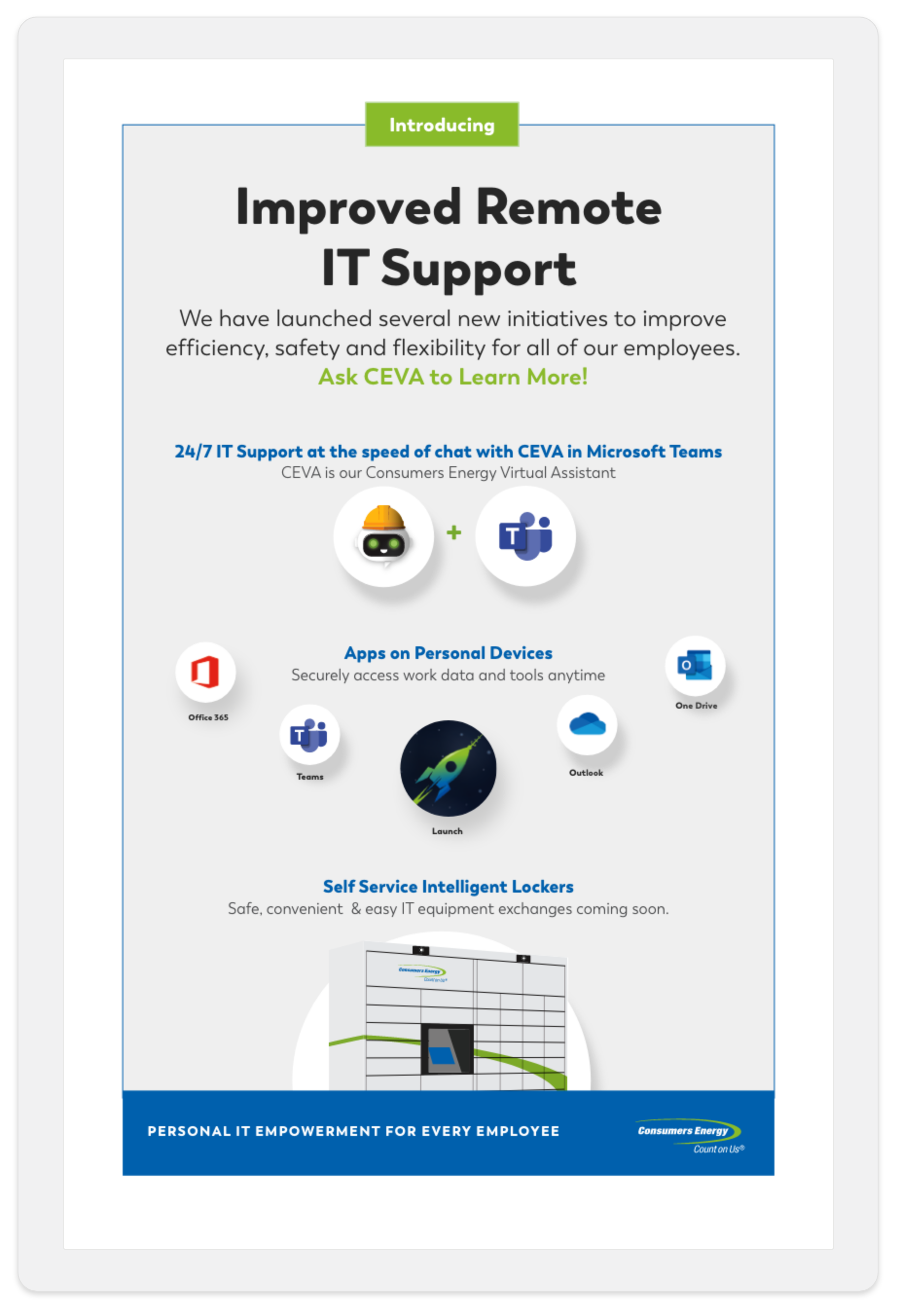
The deliverables included a schedule for accomplishing all tasks within eight weeks, a deck of insights and future initiatives obtained during the discovery process, and various marketing materials such as Outlook email blasts, animations, posters, and teams backgrounds highlighting the components of the self-service initiative, including the CEVA AI Virtual Assistant, Corporate apps on personal devices, and self-service intelligent lockers.
Problem Statement
Employees expect quick resolution of IT issues but have to utilize human intervention to solve common IT problems increasing manpower requirements and cost to the company.
Success Criteria
• Unpack business partner groups and their pain points
• Determine which new initiatives address specific business partner pain points.
• Develop an effective communication strategy to reach each business partner group
• Create effective messaging and marketing concepts that will appeal to all BP groups
• Create awareness of new self-service initiatives among business partner groups
• Educate business partners about self-service feature benefits
• Encourage engagement and foster adoption of the self-service initiatives
• Create a communication plan targeting the business partner groups
• Deliver marketing materials and communication plans to the client
• Create a presentation deck of additional observations and opportunities
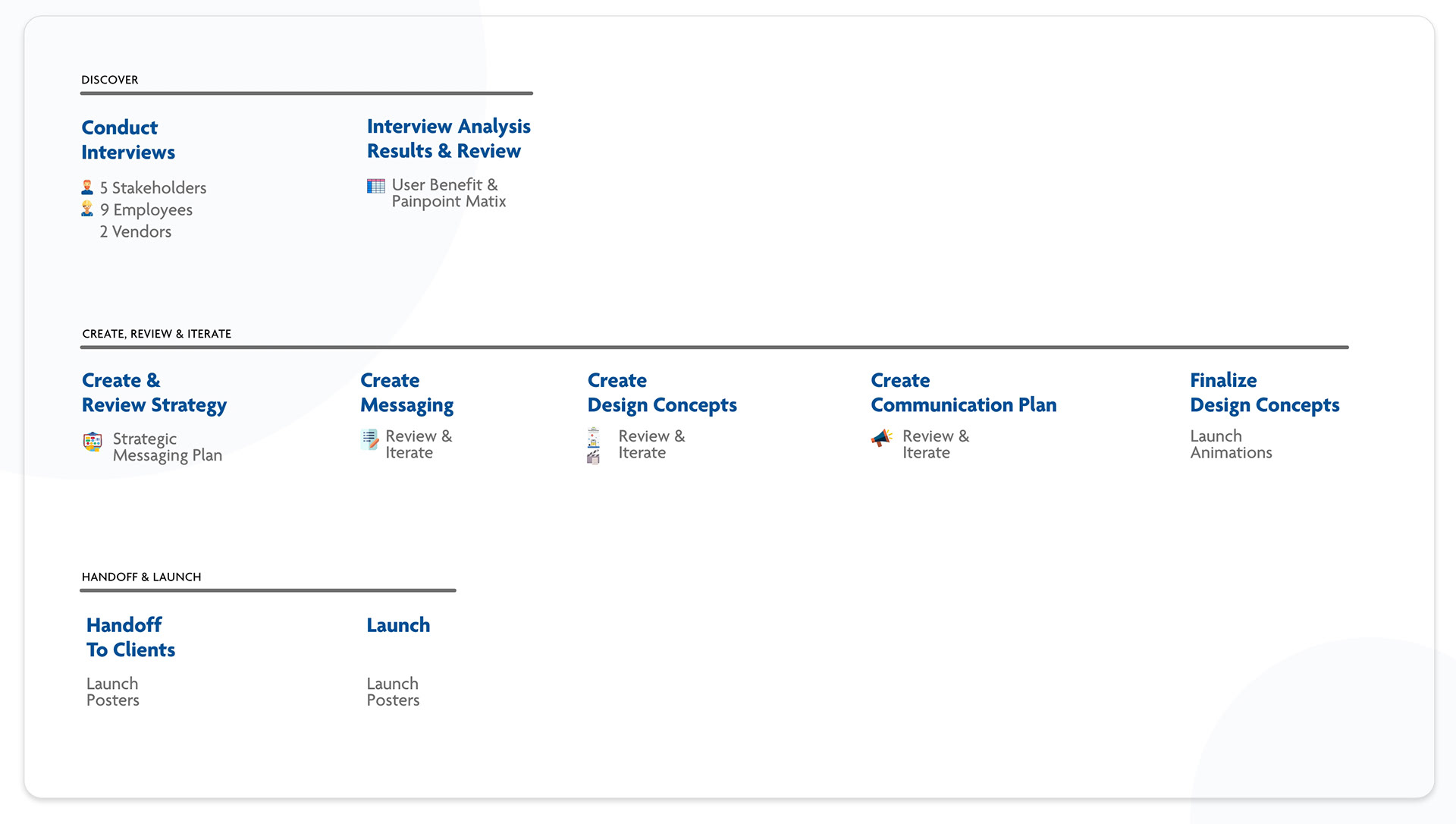
Eight-Week Schedule & Delivery Plan
Stakeholder Alignment & Business Partner Interviews
We conducted stakeholder interviews during the first week of our engagement. We began with the IT stakeholders, with the primary focus on achieving alignment, reviewing internal research, identifying potential problems and goals, and defining success and deliverables for our engagement.
The stakeholder interviews were productive and collaborative, and we were able to lay a strong foundation for the rest of our work together. We were able to gather valuable insights and perspectives from the IT stakeholders, which helped us to better understand the organization's goals and challenges related to self-service initiatives.
We worked closely with the IT stakeholders to identify the key business partner groups that they intended to reach with the marketing campaign. Based on their input, we facilitated introductions and set up business partner interviews.
Through these interviews, we were able to gain a better understanding of the needs, pain points, and communication preferences of each business partner group. This information was critical in developing a messaging strategy that would effectively reach and resonate with each group.
The IT stakeholders were valuable partners throughout this process, providing guidance and input to ensure that our work was aligned with the organization's goals and objectives. By working closely with them, we were able to develop a comprehensive and effective marketing campaign that successfully promoted the self-service initiatives to the target business partner groups.
Interviews were conducted with video conferencing tools due to COVID-19 Pandemic

Executive Assistant

IT Executive

Executive

Corporate Worker



Interviews were designed to identify:
• Pain points
• Job roles and responsibilities
• Daily tasks
• Relationships with technology
• Types of technology utilized for daily work
• Resources available for technology education
• Preferred learning methods
• Concerns and areas of improvement
• How employees received corporate communications
• Relevant pain points regarding corporate communications
Insights from interviews:
• Determine the most effective communication channels
• Maximize reach for our messaging
• Deliver impactful and educational messaging
• Tailor our messaging to address the identified pain points
• Choose the appropriate communication mediums
Business Partner Personas
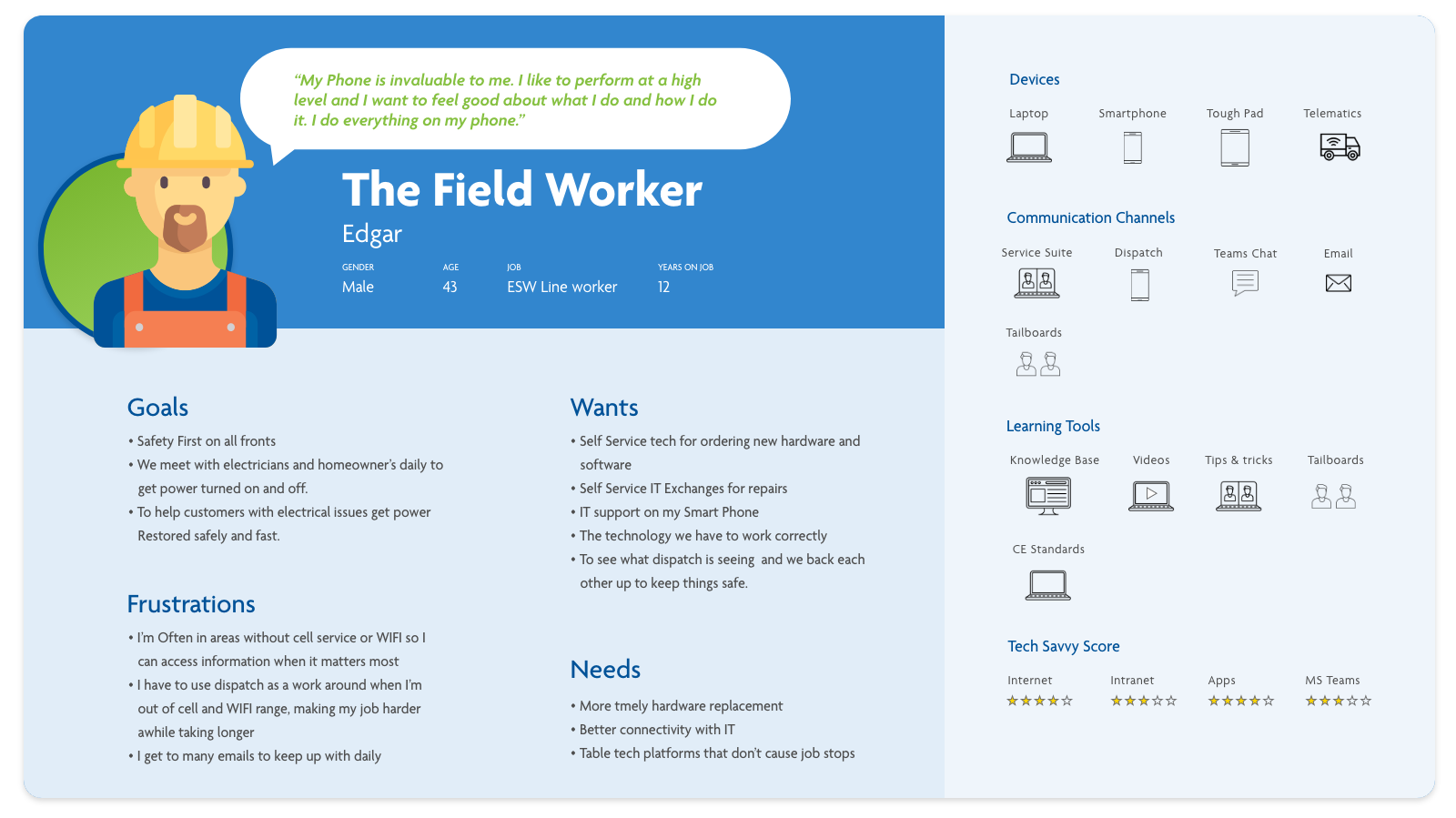
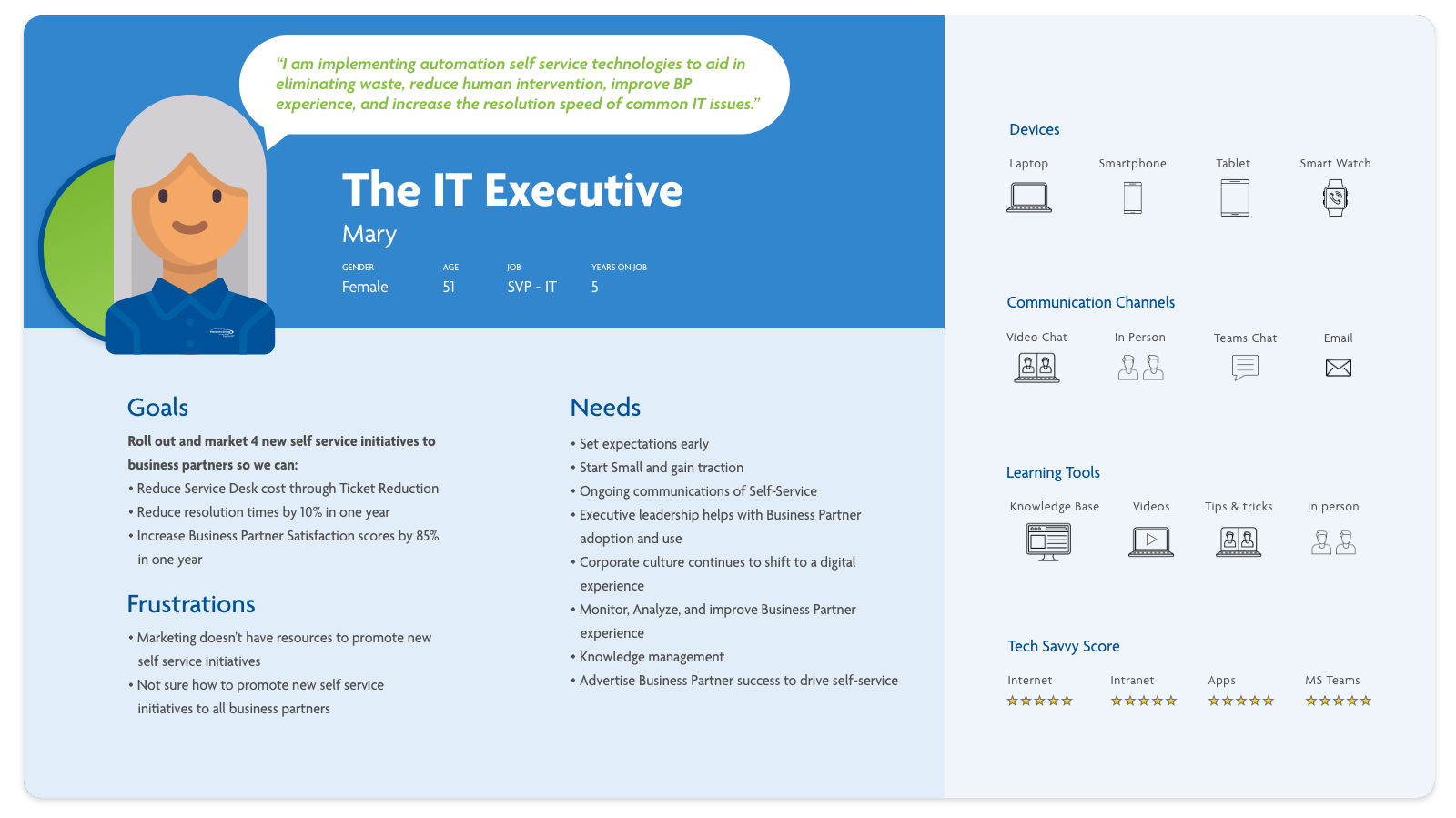
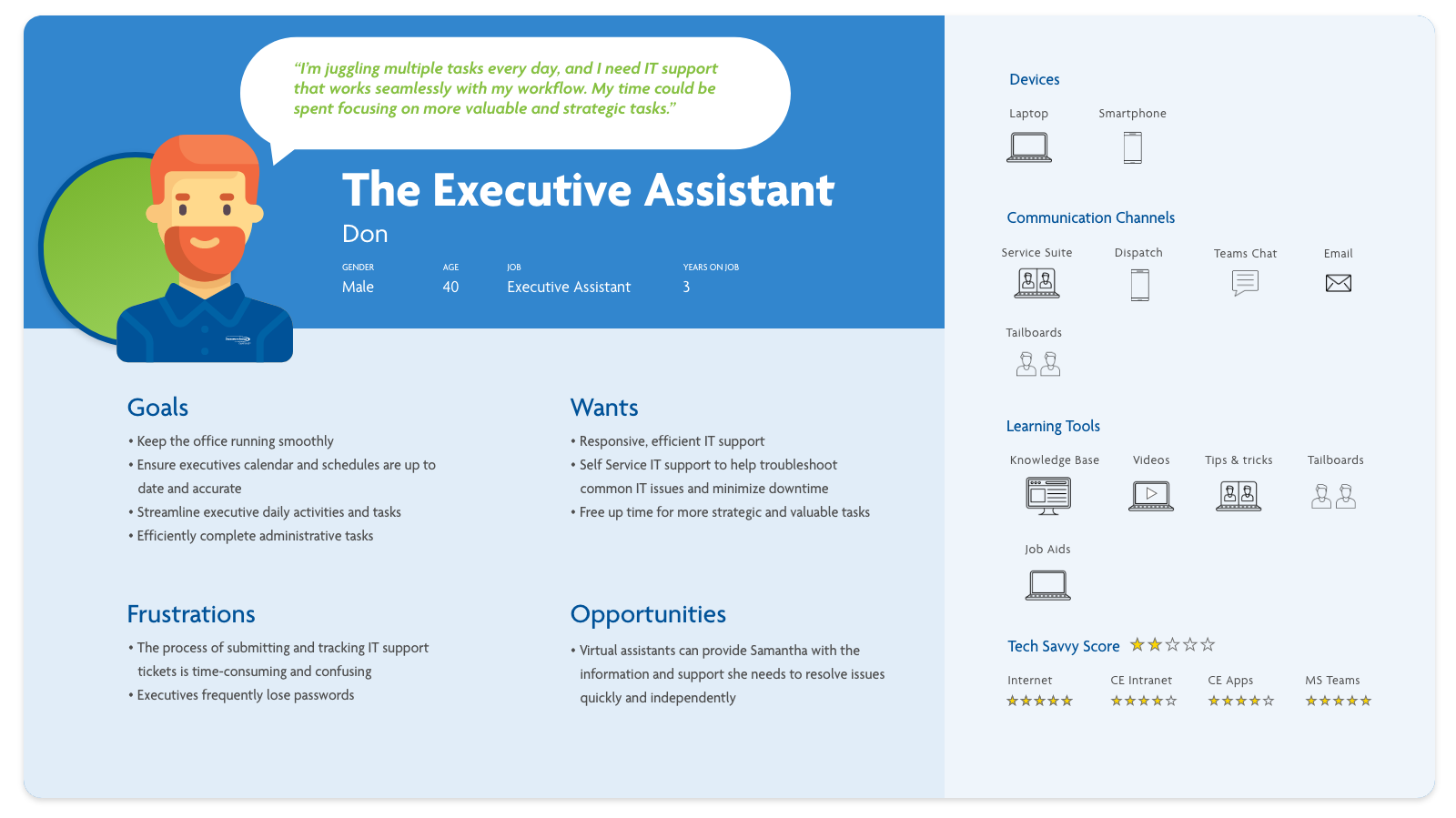
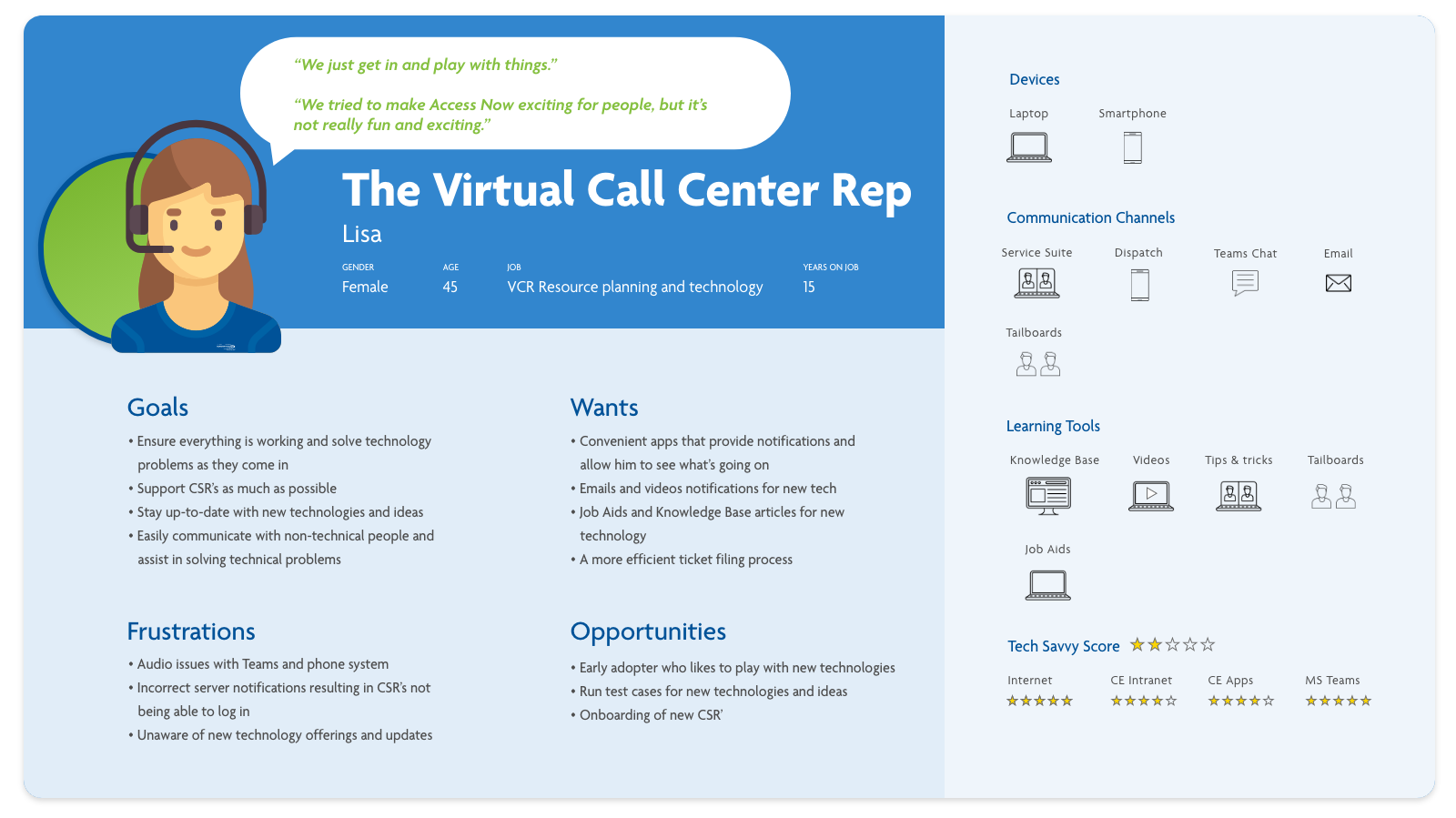
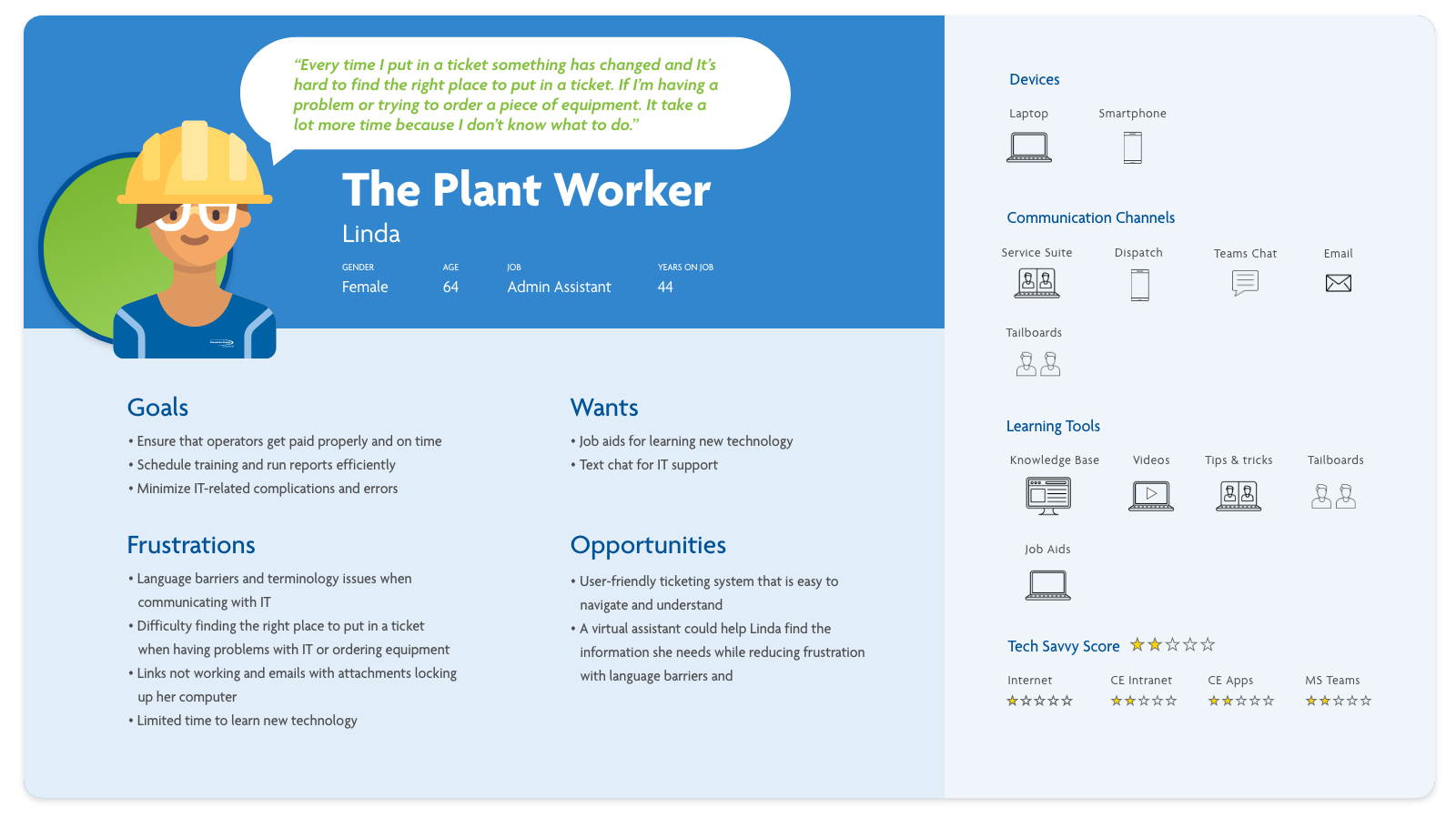
We developed a set of personas representing key business partner groups. We focused on learning their goals, frustrations, wants, needs, and potential opportunities, as well as specific details such as the devices they use and the channels they use to communicate with other business partner groups.
By understanding these aspects of the business partners' workdays, we were able to identify their pain points and create messaging that was specifically tailored to their needs and preferences. We also looked at the learning tools available to them and analyzed the communications regarding new technology releases in order to develop messaging that would be most effective in promoting the self-service initiatives.
The personas we developed helped us to build empathy for the business partner groups and to develop messaging that would resonate with them. By taking a user-centric approach to the marketing and messaging materials, we were able to create content that addressed their pain points, highlighted the benefits of the self-service initiatives, and ultimately led to increased adoption and success of the initiatives.
Business Partner Pain Points & Self-Service Benefit Matrix
As part of our UX design process, we developed a matrix to identify pain points that could be addressed by the self-service initiatives. By cross-referencing the pain points with the benefits of each initiative, we were able to determine which initiatives would address each pain point.
Using this information, we cataloged the benefits of each initiative and used them as the basis for developing content for the marketing materials. This approach ensured that the marketing materials effectively highlighted the benefits of the self-service initiatives and addressed the pain points identified during the research process. By doing so, we were able to create marketing materials that resonated with employees, improved their understanding of the self-service initiatives, and increased their willingness to use them.
Strategic Messaging Plan & Channel Selection
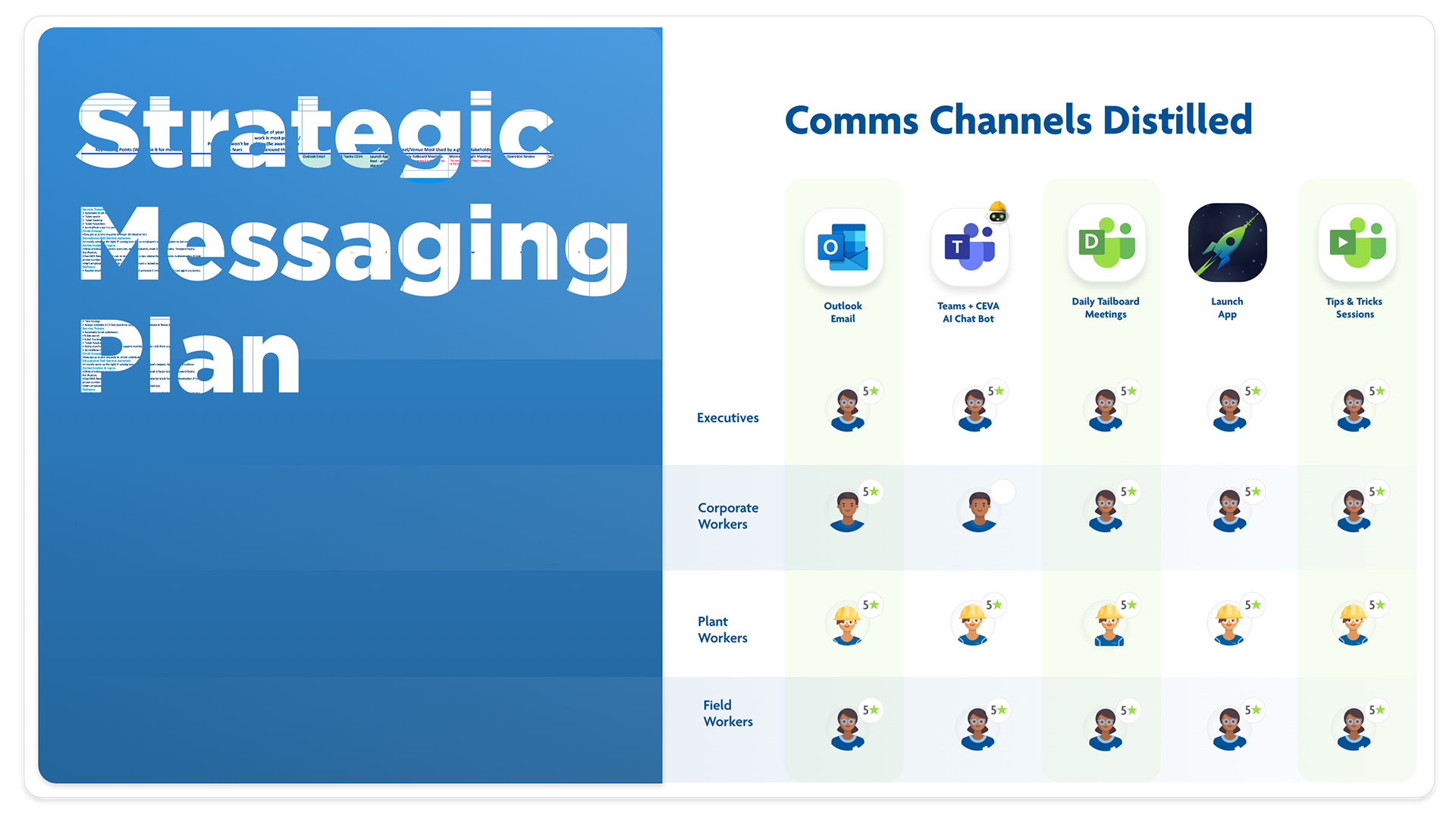
We conducted a communication channel analysis to determine the most effective channels for reaching each business partner group. To do this, we extrapolated communication channel data from business partner interviews and analyzed which channels were used most frequently throughout their daily journeys.
By identifying the channels that each group preferred to use, we were able to develop a messaging strategy that would effectively reach and resonate with each group. This approach allowed us to tailor our messaging and marketing materials to each business partner group's unique preferences, ensuring that they received information in a way that was most convenient and effective for them.
Marketing Materials
We took into consideration the various learning styles and access to communication channels among the business partner groups. We developed a plan to cascade messaging through a variety of channels, allowing the new initiative to be surfaced in a way that was most effective for each group.
We used a combination of channels such as on-premises posters, email blasts, MS Teams posts, and CEVA virtual assistant to reach business partners as we rolled out the campaign. We also leveraged the knowledge base, launch app, daily tailboard meetings, tips and tricks virtual learning sessions, and service now banners to promote the initiatives
By using a variety of channels, we were able to maximize organizational reach. This approach helped us to increase awareness and adoption of the self-service initiatives and ultimately drive success for the initiative.
Marketing Emails
Email content was created to target specific business partner groups in addition to the global campaign audience. Targeting specific groups allowed us to maximize the reach of the campaign.
Animations
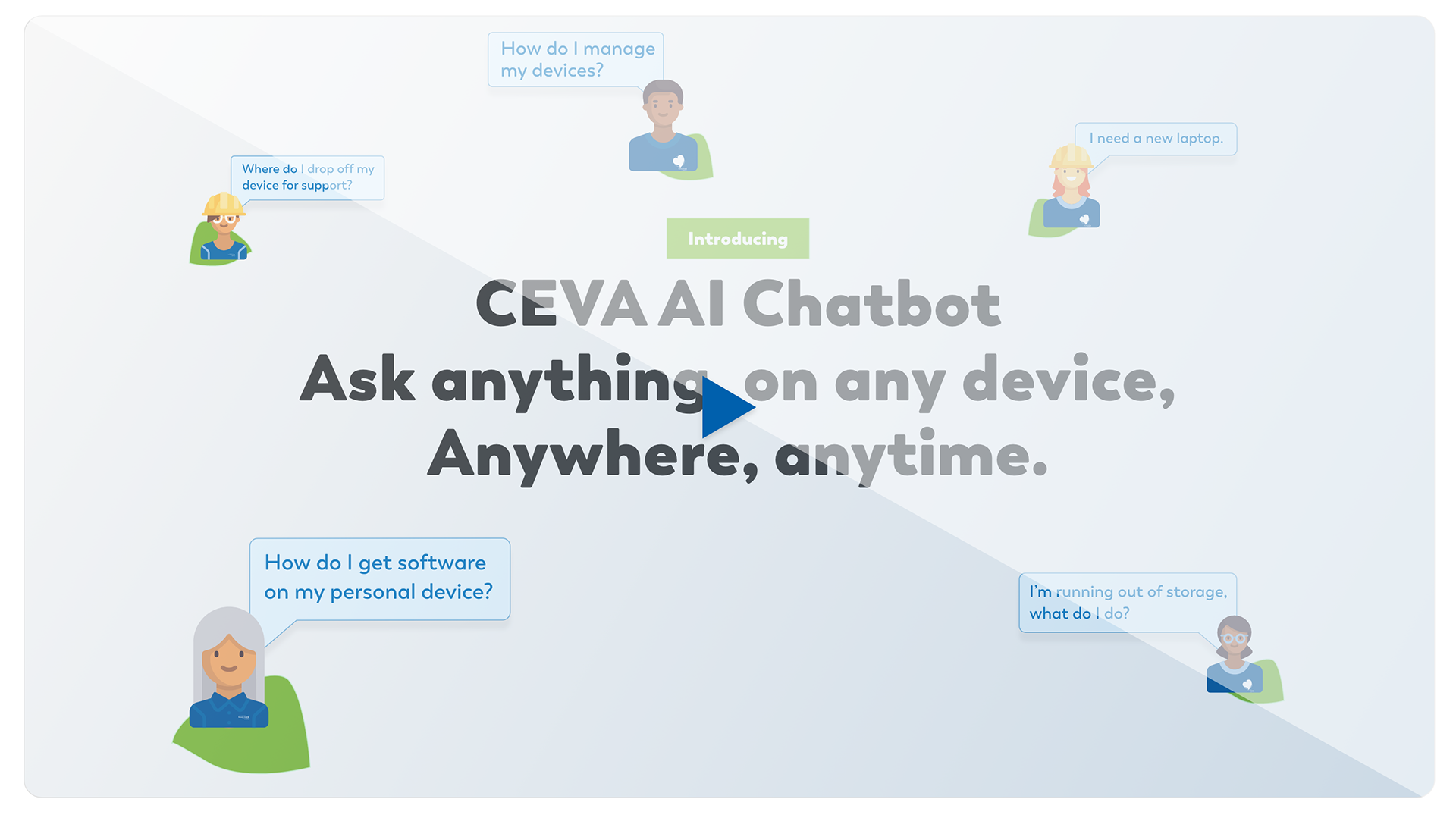
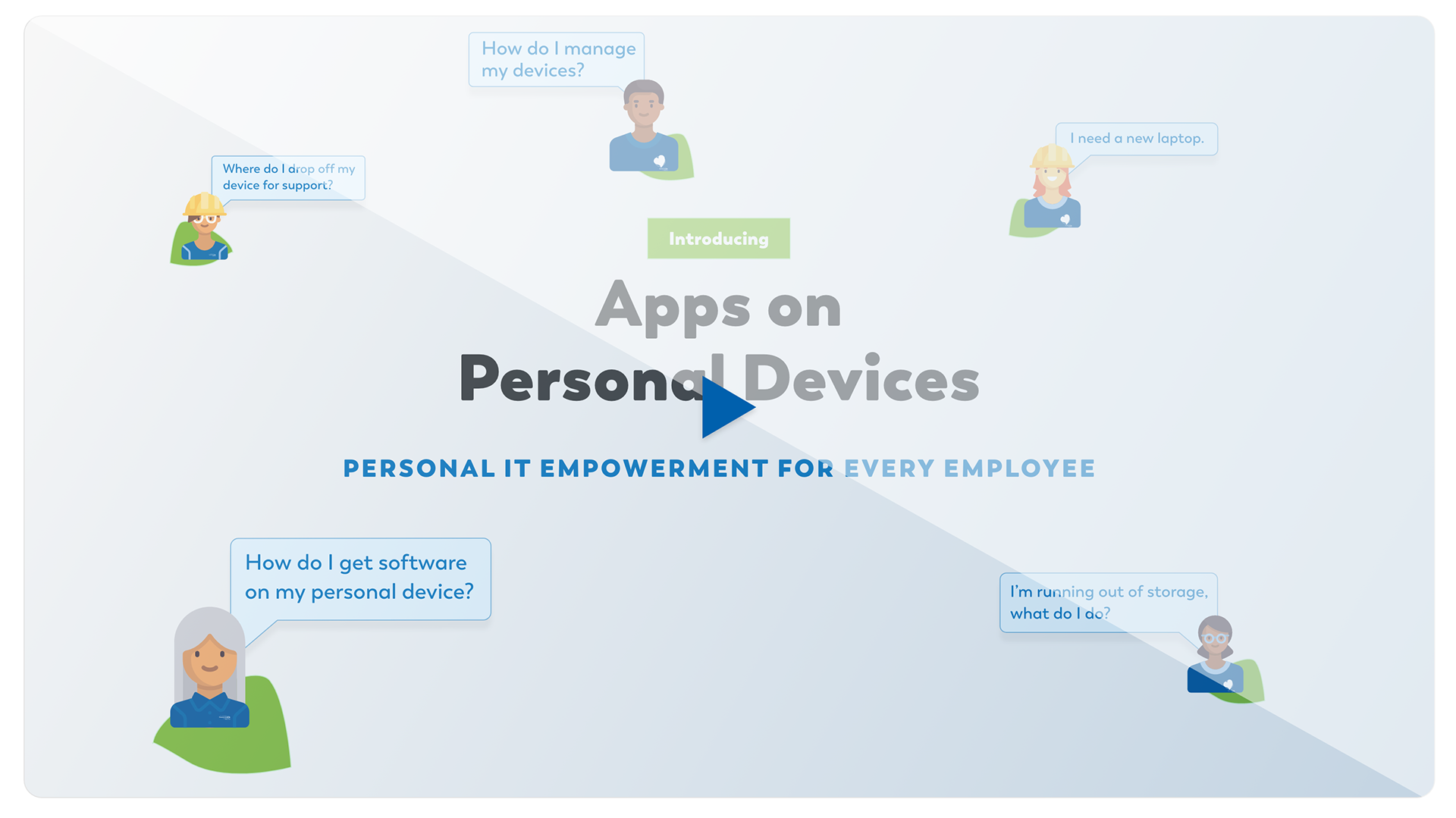
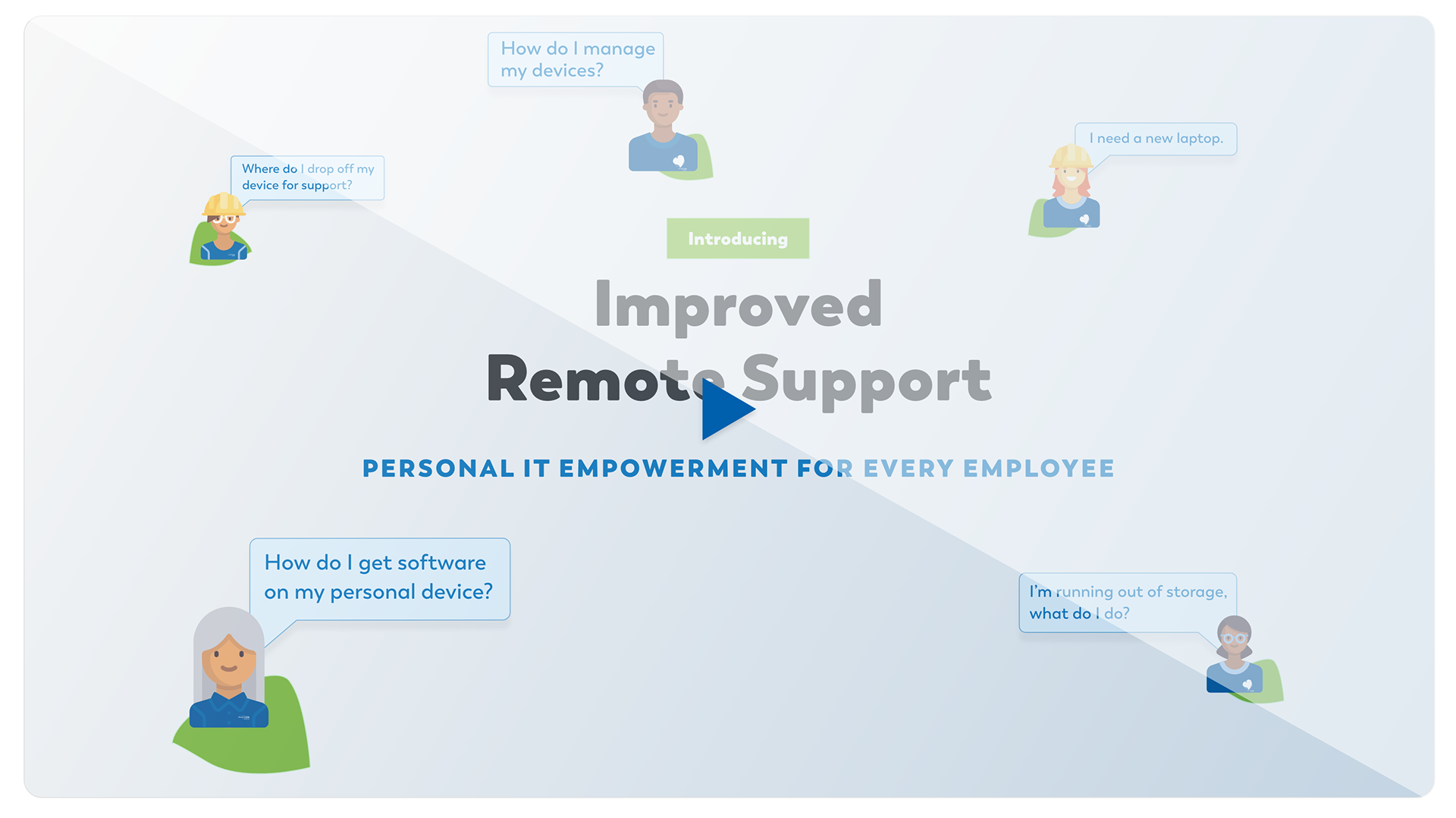
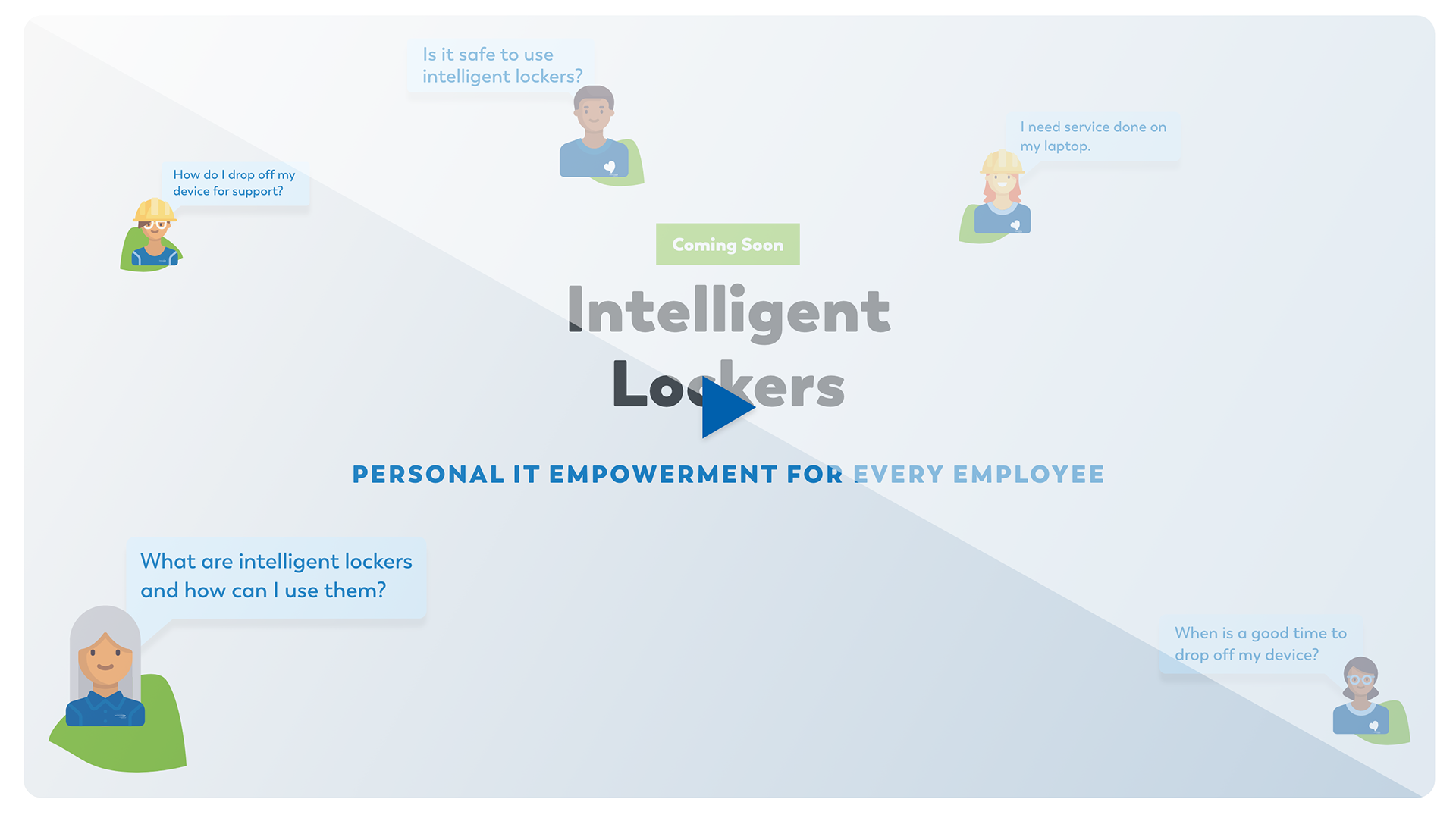
To aid business partners with different learning styles and create a consistent style for the campaign we created four short animations highlighting the feature benefits and educational information for each initiative. These animations were attached to emails, Pushed out to business partners in CEVA Teams posts, and attached to emails to maximize reach.
Posters
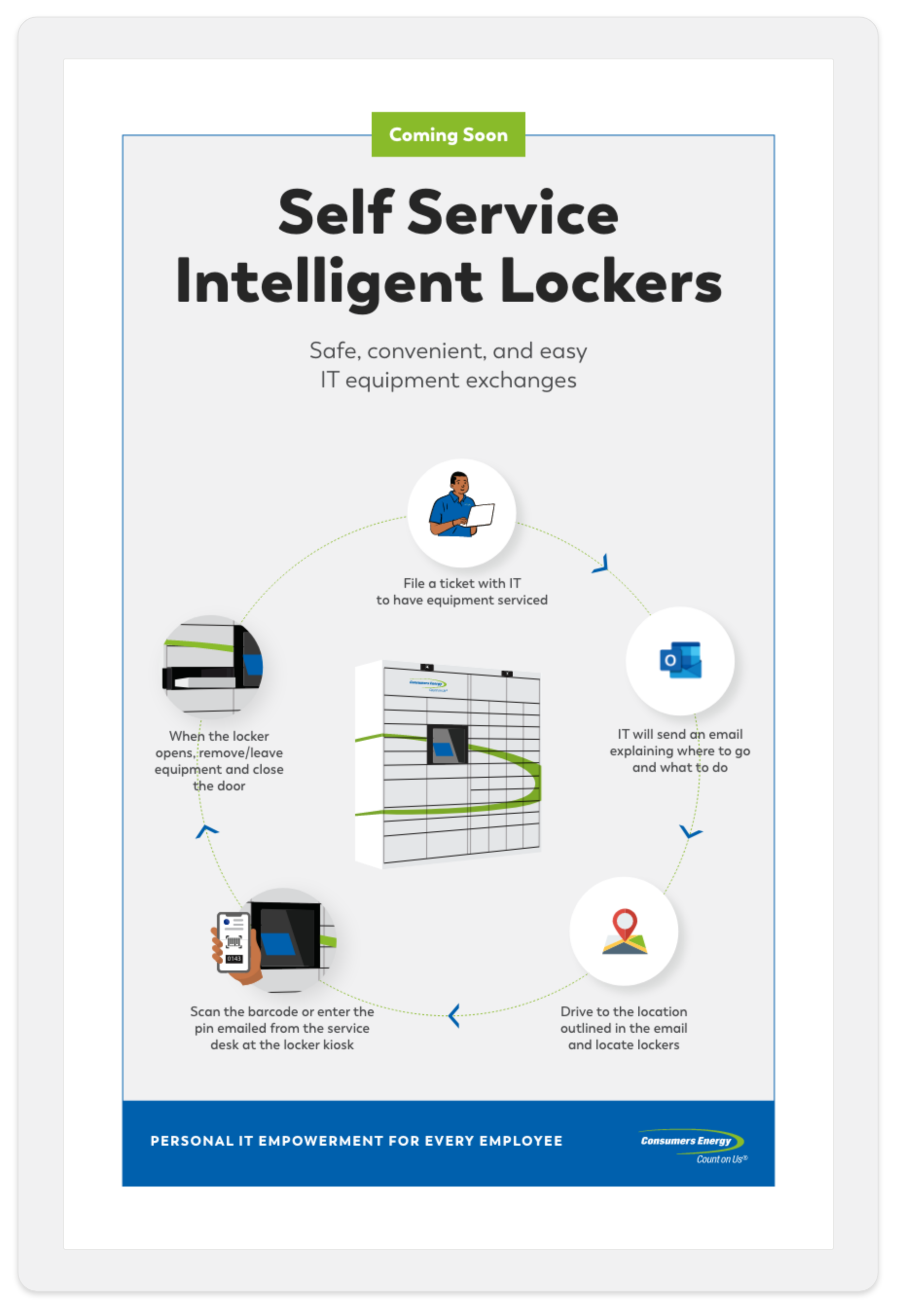
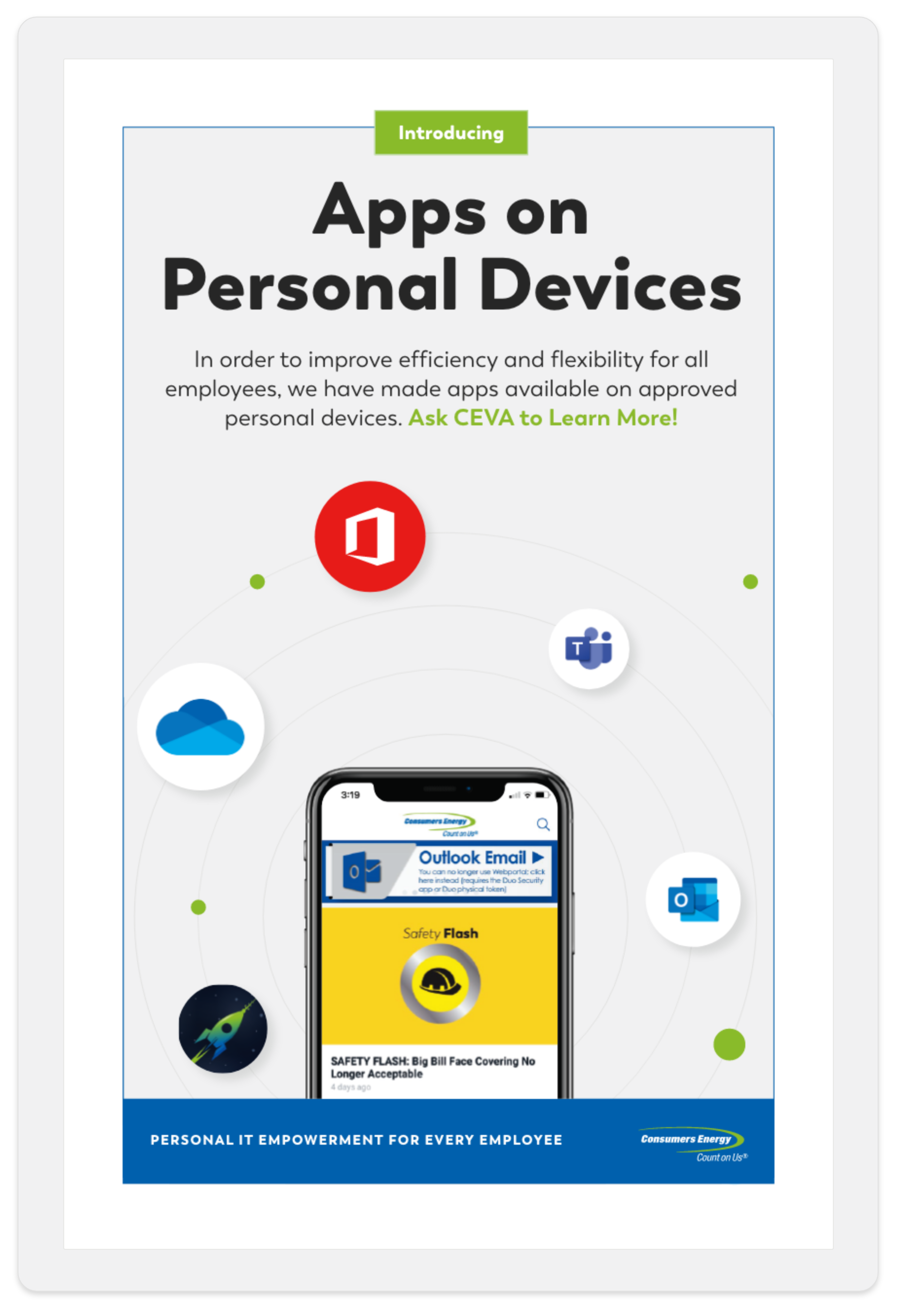
We developed a series of posters to be displayed in common areas at each area headquarters to raise awareness of the remote support and self-service initiatives with onsite business partners.
Strategic Communication Plan
While working through the development of campaign content we created our plan to roll out the campaign. We talked to internal stakeholders to determine optimal times to roll out the campaign throughout the end of the year to ensure communications would reach employee communication channels at optimal times.
Client Handoff & Asset Delivery
After organizing and packaging all of the assets I facilitated a meeting with clients to affirm they understood the campaign rollout strategy and communication plan. Clients took all of the email, design, and animated assets and successfully implemented the communication strategy in the allotted time frame. To ensure market saturation I designed a secondary rollout to take place after the holiday season.
Additional Insights & Opportunities
Throughout the discovery phase of the engagement, several insights pointing toward additional client opportunities and potential needs were identified. During the analysis of discovery materials, I tagged each of the data points and prepared a deck, and presented the additional opportunities to our client stakeholders. Many of the opportunities pinpointed were unknown to stakeholders and resulted in further discovery work and additional engagements within the client's organization.