Engagement Overview
Our team was brought in to consult on the ground-up redesign of the 20-year-old Ally SmartAuction vehicle remarketing product platform. The project required us to introduce a new technology architecture and infrastructure and set up a dev ops system to manage cross-functional team workflows. Our team also introduced a dual-track agile development process, pair programming, design thinking, and test-driven development, to transform the SmartAuction product team.
As part of the redesign process, our team worked closely with Ally's in-house UX and Product Design teams. We paired with them to supplement their discovery efforts, research cycles, product design, user testing, beta testing, and innovation efforts. This collaboration helped to uplift the product managers, product owners, and cross-functional team members by coaching them on the best practices for scoping a product MVP to meet the needs of the end users. Our team also helped build a product roadmap that facilitated a healthy prioritized product backlog.
The outcome of our work was a completely revamped SmartAuction platform that delivered an enhanced user experience and better functionality. The platform was built to actualize the goals and business requirements set forth by our Ally business partners by focusing on the needs of the product's end users. With the new architecture and workflows in place, the Ally SmartAuction team was able to work more efficiently and deliver more value to their customers.
UX Team Leads: Josh Ribola, Ryan McCarthy
UX Research: Gretchen Mcnely, Sarah Adams, Rachel Krasnik, Ryan McCarthy
Product Design: Ryan McCarthy, Steve Hayes, Rachel Krasnik, Jason Howley
My Roles
Throughout the 19-month engagement, I played many roles in the ground-up redesign of the 20-year-old Ally SmartAuction vehicle remarketing platform. Initially, I was brought in as a Senior Digital Experience Consultant to contribute to the discovery phase and support the Ally in-house design team's research and feature design efforts. As the team scaled, I facilitated onboarding new team members by organizing product and process documentation to ensure they could quickly get up to speed.
In addition, I contributed to and supported user research efforts to identify key end-user types, pain points, needs, and wants. I facilitated and participated in user research to identify opportunities, daily tasks, and products outside of the Ally ecosystem used to complete daily work. We worked in a dual-track agile workflow, designing, reviewing, user testing, and iterating on new product features to ensure our work was in line with business goals and meeting the needs of end-users.
When our cross-functional team struggled to maintain a focused direction due to architectural changes and pivots in product direction, I stepped into a product coaching role. I facilitated sessions with the Ally product management team to reframe the product value story to support new business goals and end-users needs. I then coached the product team on best practices for building a roadmap and healthy product backlog, which resulted in full team directional alignment, a now-near-far product roadmap, a healthy backlog, and increased cross-functional performance and productivity.
As the engagement progressed, I was asked to step into the role of Digital Experience Team Leader, where I continued to work closely with key client stakeholders and cross-functional team members to ensure all facets of the digital experience were on track. Finally, I facilitated digital experience innovation sessions focused on vehicle posting and led a team that conducted several rounds of contextual inquiry with dealerships to unpack all facets of grounding, inspecting, and posting vehicles. Overall, my varied roles throughout the engagement played a critical part in its successful completion.
Engagement Problem Statement
Ally SmartAuction has been losing market share to competitors who have employed modern technology solutions, methodologies, and human-centered design practices to gain a foothold in the digital vehicle remarking space. As a market leader for over 20 years, SmartAuction has seen a decline in its market share as its competitors continue to innovate and improve their product offerings. To regain ground and maintain its position as a market leader, SmartAuction must adapt and embrace modern technology solutions, methodologies, and human-centered design practices.
Success Criteria
• Design and implement a scalable modern product technology infrastructure, development pipeline, and dev ops
• Embrace human-centered design methodologies to foster innovation and create a scalable next-generation, white-label product
experience
• Increase user satisfaction and delight by regularly releasing updates and new features that reduce user friction and enhance the
SmartAuction product experience
• Mitigate user abandonment, the loss of market share and begin regaining lost ground
Discovery
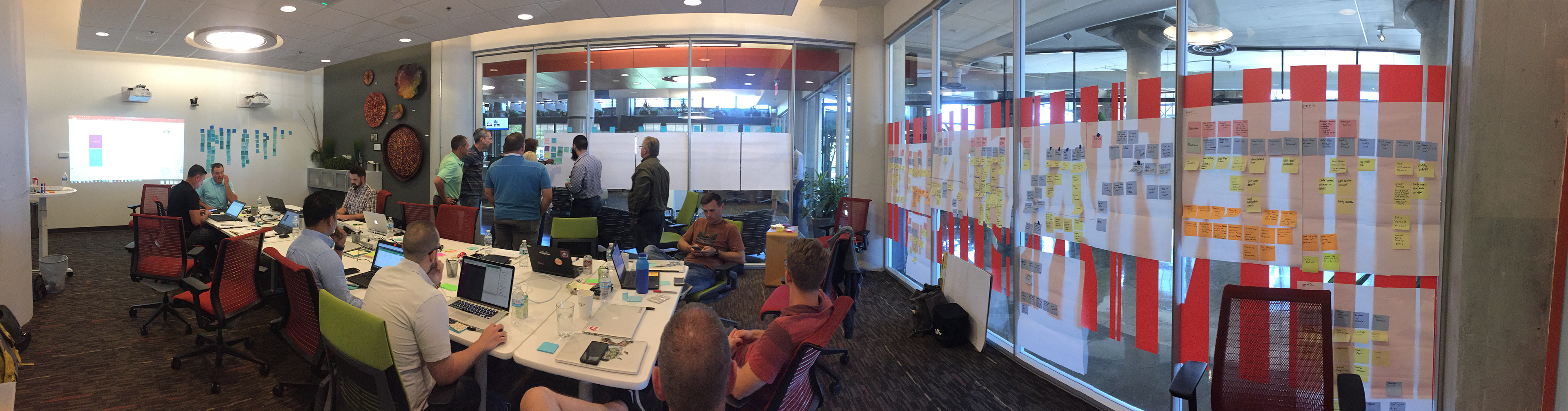
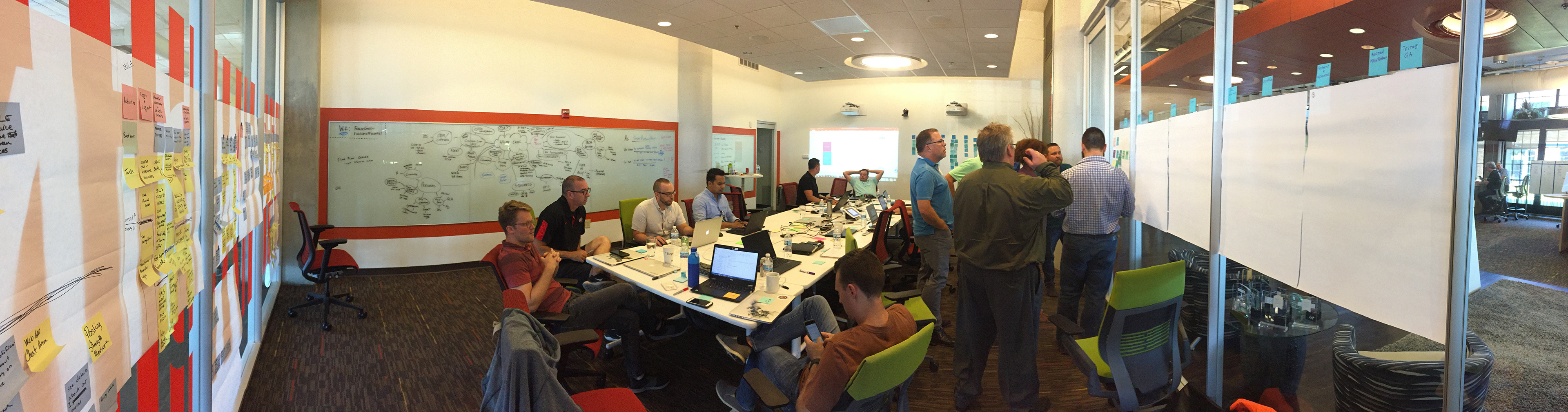
Our team scheduled a week of time-boxed discovery sessions with client stakeholders and cross-functional team members, designed to understand and align the goals of the engagement. At the end of the week, we completed a full team immersion and created a product roadmap and MVP for the next-generation SmartAuction product platform.
Sessions breakdown:
• Problem Definition
• Value Statement Creation
• State of the product immersion
• Persona and user overview
• New product vision and design immersion
• Review of current product epics and features
• Next-generation product story mapping, epics, and
• Value Statement Creation
• State of the product immersion
• Persona and user overview
• New product vision and design immersion
• Review of current product epics and features
• Next-generation product story mapping, epics, and
feature alignment
• MVP Alignment and roadmap prioritization
• MVP Alignment and roadmap prioritization
Digital Experience Research Kick-off
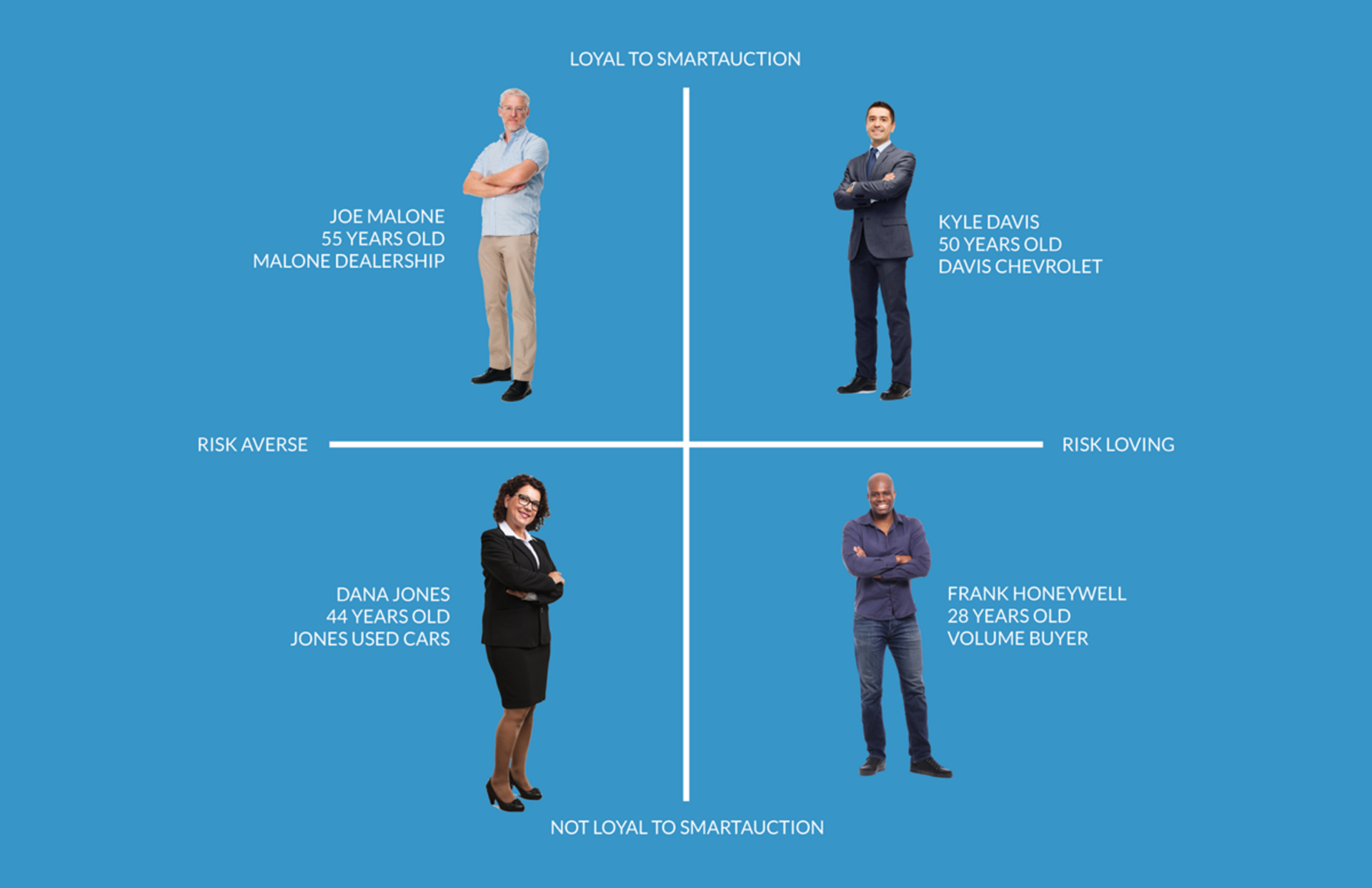
Following the initial phase of discovery, our team embarked on a user research effort by conducting in-depth interviews with a diverse group of car dealerships of varying sizes to better comprehend the utilization of the SmartAuction Platform across the industry. As a result of this research, several distinct themes have emerged, particularly concerning dealer size, lot volume, and product movement frequency. We have identified these themes as "Net Casters" and "Line Droppers."
The "Net Casters" are dealerships that seek a diverse range of vehicles and purchase multiple vehicles at once to maintain a fully-stocked inventory. Conversely, "Line Droppers" are typically smaller family-owned lots and dealerships that leverage the product to source unique vehicles for individual customers, or procure vehicles in small quantities, often one or two at a time.
User Persona Evolution
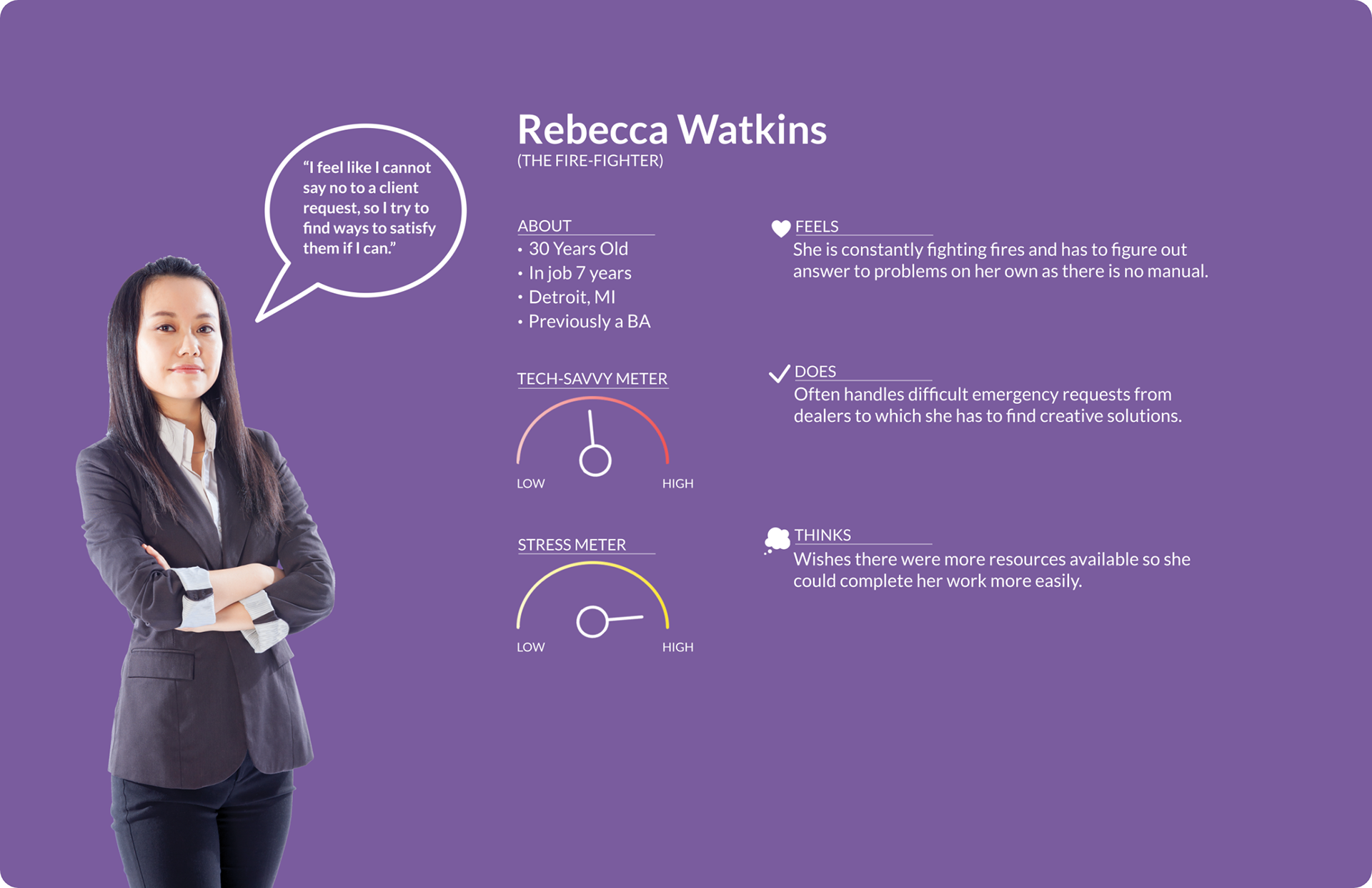
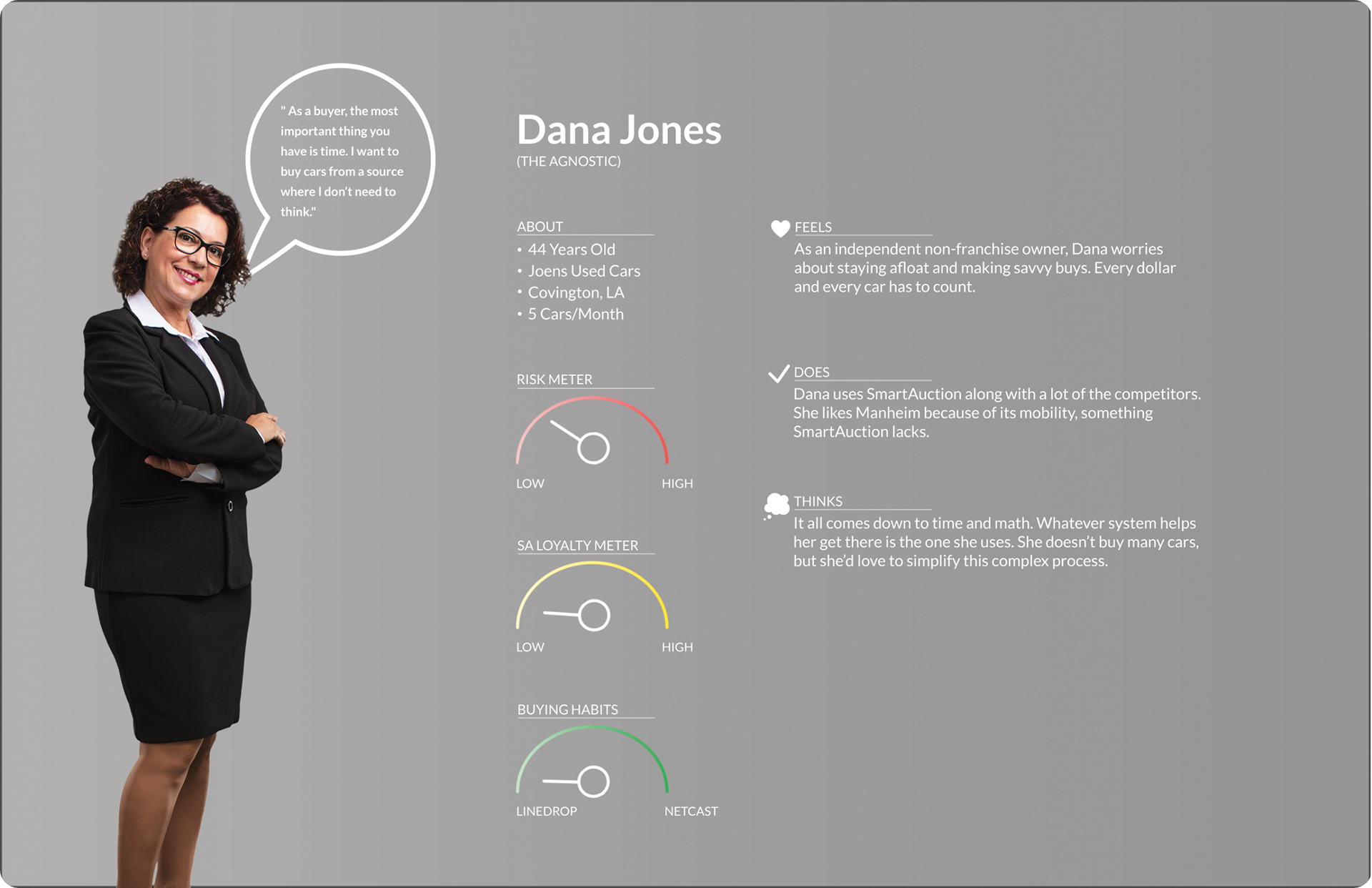
After unpacking industry use cases for the SmartAuction product we created evolutions of the initial personas. We continued to evolve the personas as we conducted additional research throughout the engagement and added new personas as we encountered important edge cases and user groups that had been previously unidentified.
Persona Matrix
Rebecca Watkins (The Firefighter)
Dana Jones (The Agnostic)
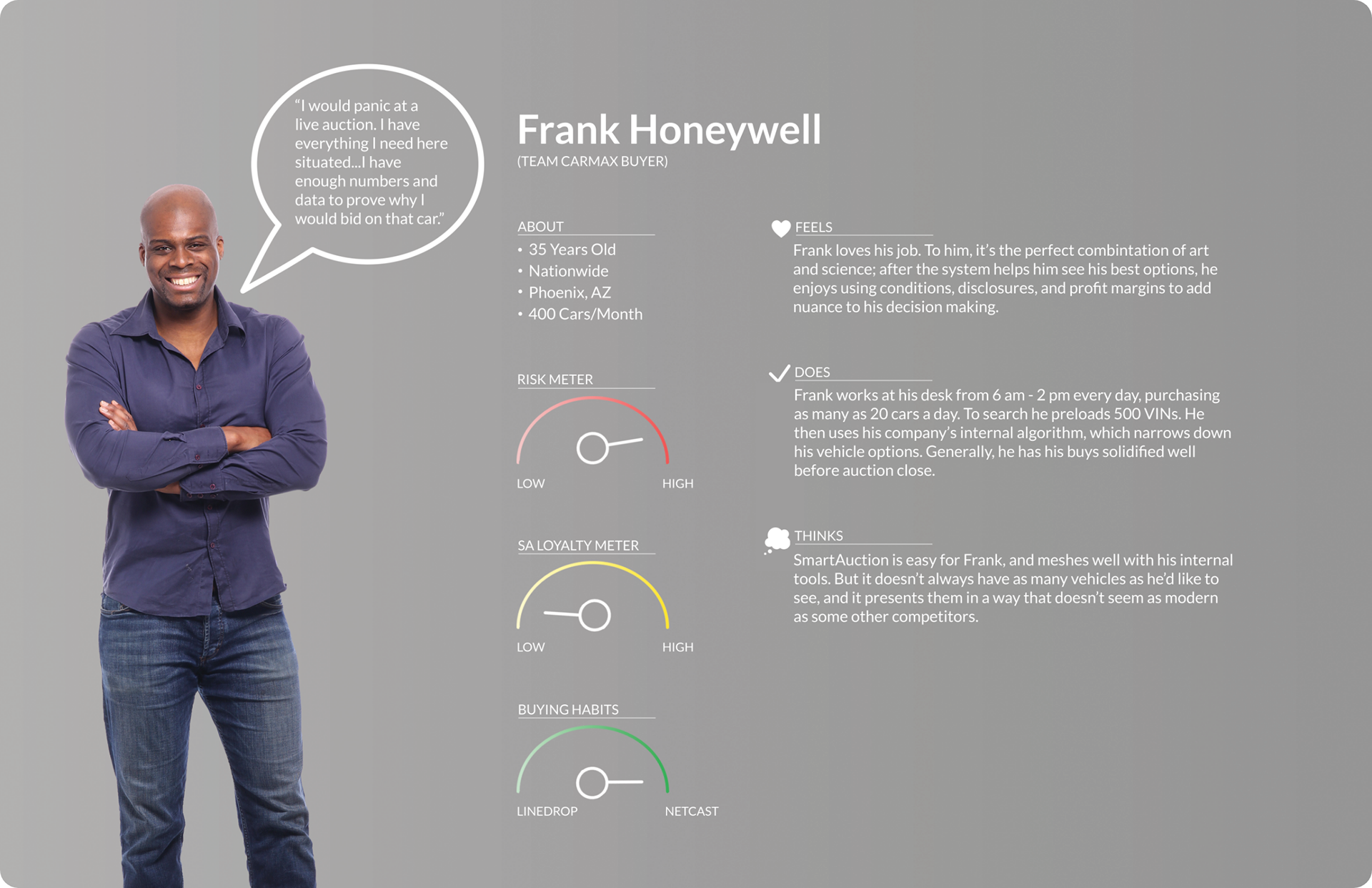
Frank Honeywell (The Volume Buyer)
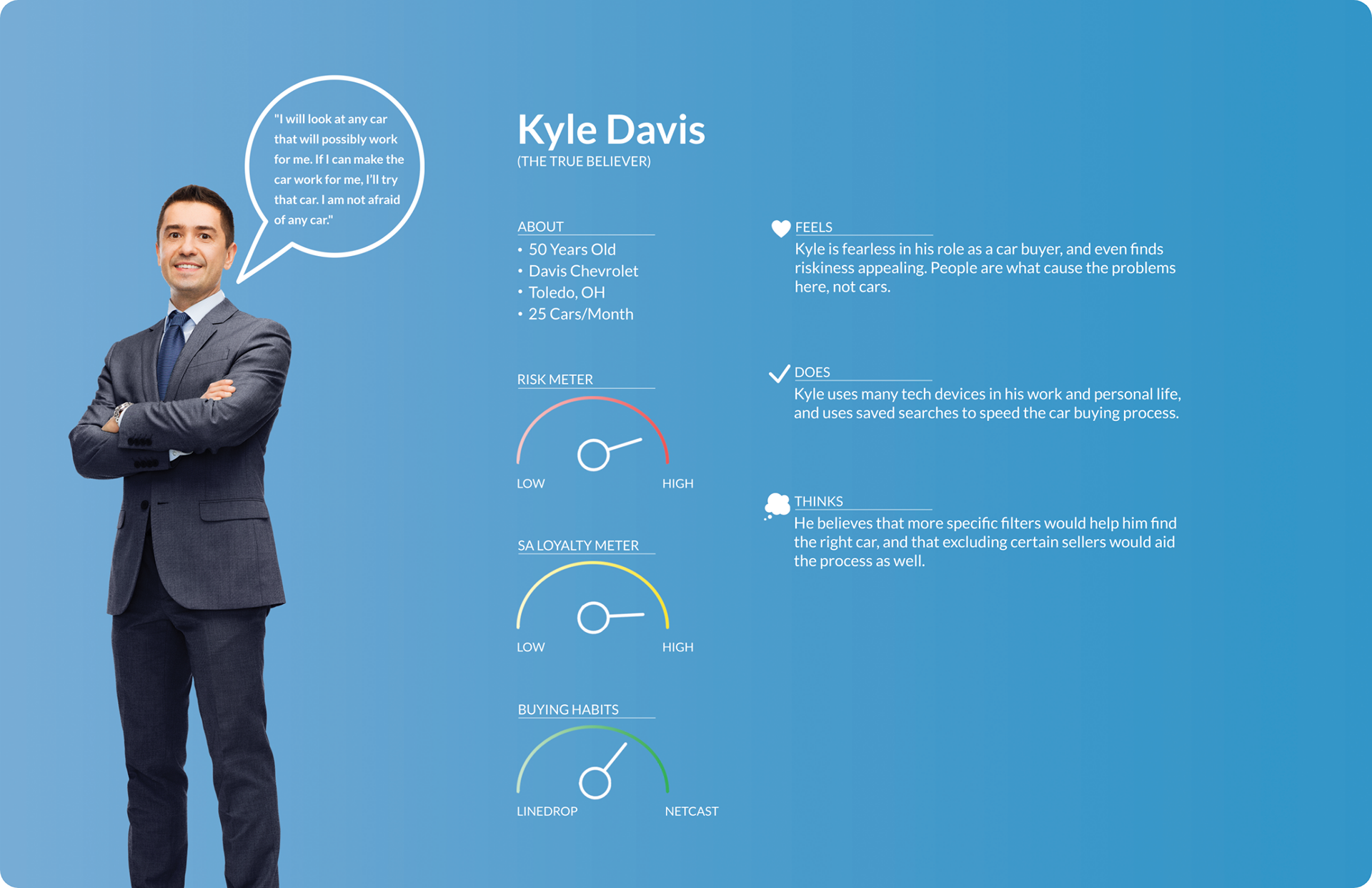
Kyle Davis (The True Believer)
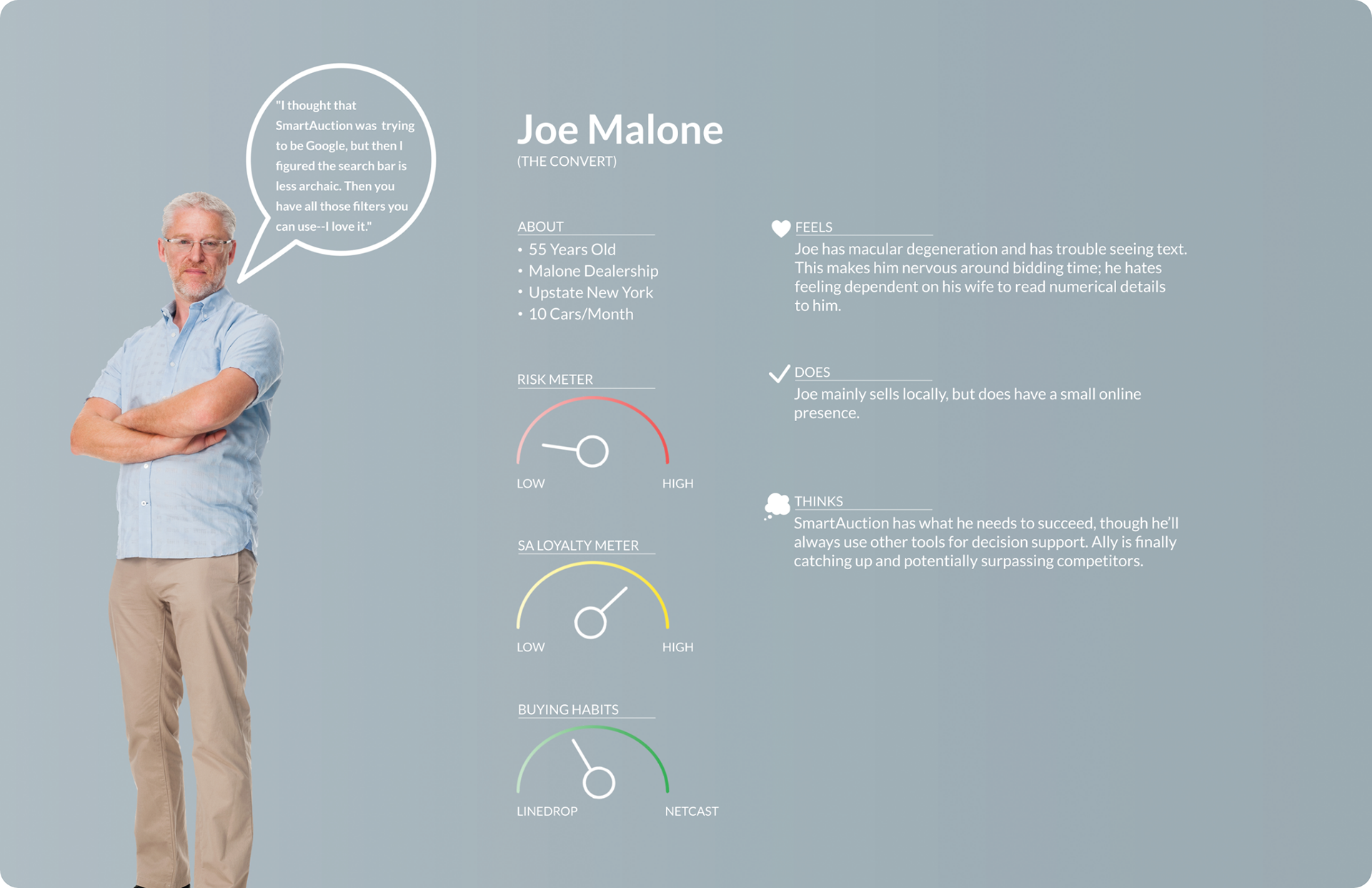
Joe Malone (The Convert)
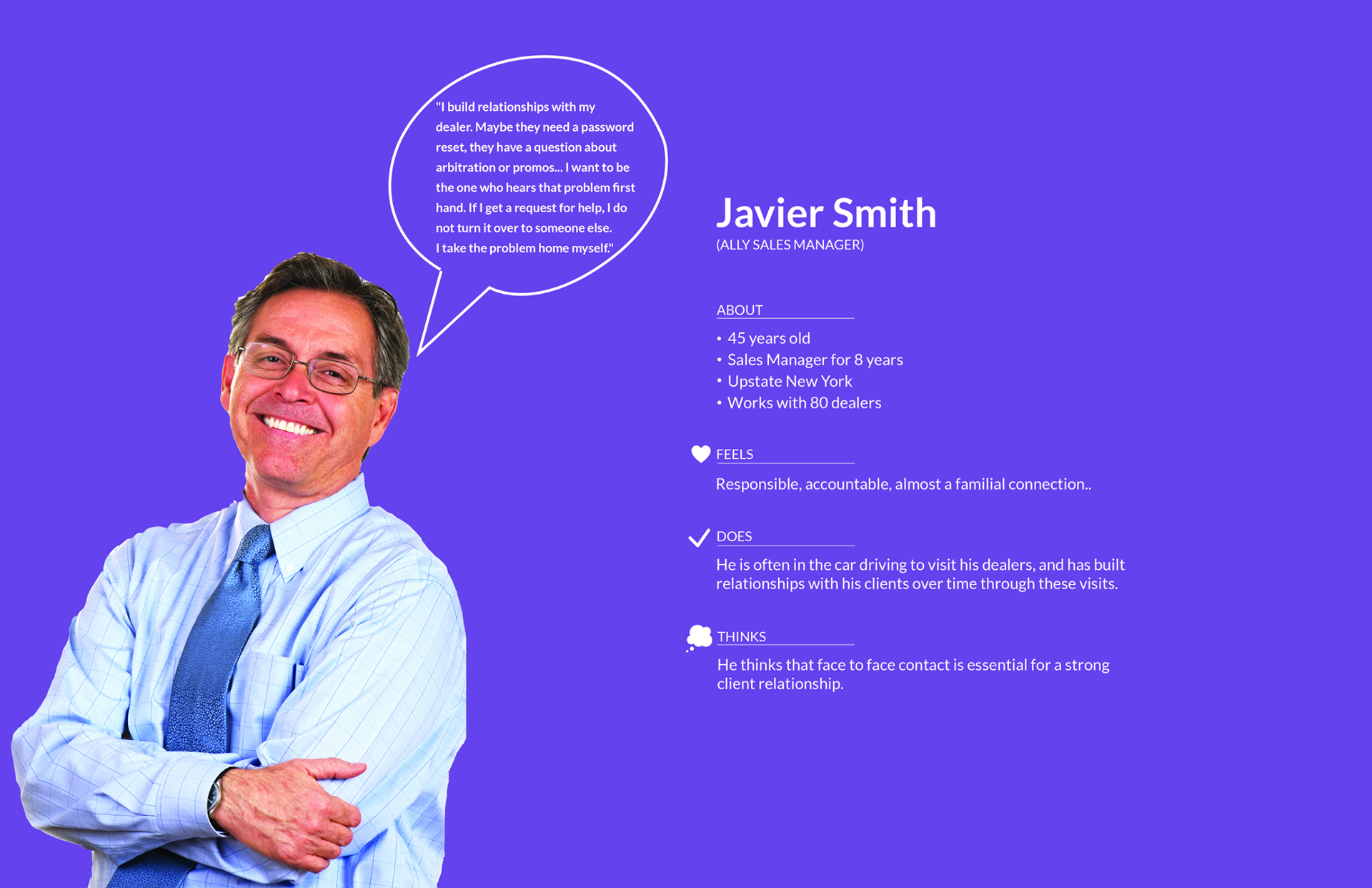
Javier Smith (Ally Sales Manager)
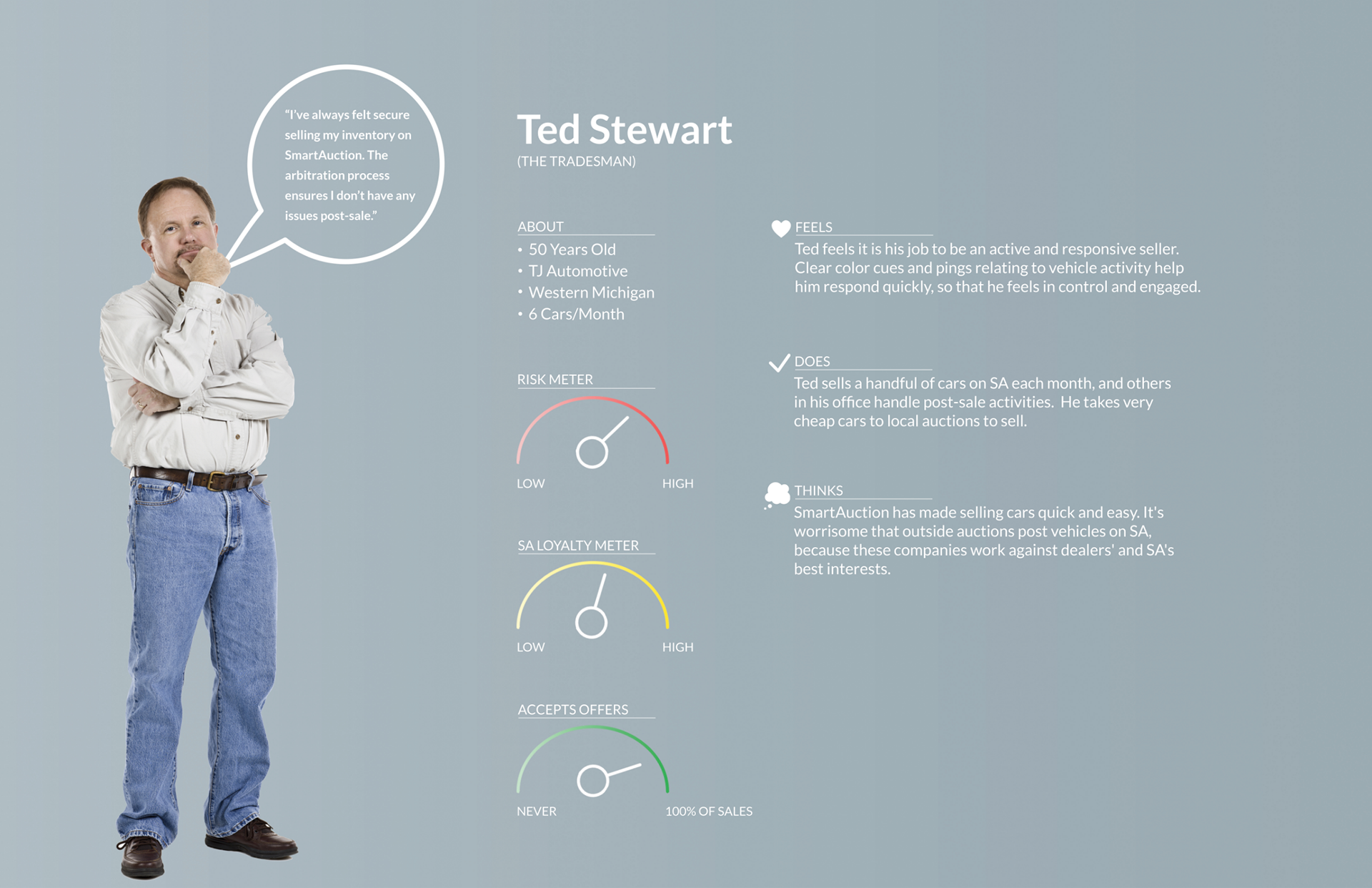
Ted Stewart (The Tradesman)
Feature-Specific User Research Planning and Schedules
Using our prioritized feature roadmap we developed research plans to learn how our user types were using SmartAuction features. We developed research plans for individual features based on their level of importance to the product, user demand, and complexity within the product ecosystem. Throughout the entirety of the engagement, we produced 19 presentations highlighting our findings, insights, and opportunities.
To conduct our research we utilized a variety of research methodologies to facilitate learning about the market landscape, competitive products, SmartAuction, users, and user processes, to iterattilvey test the design of new features.
Research Methodologies:
• Stakeholder interviews
• User Interviews
• Contextual Inquiry
• Ethnography
• Market Research
• Secondary Research
• User Testing Prototypes
• User Journey mapping
• Card Sorts
Research Overview
Our team conducted 19 research initiatives throughout the SmartAuction engagement.
8.18 Usability Testing: Search:
Early exploration of challenges and opportunities around a shift to keyword search 08.18 Search Trends: Secondary Source Findings Review of behaviors and trends that define Search today, including a glossary of terms
8.18 Approaches to Search:
Competitors We explored competitor approaches to search
10.18 Coach Marks:
The initial proposal for the Remarketing Platforms user onboarding tool
11.18 Search & Moblie Prototype:
Concept and usability testing for search behavior. End to end Mobile prototype testing
11.18 Volume Buyers:
Contextual inquiries with volume buyers. End-to-end testing with volume buyers
12.18 Small Independent Dealership:
Mobile and Desktop Testing Mobile end-to-end and desktop (Bid confirmation, Bidlist Views, Shipping, Coach marks) testing with small independent dealerships
08.19 Beta Launch:
Review with 5 dealers in Southeastern Michigan
2.19 Desktop Remote Testing:
Remote desktop testing of bid list A/B, Buy Now, Help Content
2.19. Admin Research Report: Detroit, MI:
Contextual inquiry with Detroit admins
2.19 Admin Research Report:
Lewisville TX Contextual Inquiry with Platform admins in Lewisville, TX and Detroit MI
4.19 White Label Research:
Preliminary interviews and contextual inquiry for white Label client
5.19 Sell Journey:
Report on interviews and usability testing for sell journey
6.19 Search:
Desktop and mobile testing of Search using the production site
7.19 Posting Research:
competitive analysis, contextual inquiry, interviews on posting, Dana Journey Map
8.18 Posting Concepts Presentation:
Presentation of collaborative posting app, including initial designs
9.19 Posting Research round 3:
Concept verification through contextual inquiry, journey mapping, persona development
10.19 Posting Prototype Testing and Research:
Interviews and testing with Axure Prototype: Platform Sales Manager, Reconditioning Manager, Dealer, Platform Ambassador Company
Product Features Redesign
We researched, tested, and utilized an iterative design process to ensure the new SmartAuction experience aligned with business goals and met the needs of our end users. Our team redesigned the entire product and interaction designs for the admin journey, user sign-up, the path to purchase journey, and post-purchase actions. While designing the experience we utilized the Ally design system to ensure the new product would align with the current brand and accessibility design standards. When needed we updated design patterns to make the user experience more intuitive and responsive to support a new mobile design experience.
Key Product Features
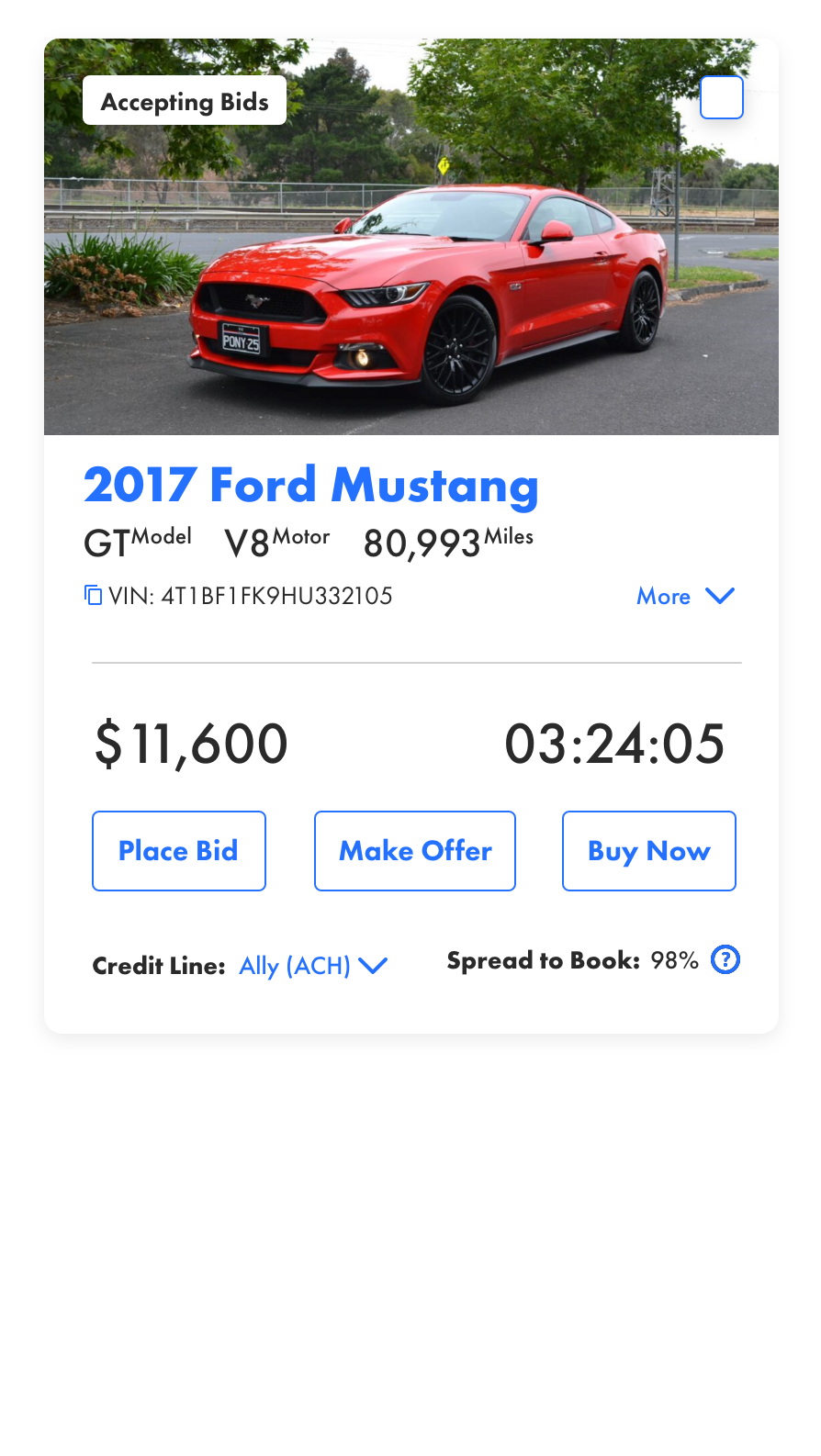
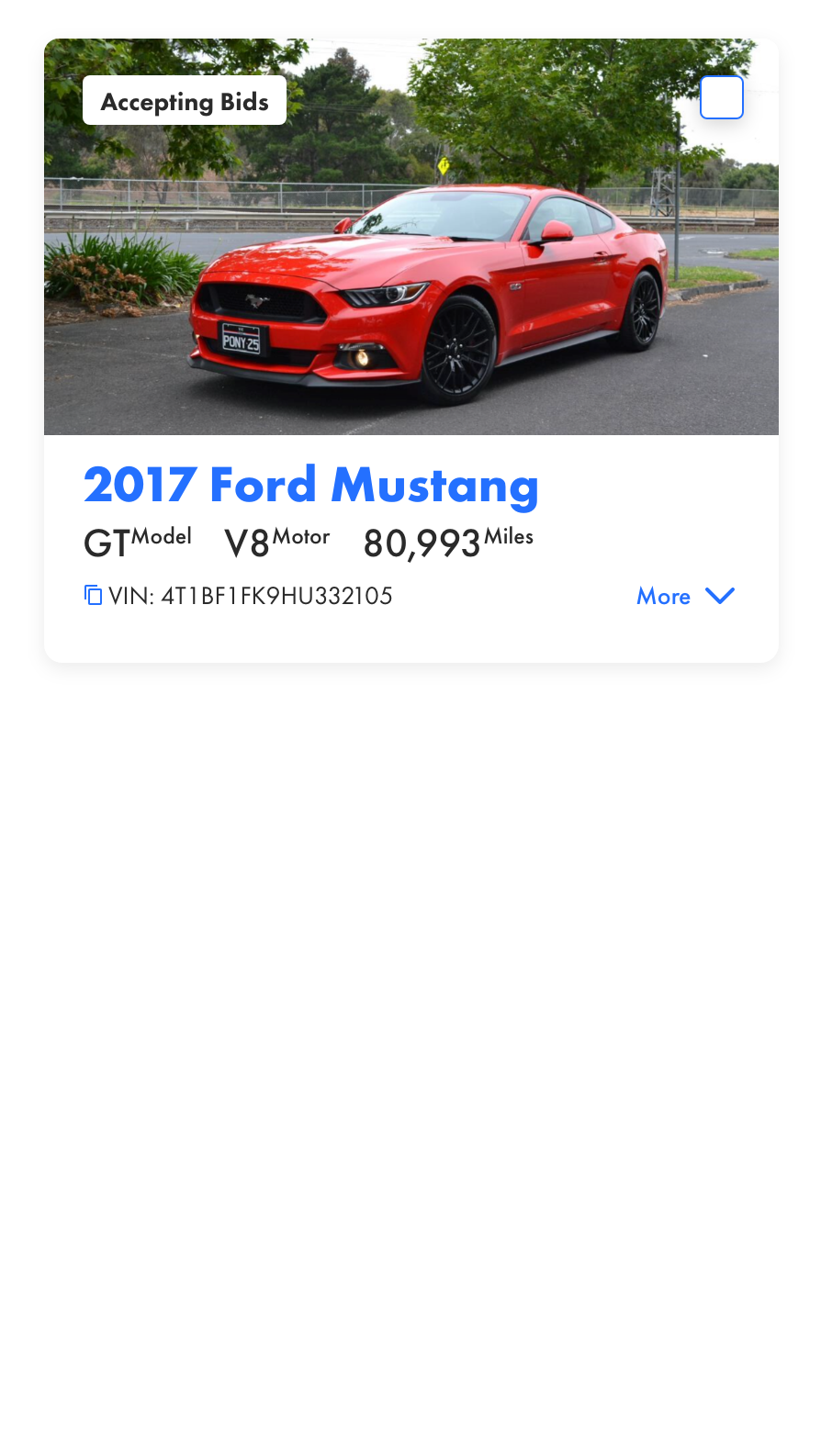
Vehicle Auction Cards
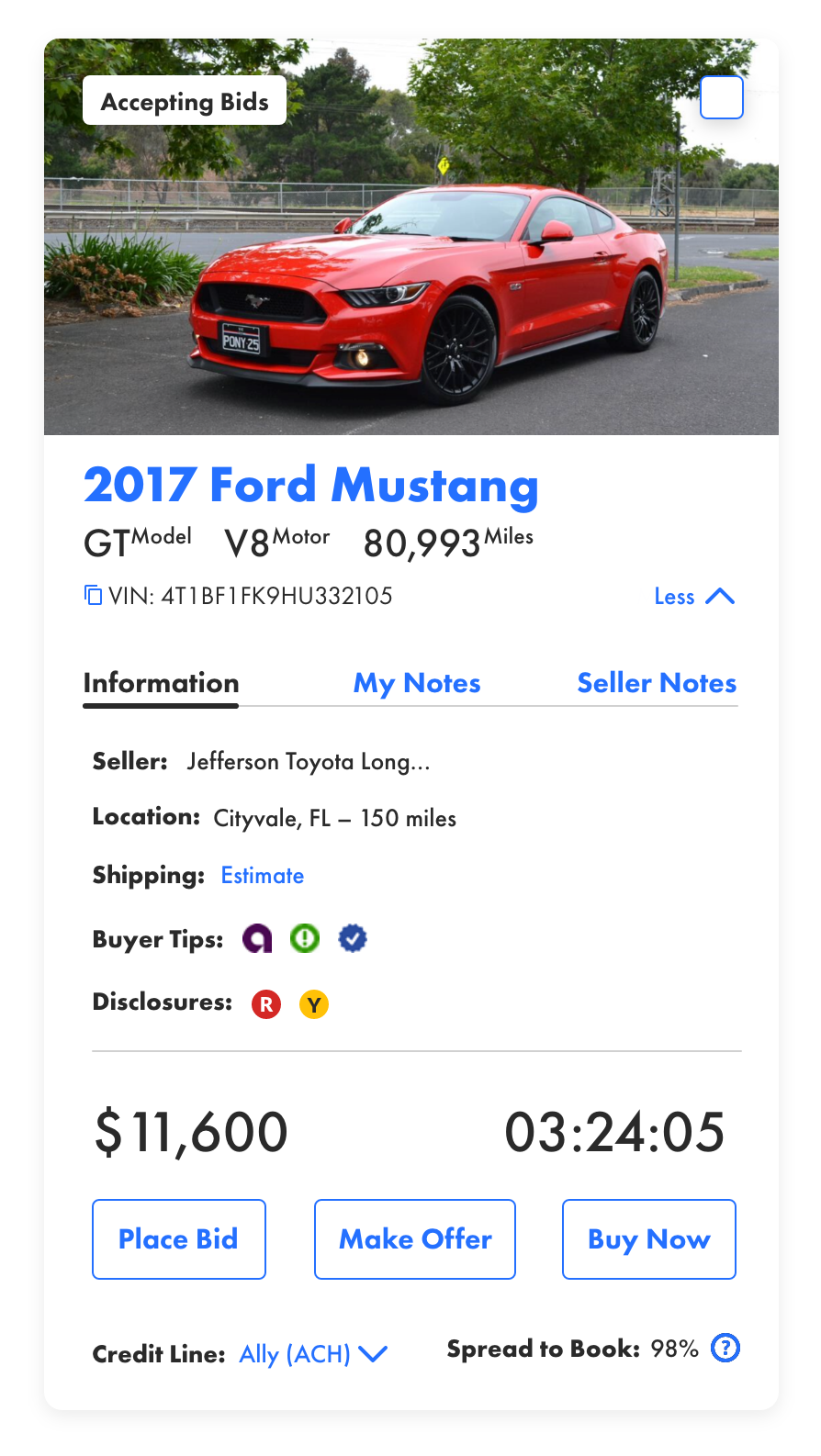
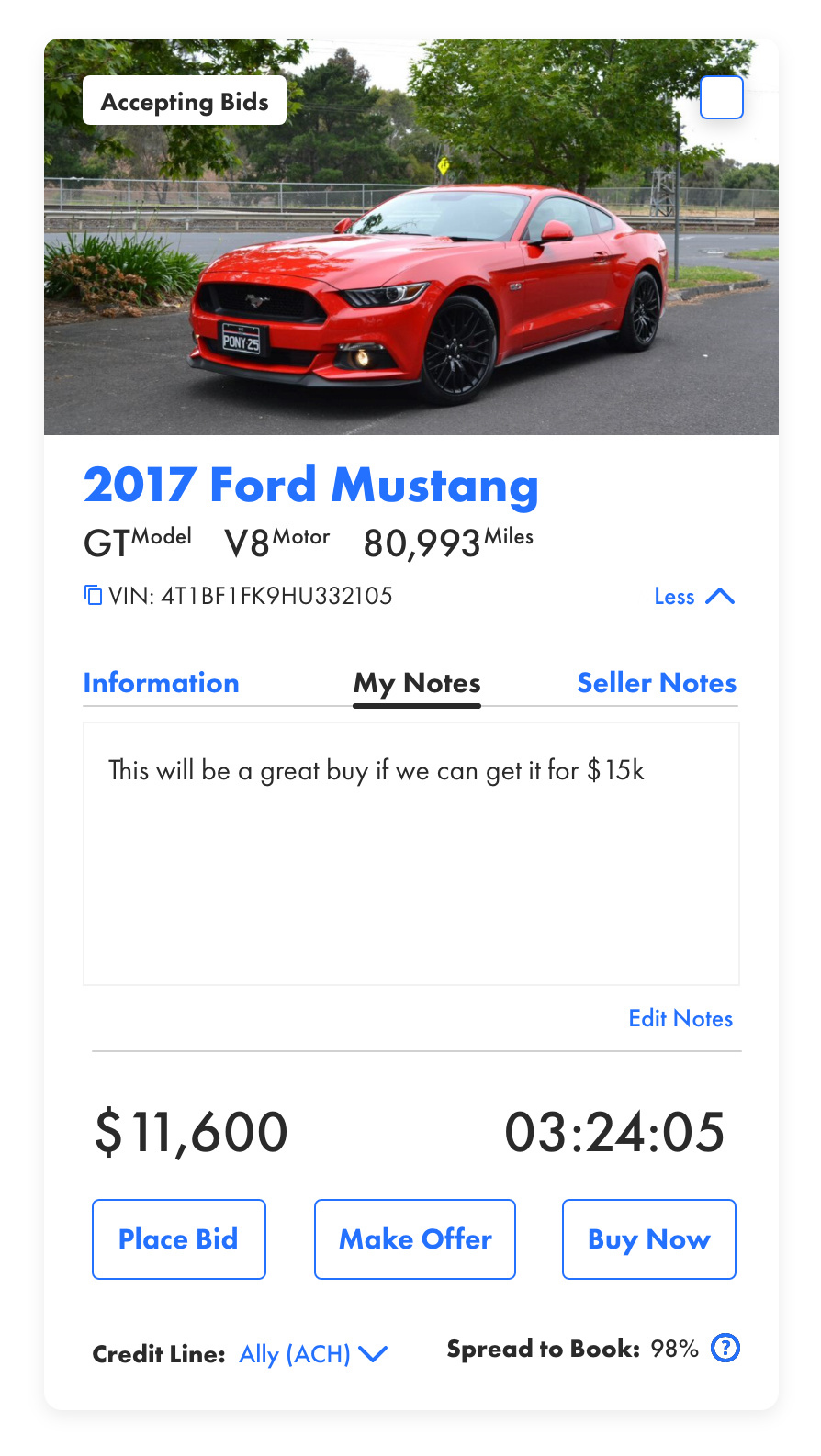
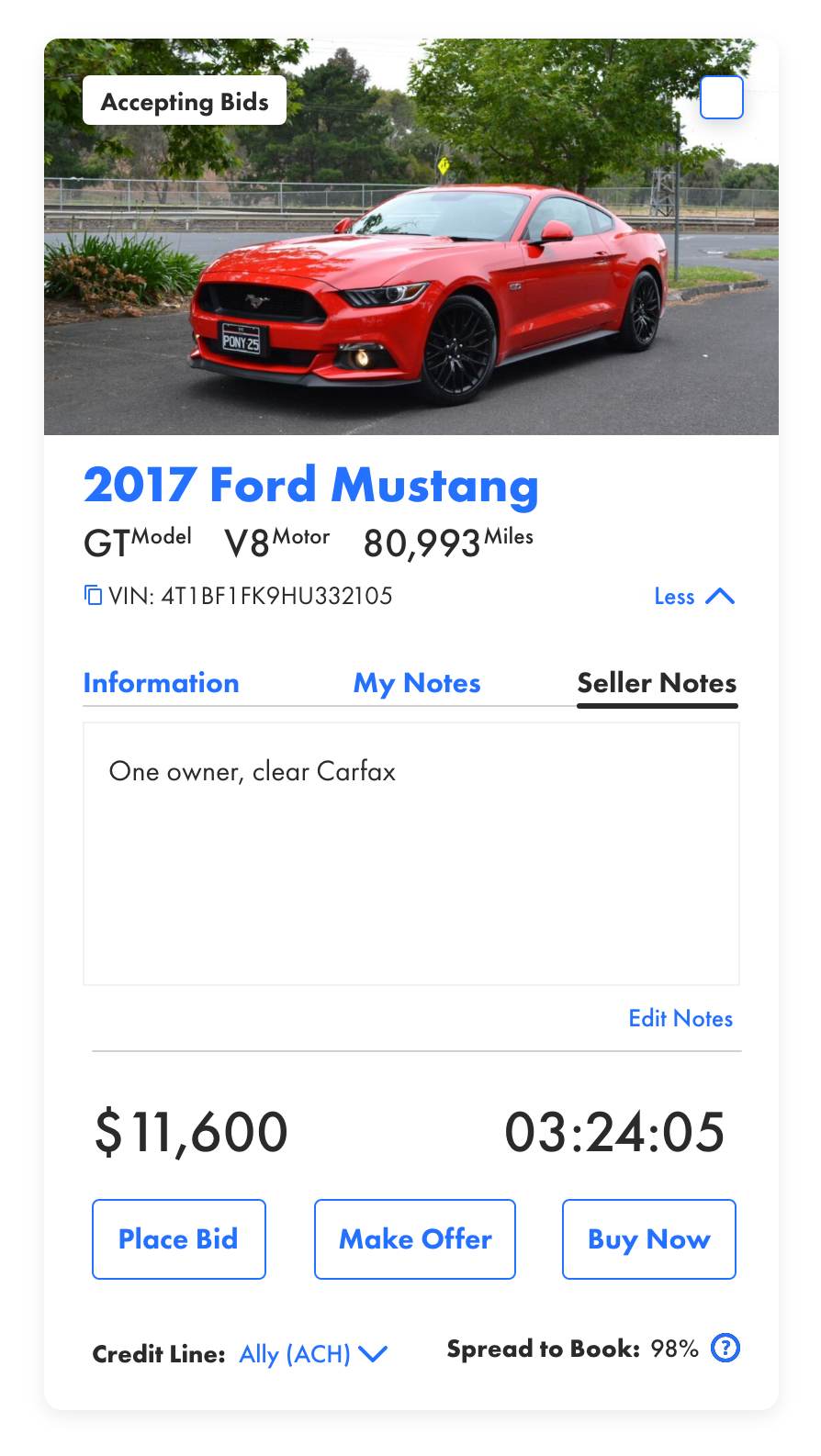
Auction Card Write up
Recommended Vehicles
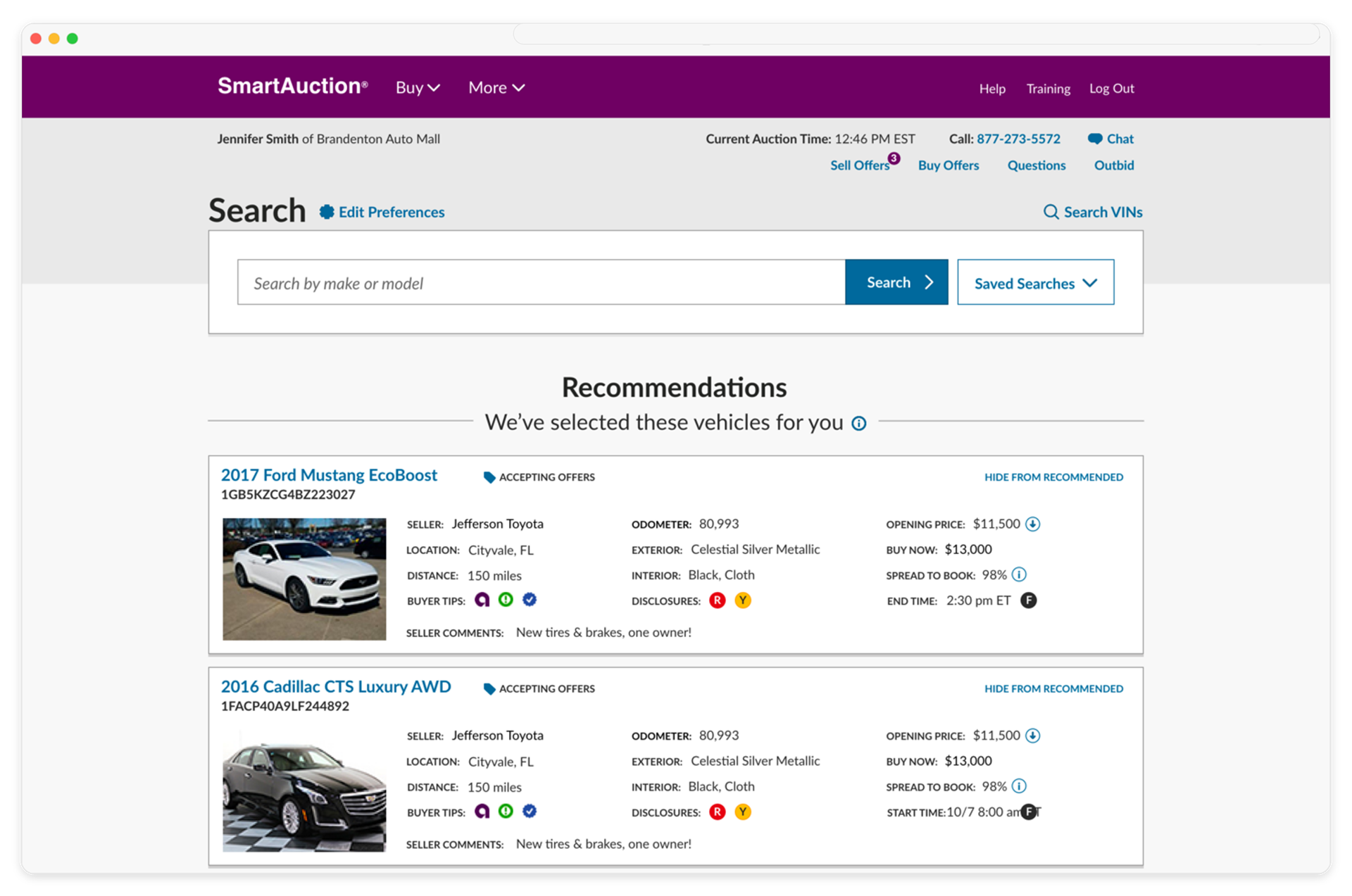
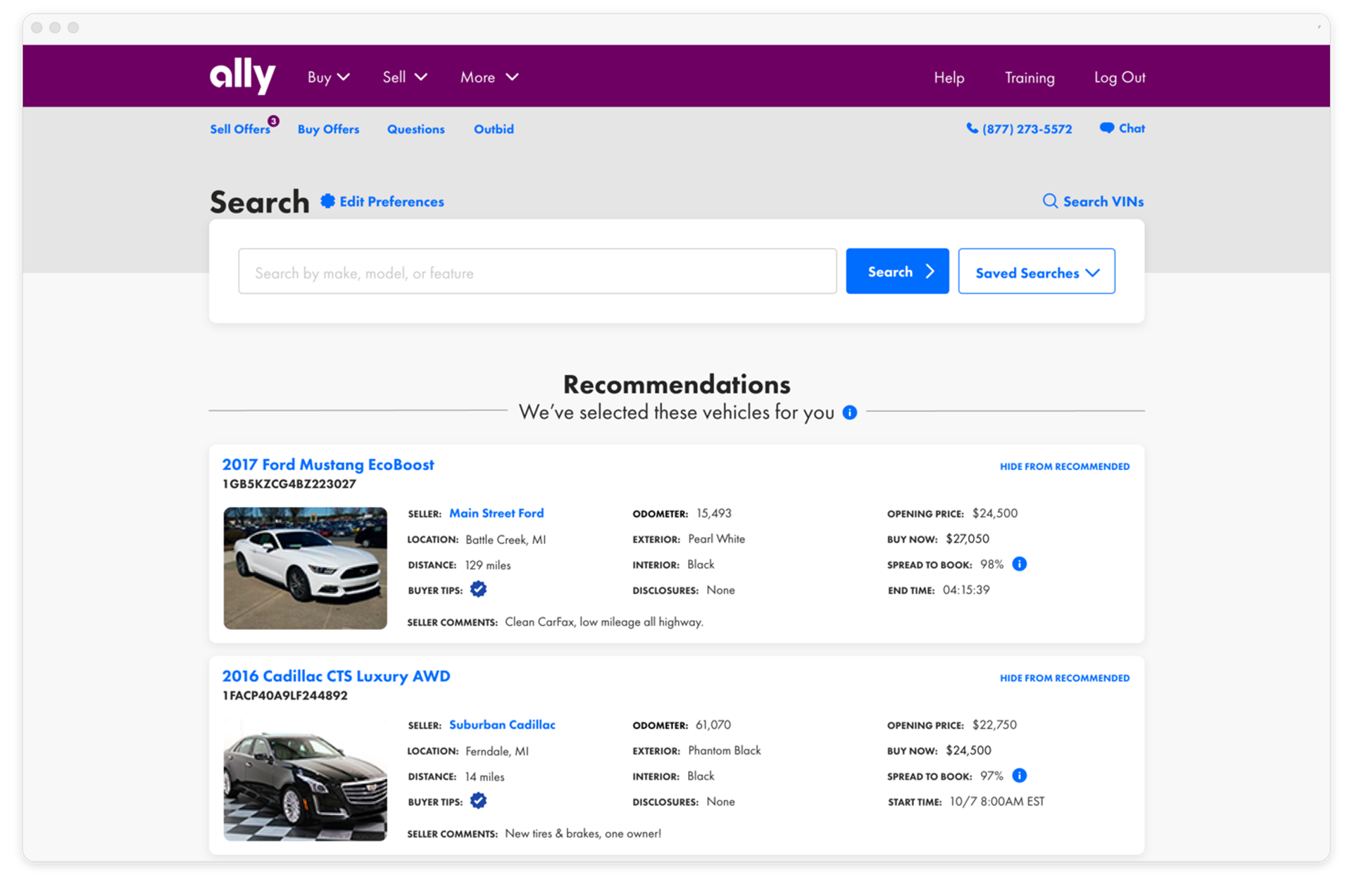
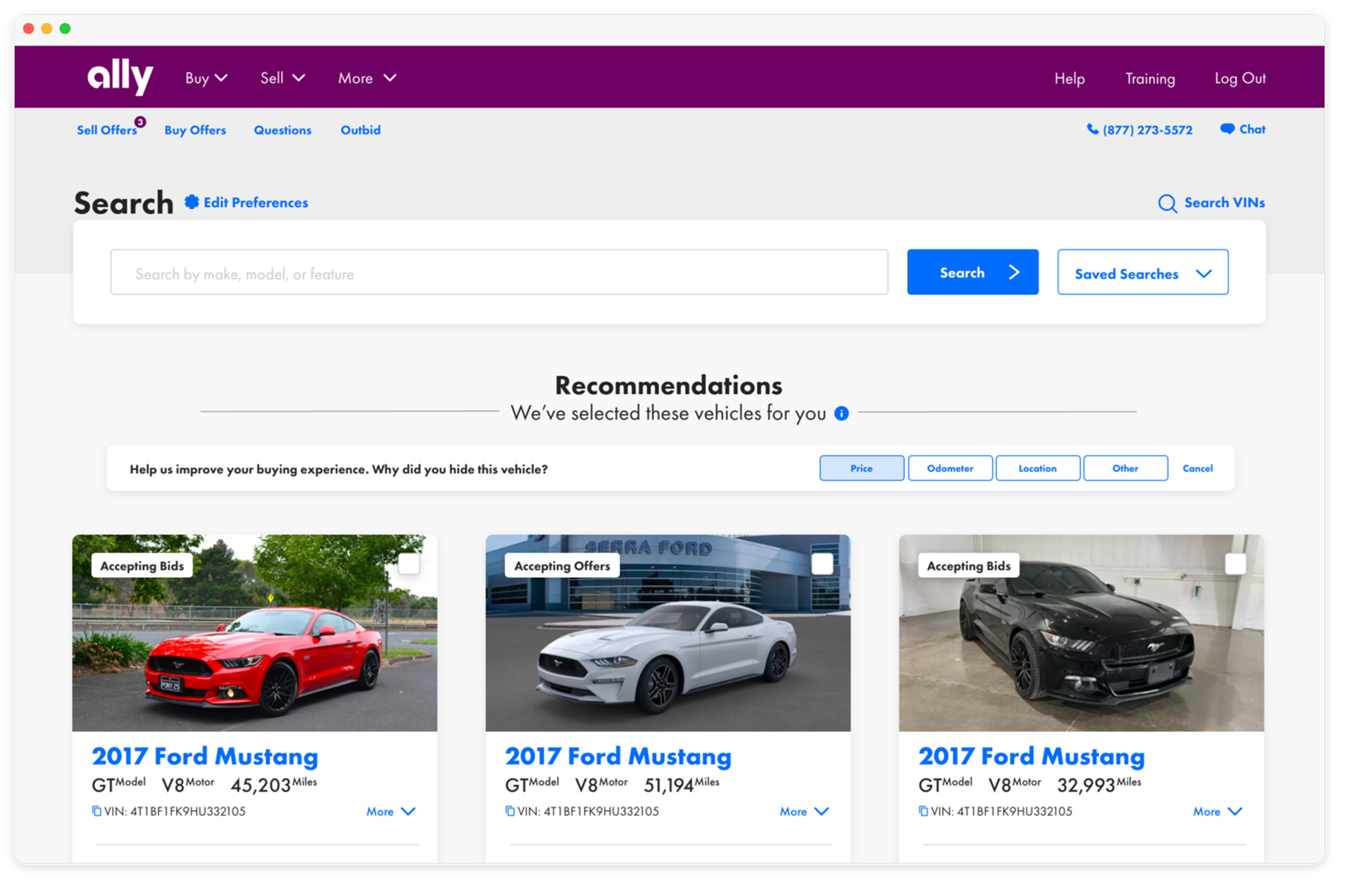
As a team, we have successfully developed and refined multiple design iterations of a recommended vehicle's product feature. Our approach was informed by comprehensive user research, which allowed us to create a feature that analyzes user search and purchase data. By utilizing this data, our feature can present users with vehicles that contain the criteria they frequently search for or purchase, thereby reducing the friction associated with finding vehicles.
Concept 1
Concept 2
Concept 3
Search
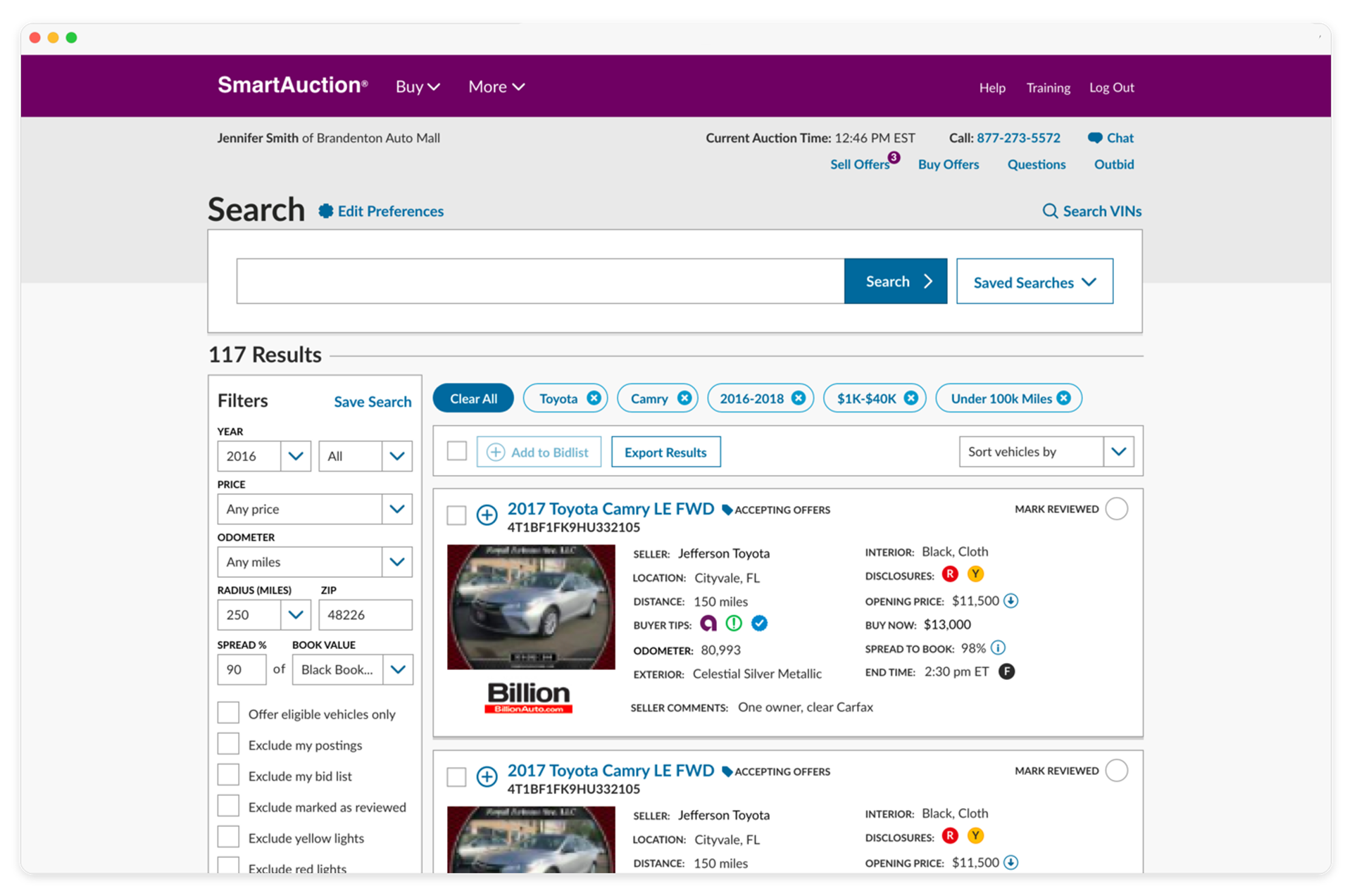
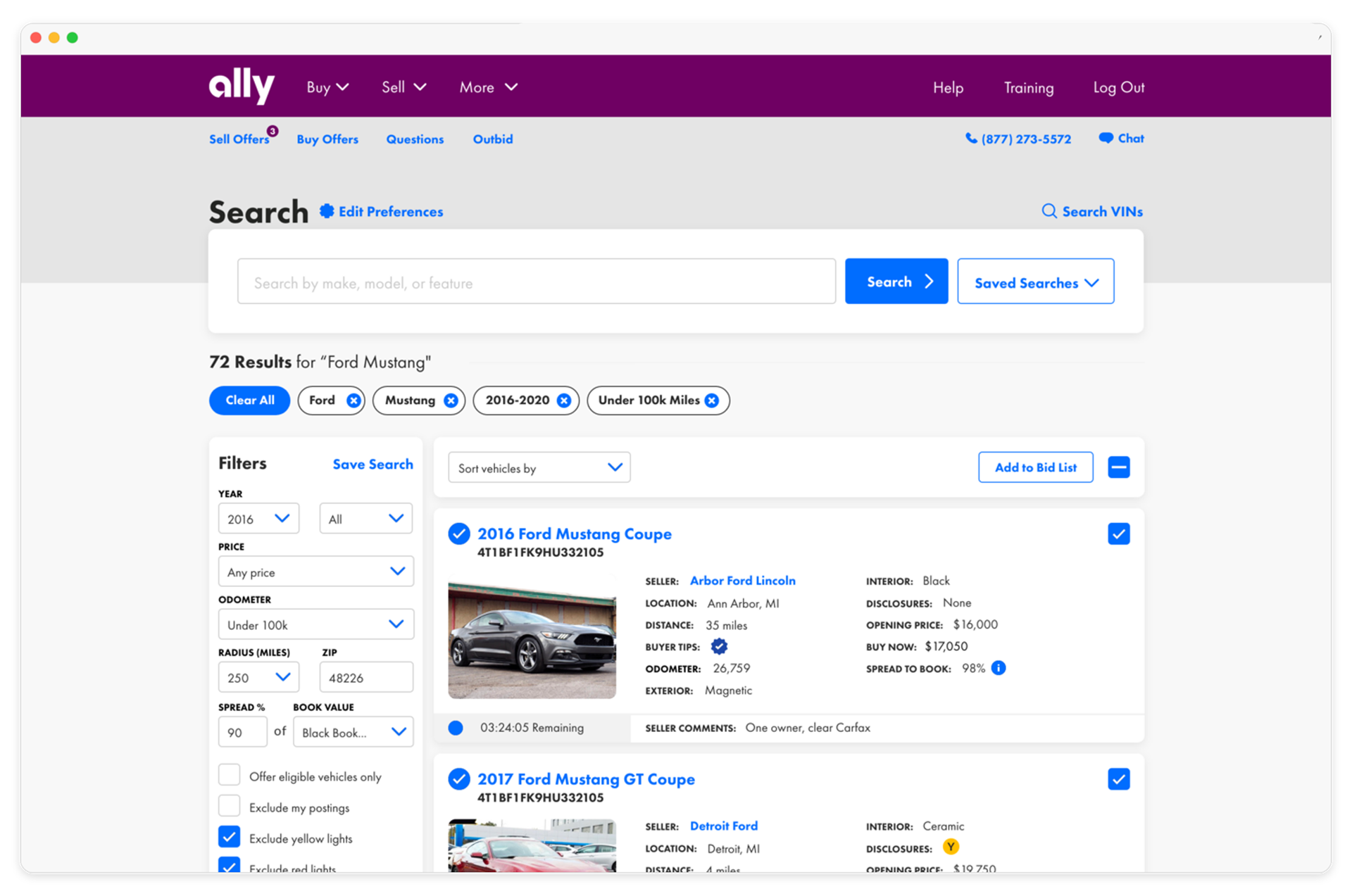
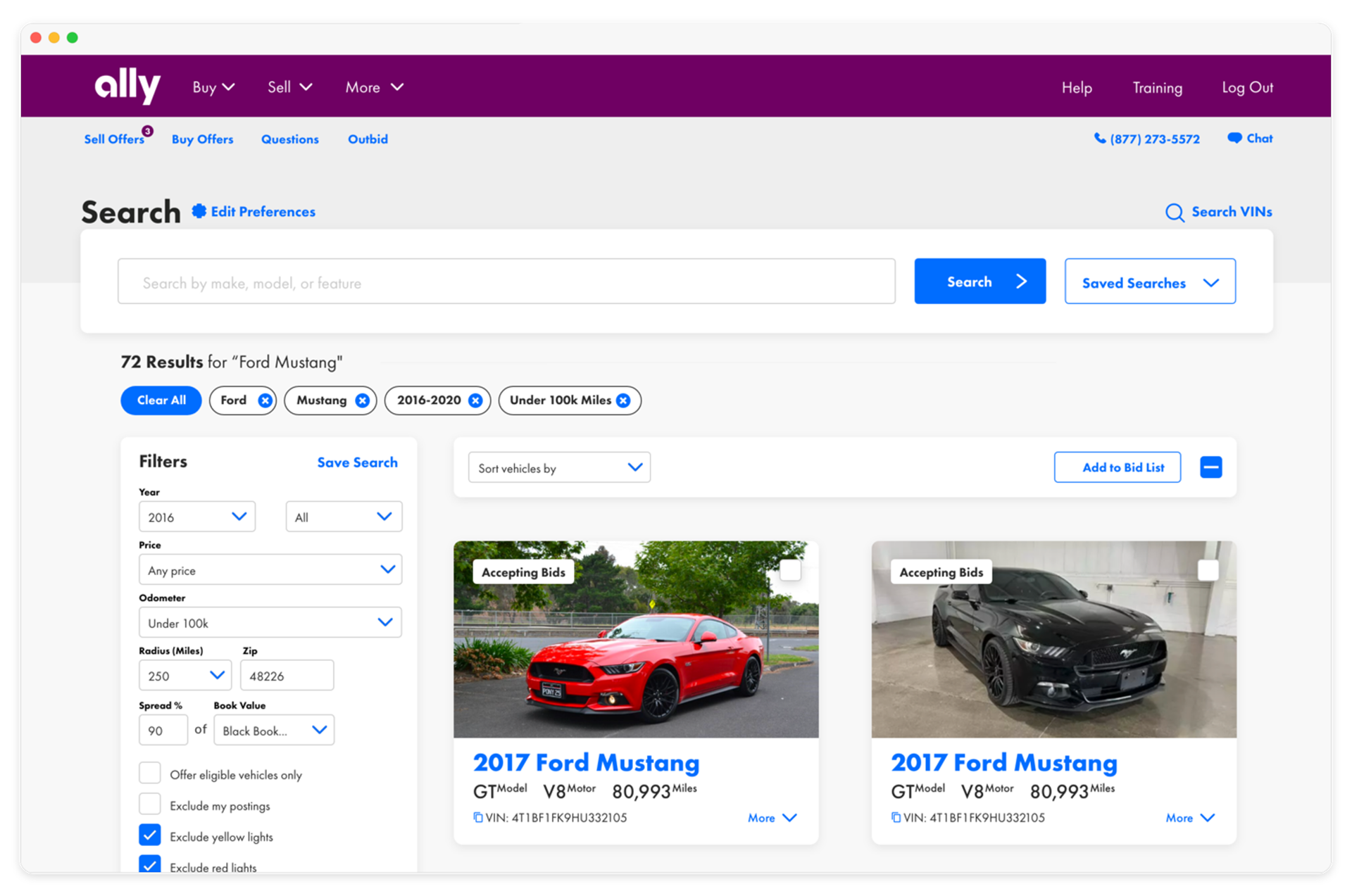
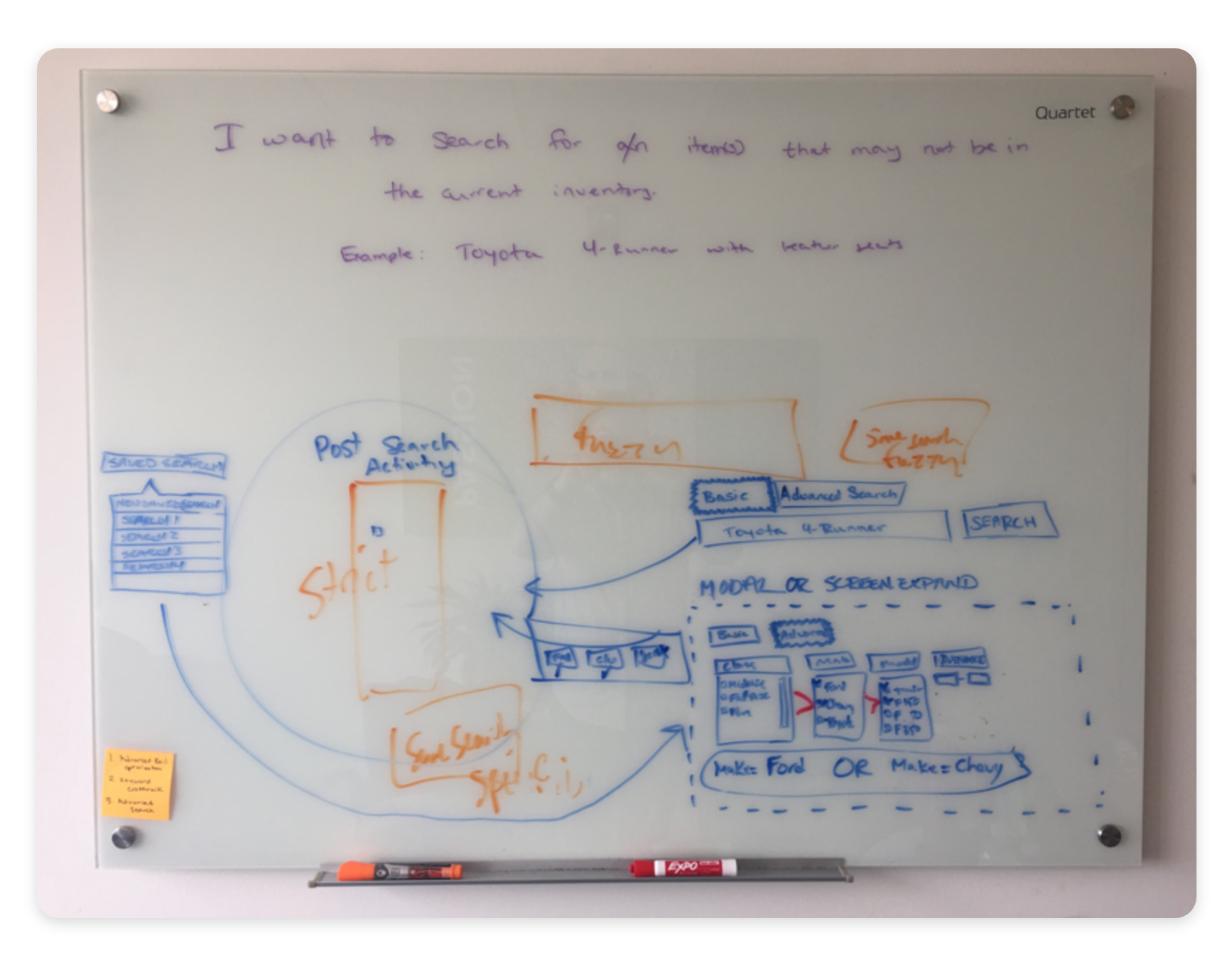
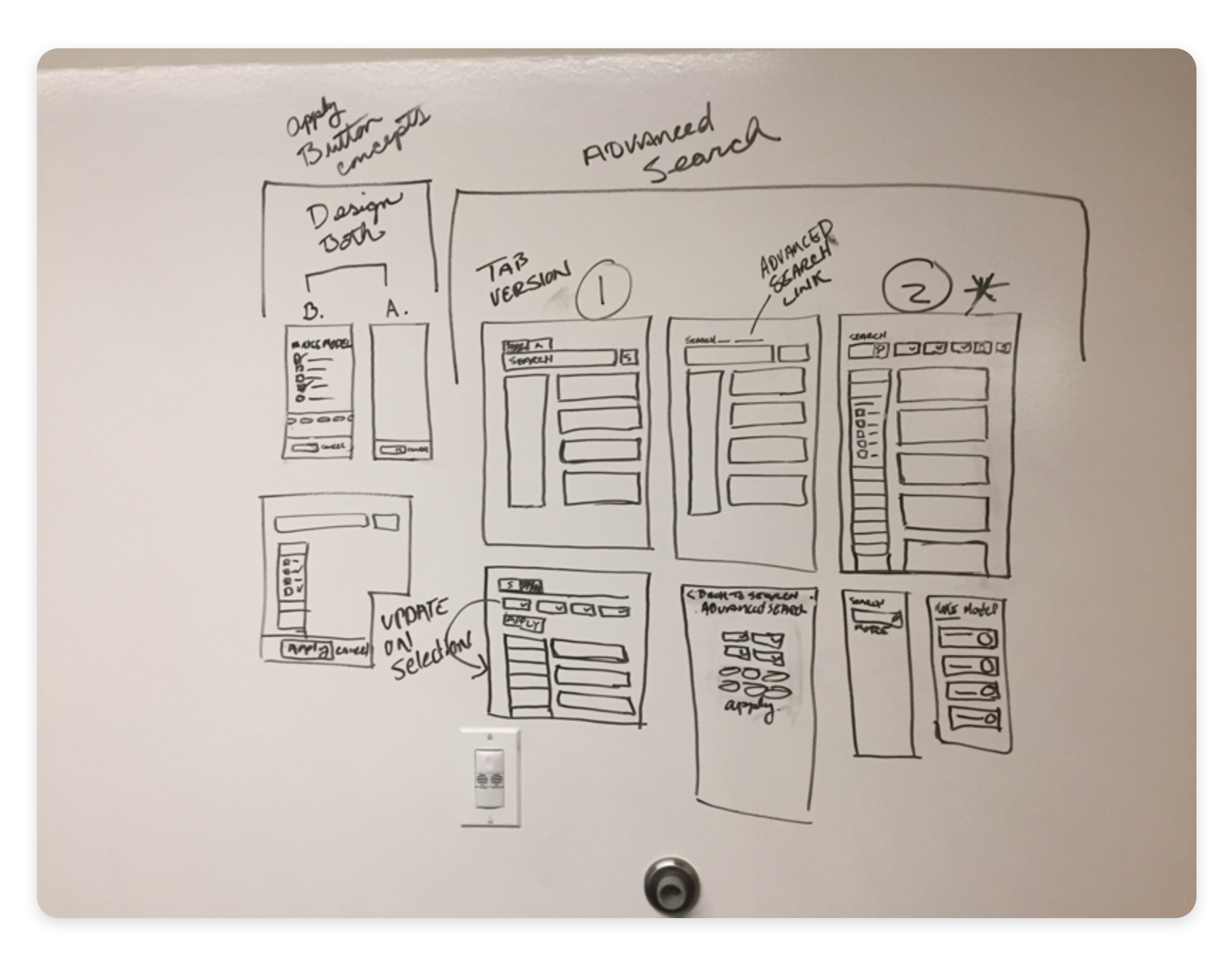
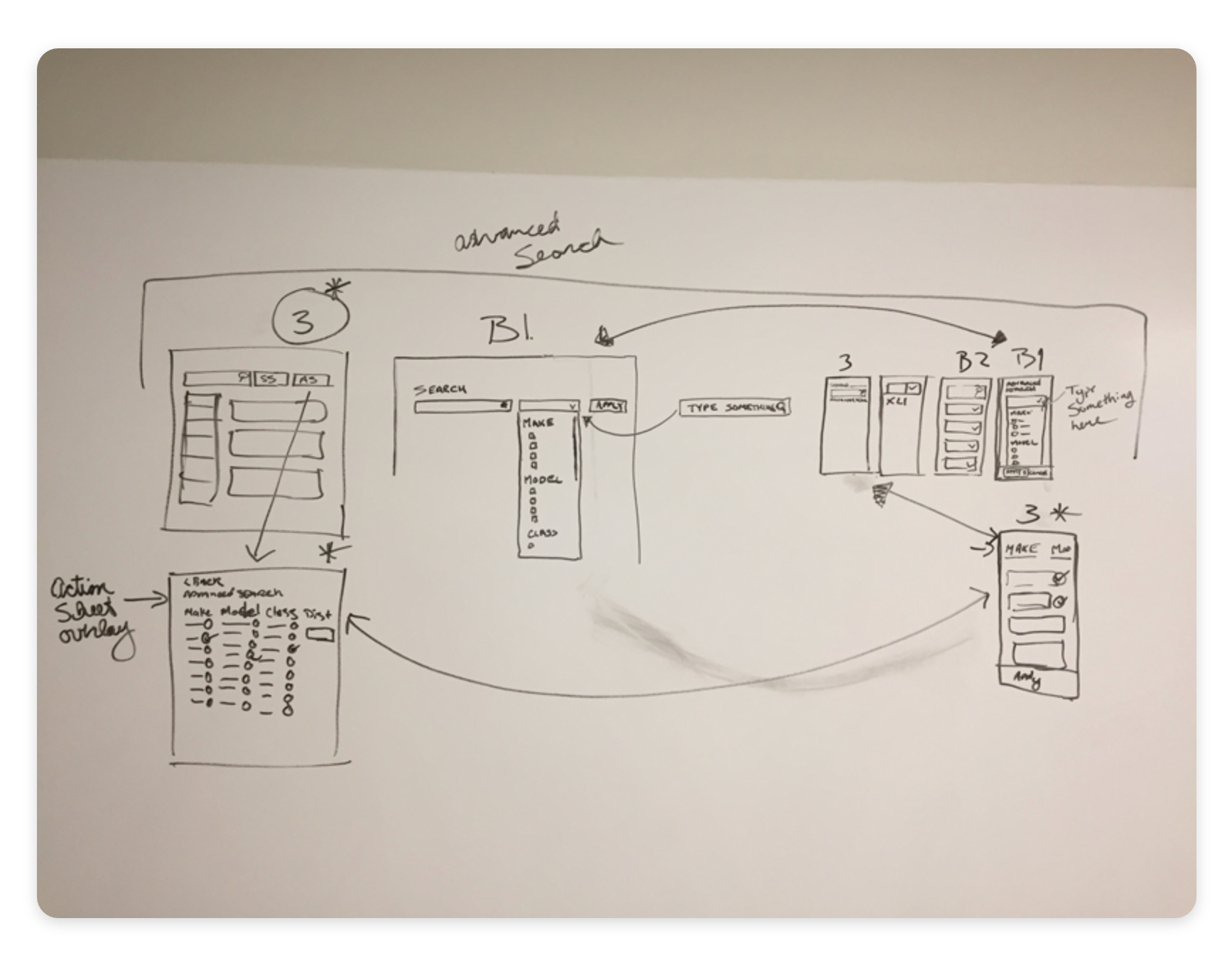
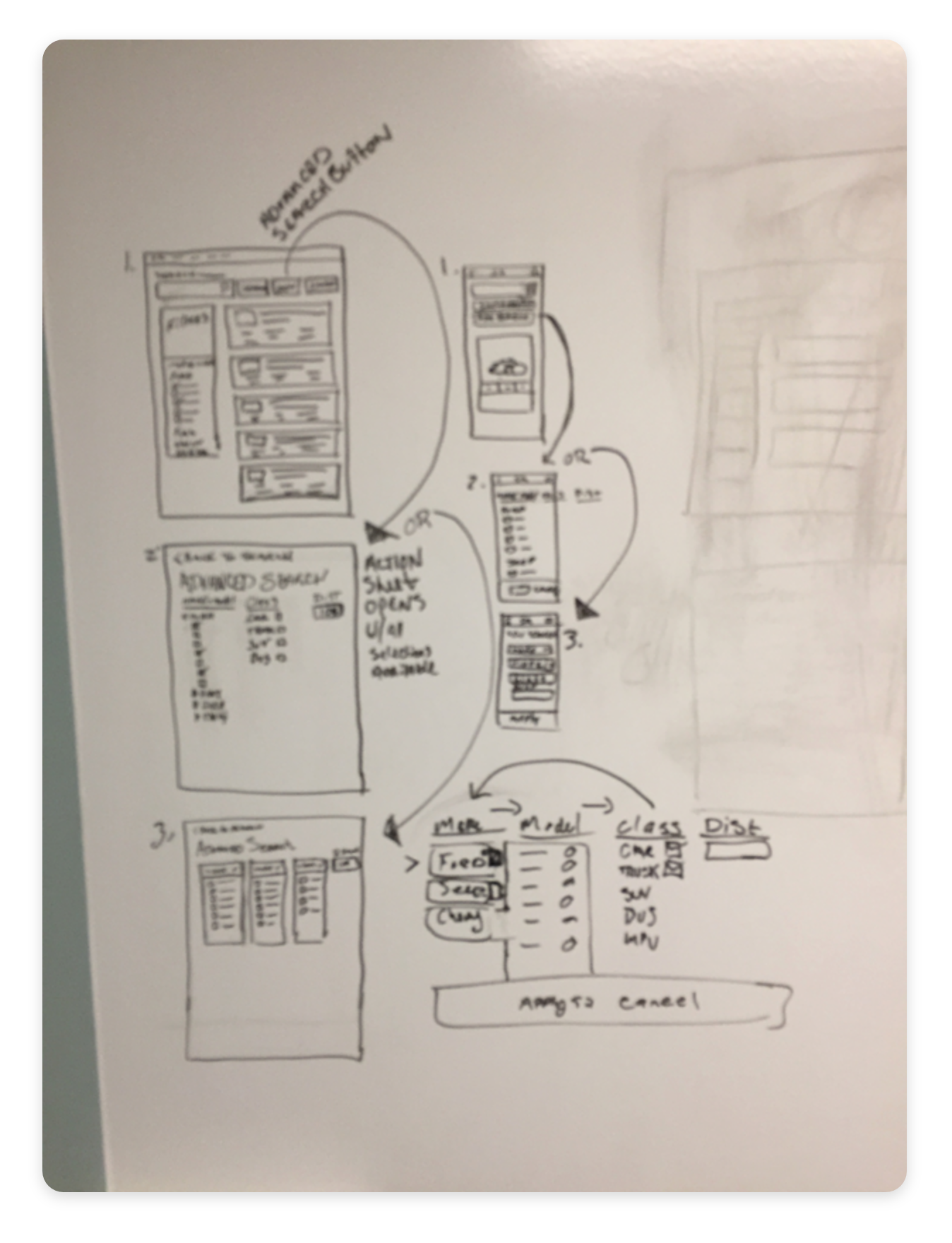
Our team embarked on a project to redesign the platform's search functionality, which began with a series of interviews with platform users to understand their mental models and how they interacted with other products that feature search functionality. We also conducted secondary research on competitor platforms. With this knowledge, we started developing prototypes and testing them with users. We utilized various approaches such as paper prototypes, high-fidelity digital prototypes, and user testing to learn the nuances of the interface design. By leveraging user feedback and insights, we iterated and refined our designs to create a seamless user experience that reduces friction while searching for vehicles on the platform. Our approach ensured that the new search functionality aligns with users' mental models and preferences, resulting in a more effective and efficient search process.
Concept 1
Concept 2
Concept 3
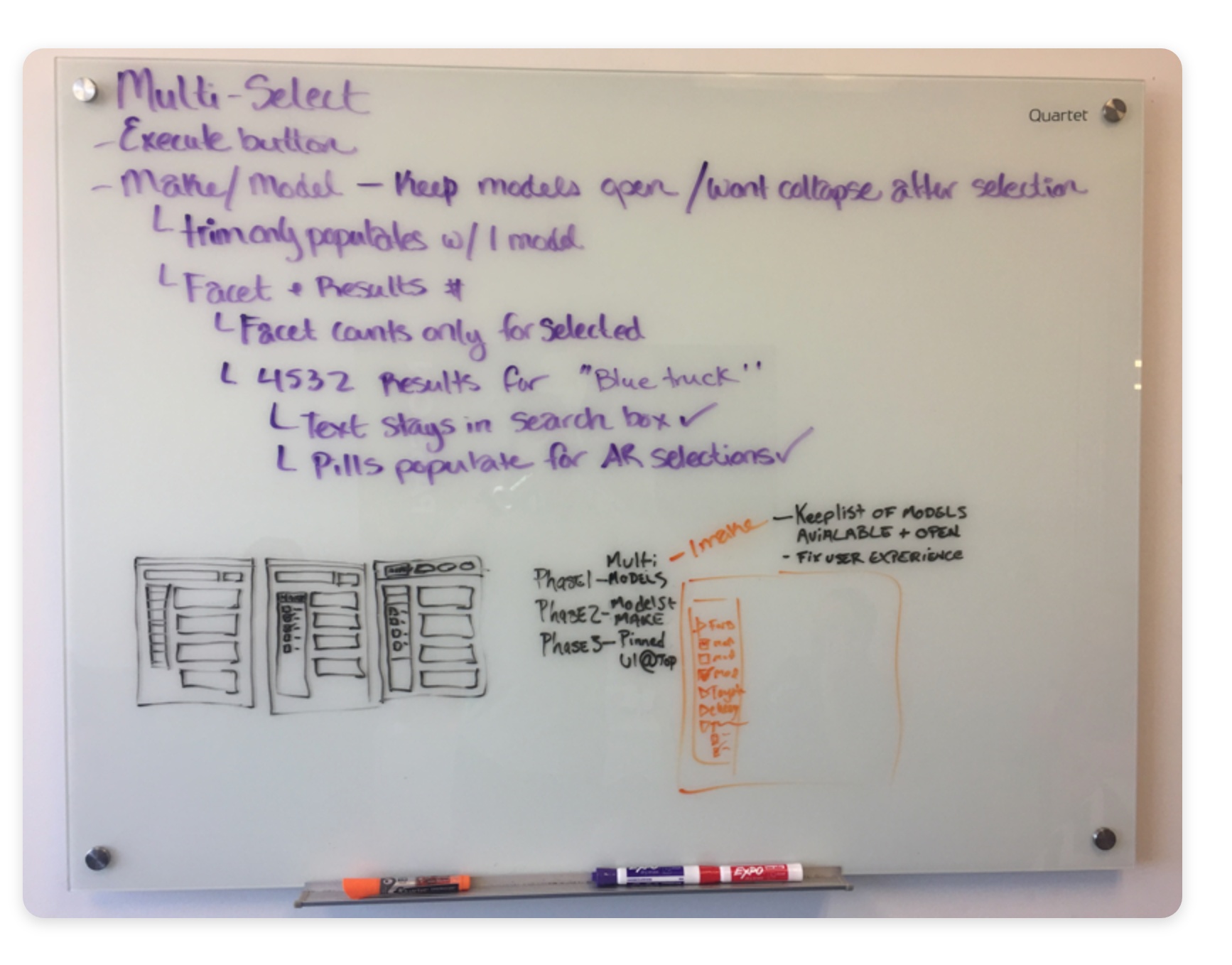
Bid List
Our team took on the task of redesigning Bid List to improve its usability and functionality for dealers. To achieve this goal, we identified the features most frequently used by dealers and updated the design patterns, fonts, accessibility, and user experience standards to align with the Ally design system standards. We conducted iterative design processes and created paper and mobile prototypes, which we tested with a diverse group of dealers, including the "Net Caster" and "Line Dropper" user groups. By analyzing the findings from these tests, we were able to iterate further and refine our designs until we achieved an intuitive interface that provides additional functionality to dealers. The redesigned Bid List now allows dealers to better understand the bid standing of all the vehicles on their list, resulting in a more efficient and effective process for managing their bids. Our approach ensured that our design aligned with the needs and preferences of dealers, resulting in a user-friendly and functional product.
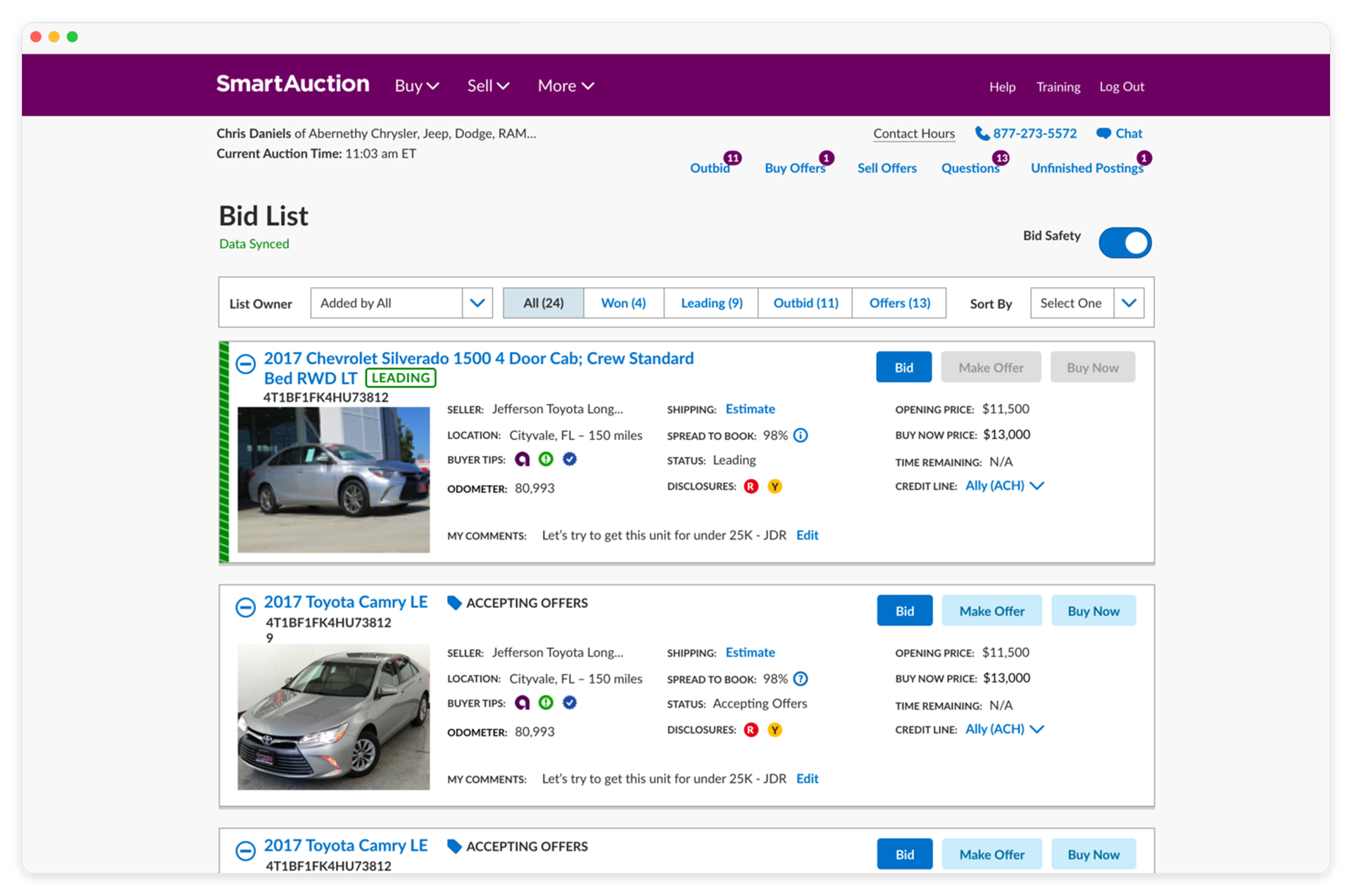
Concept 1
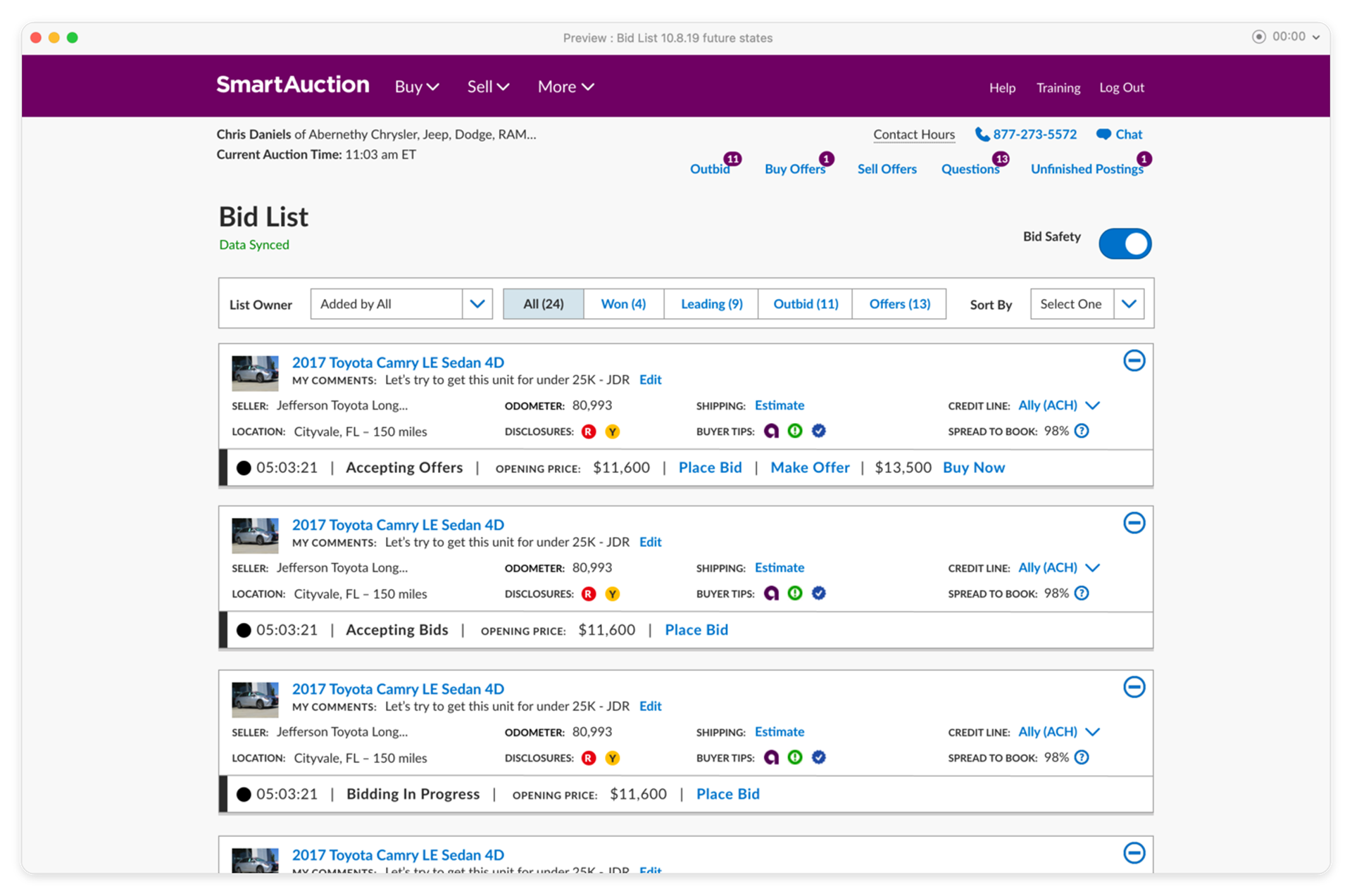
Concept 2
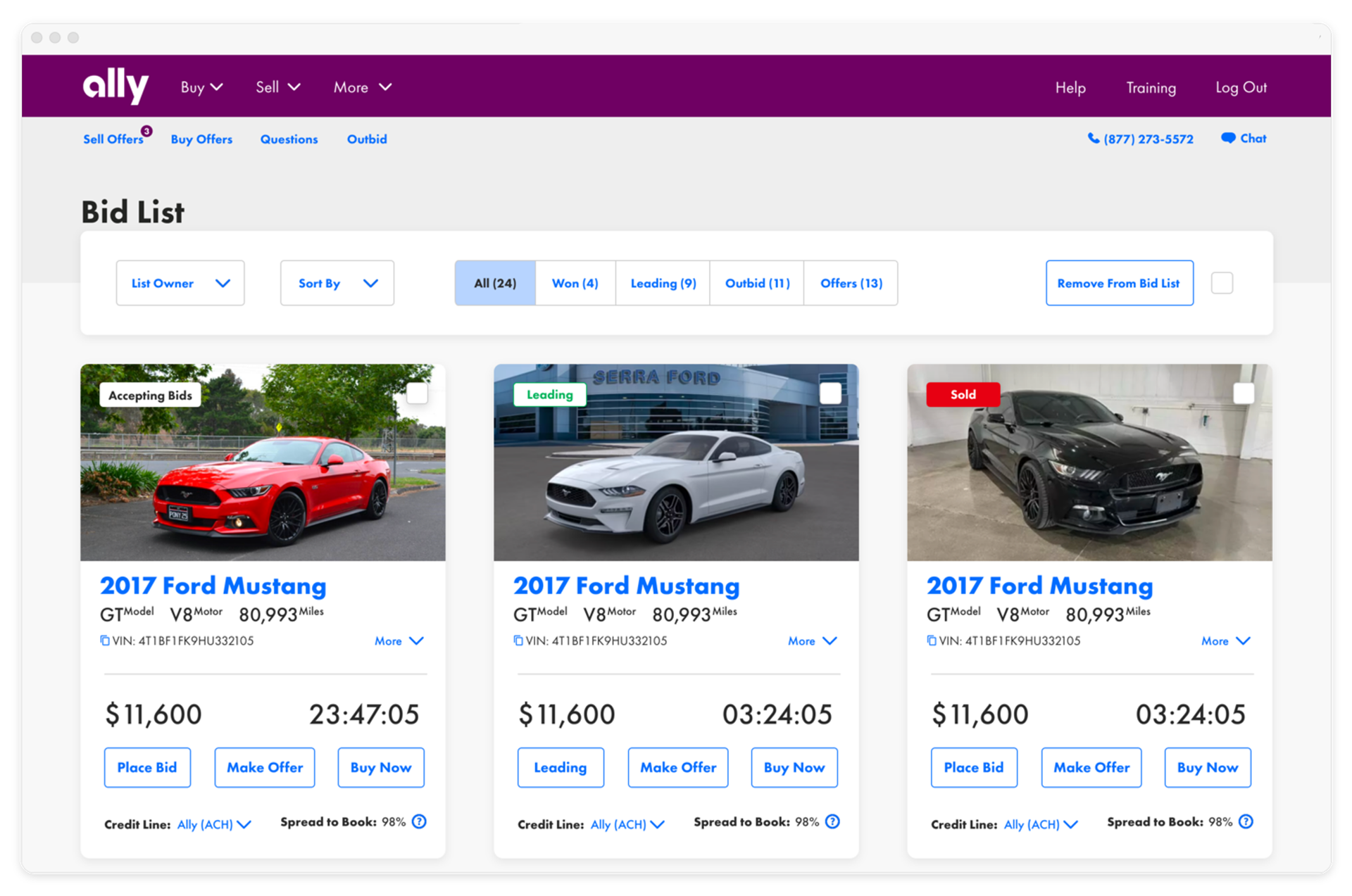
Concept 3
Vehicle Detail Page
Our team recognized that the auction vehicle detail page is a critical component of the decision-making process for dealers. Therefore, we focused on redesigning this page to ensure that buyers could quickly and easily scan vehicle details. We started by reviewing the legacy design and identifying the most important information for prospective buyers. Based on this understanding of buyer needs, we redesigned the page's architecture to prioritize key information and deprioritize less important information in the buyer experience. Through user testing, we were able to refine the design and create a page that allows users to quickly determine if a vehicle is a good option. By minimizing friction in the path to purchase and prioritizing key information, users can spend more time finding the right vehicle for their needs and focusing on non-inventory-based tasks. Our approach resulted in an improved user experience that better serves the needs of dealers.
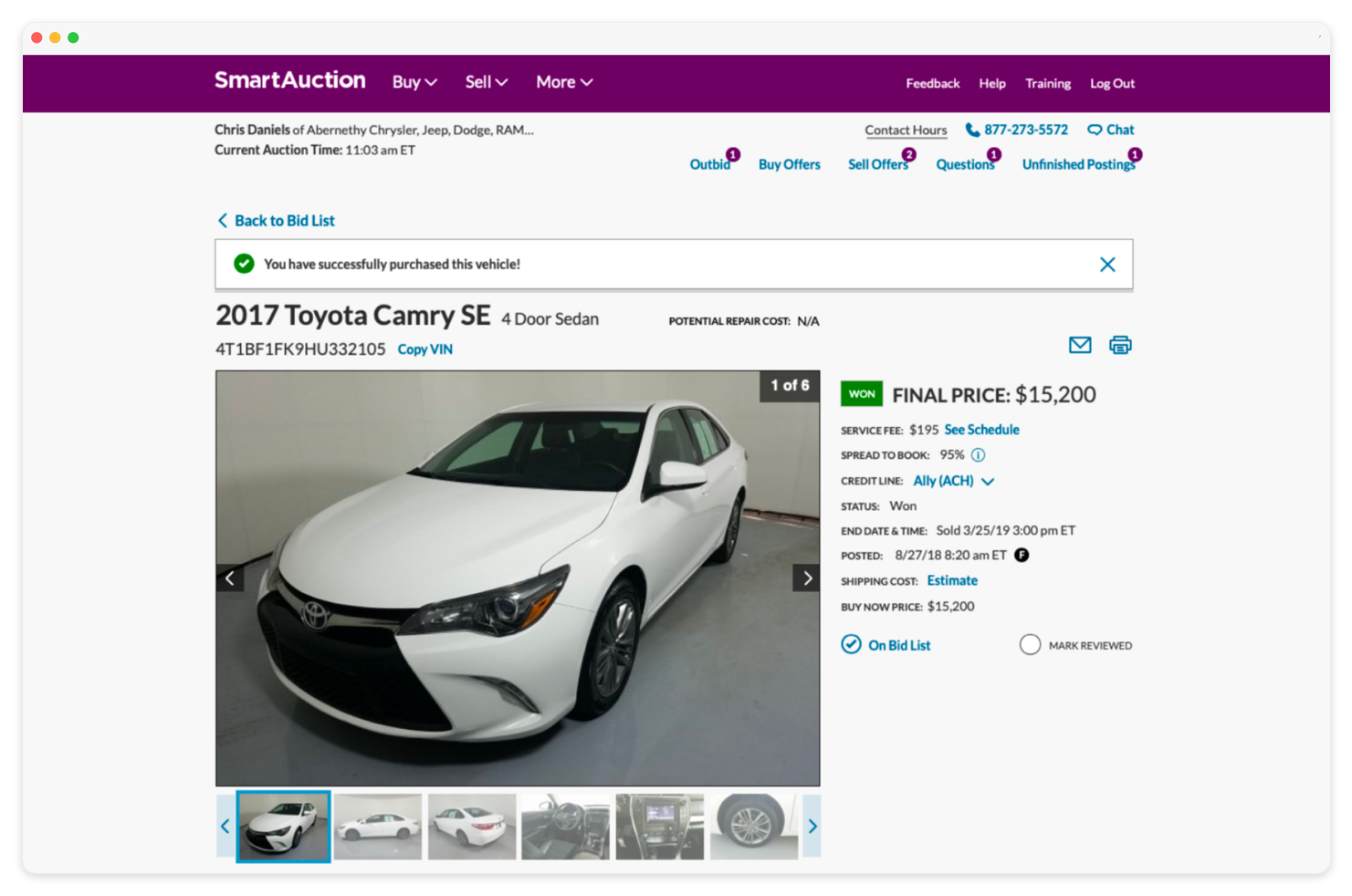
Vehicle Detail Page 4.0 Redesign
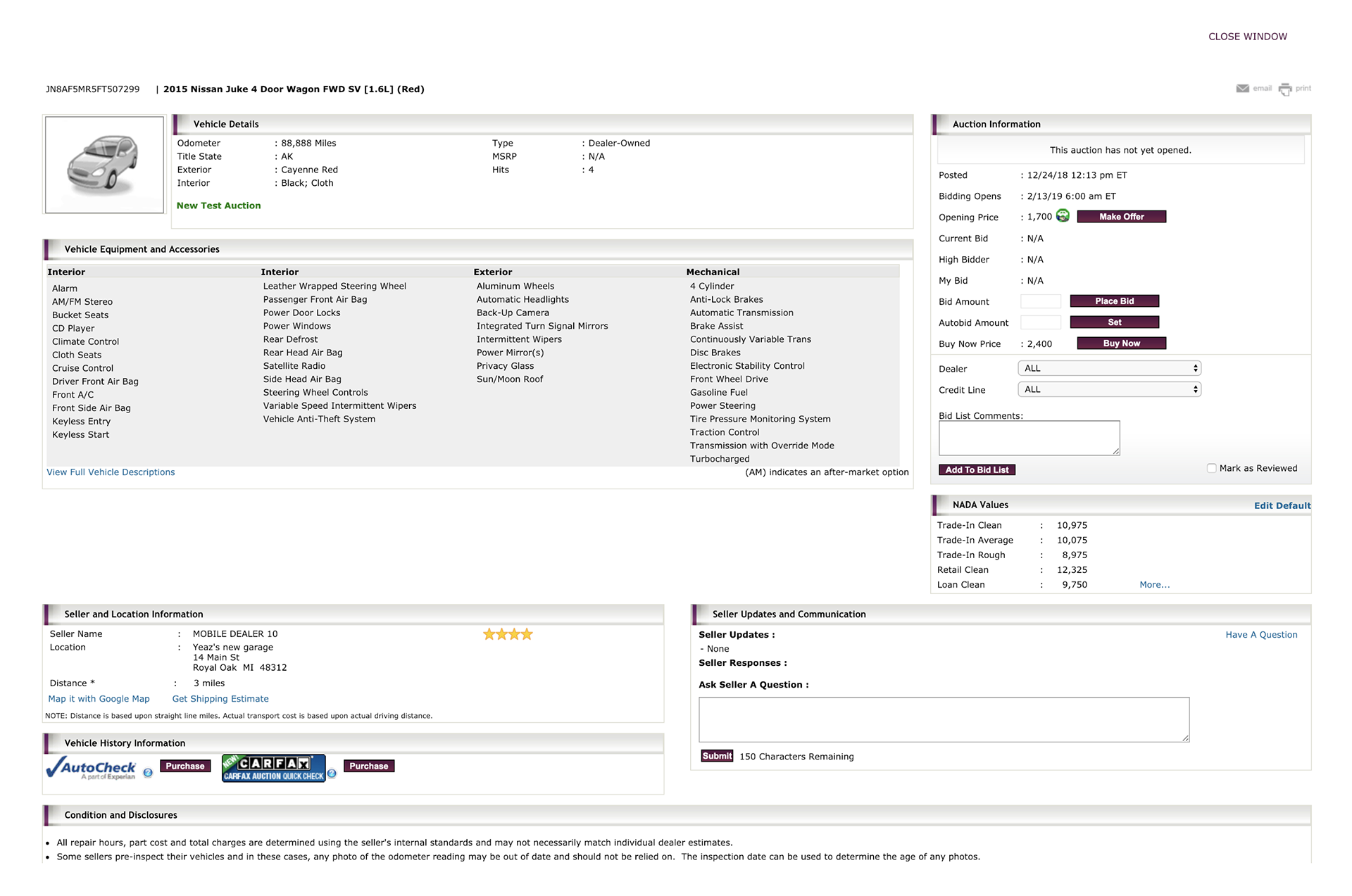
Vehicle detail page2.0 Design
Vehicle Posting Experience Innovation
Challenge Statement
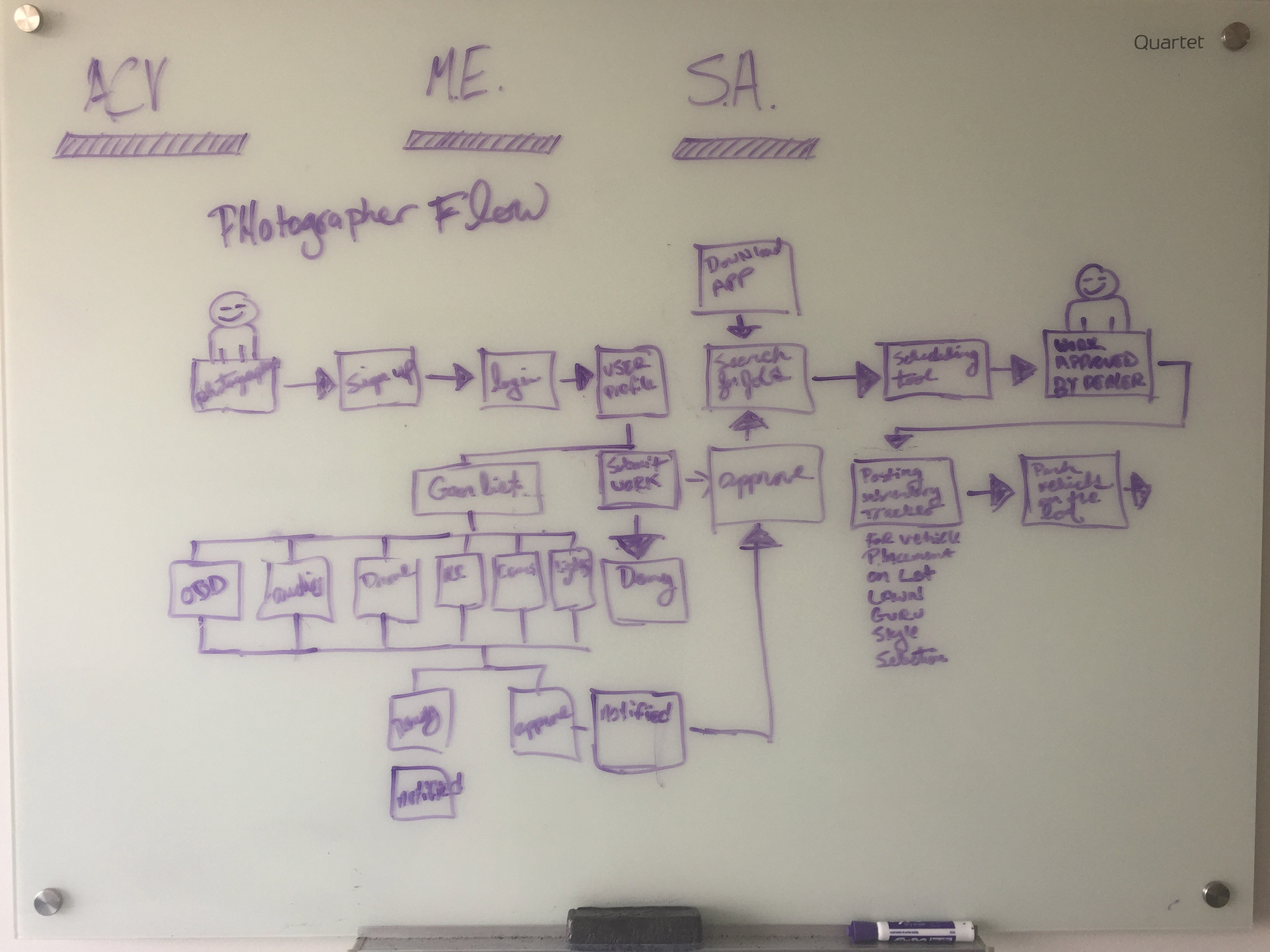
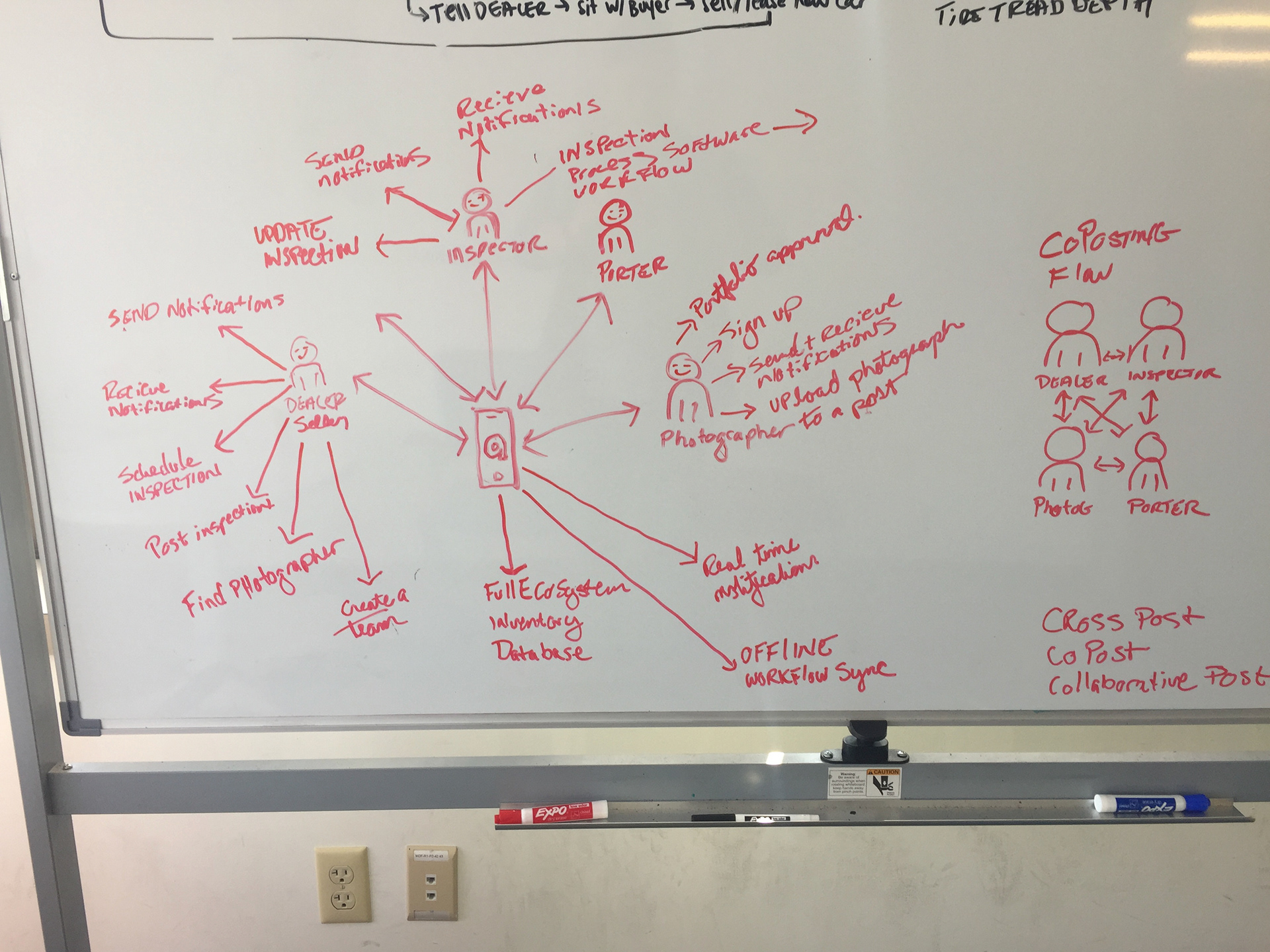
Research the current vehicle posting process, Identify the steps in the grounding & posting processes, the people involved in the processes, the systems used, the services used and the pain points users are experiencing.
Personas
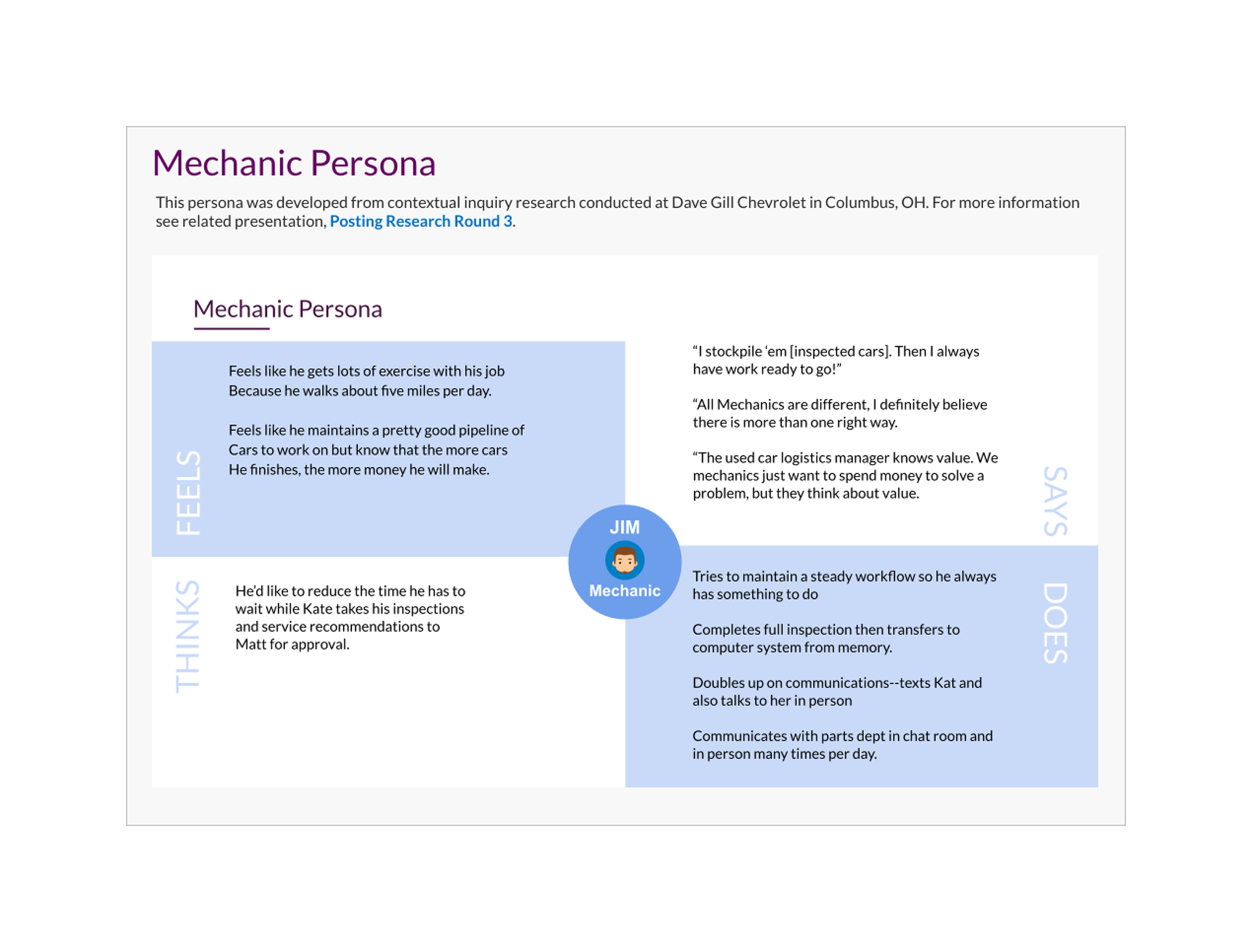
We developed some new key personas for the posting experience after conducting ethnography at dealerships in several markets across the country.
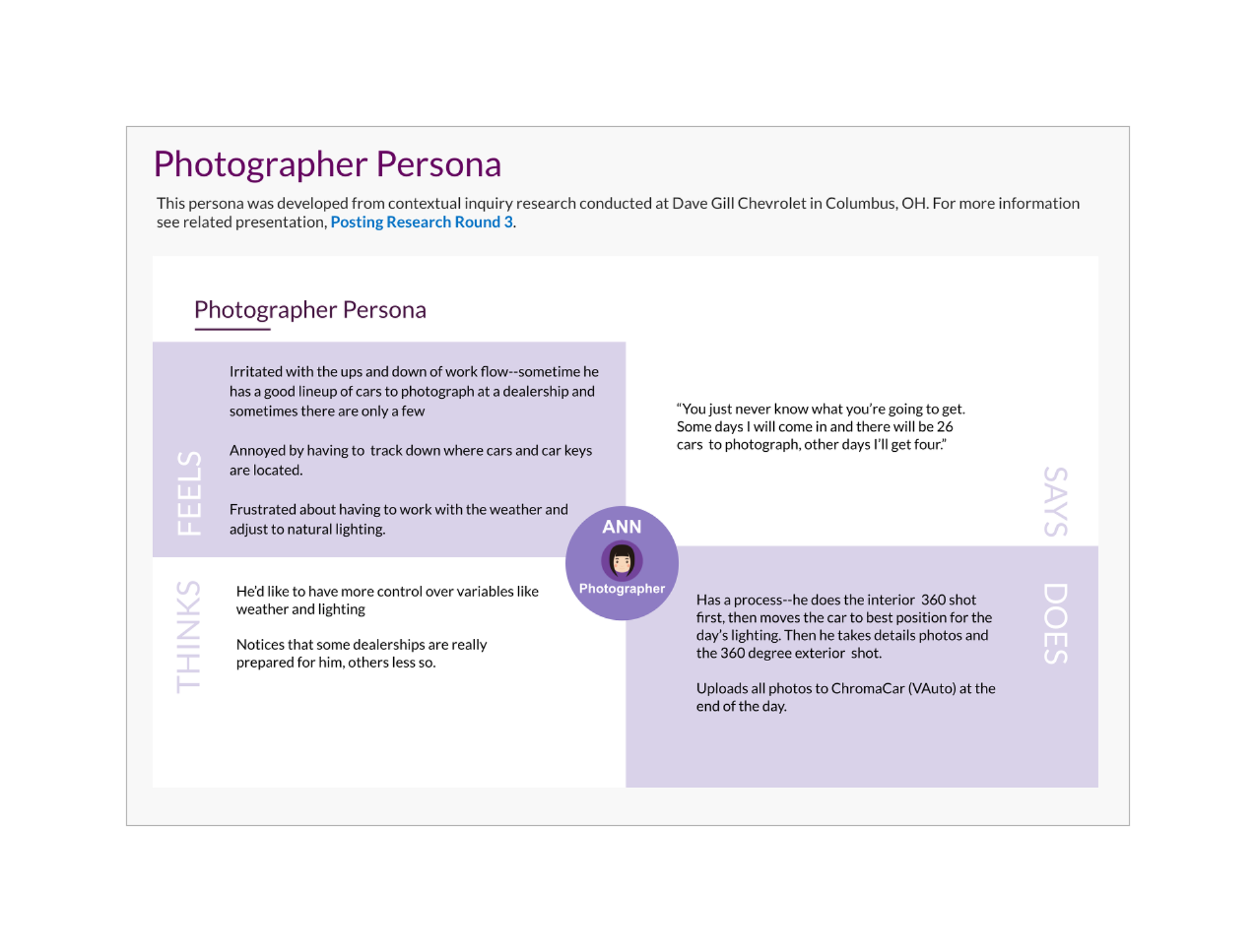
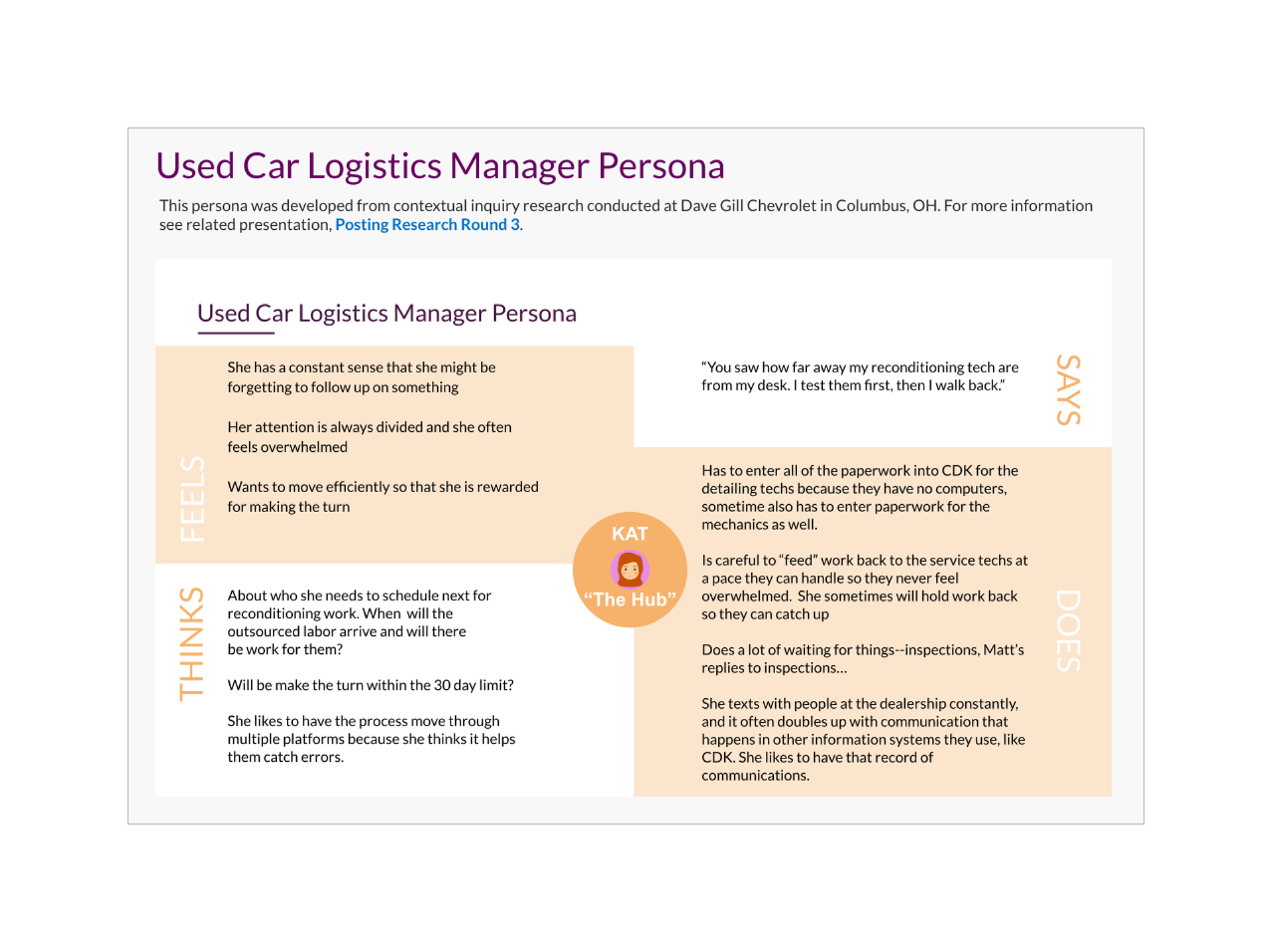
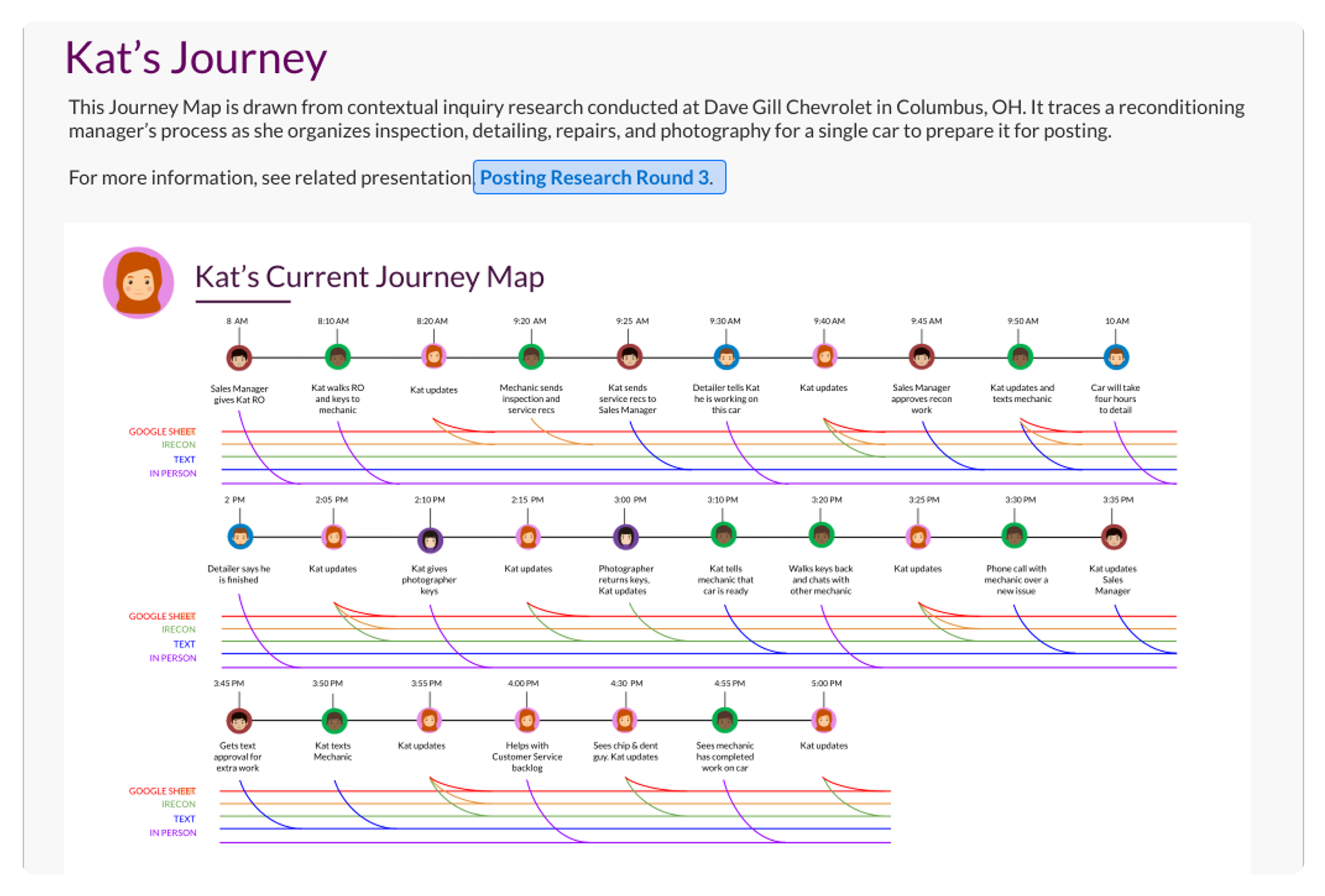
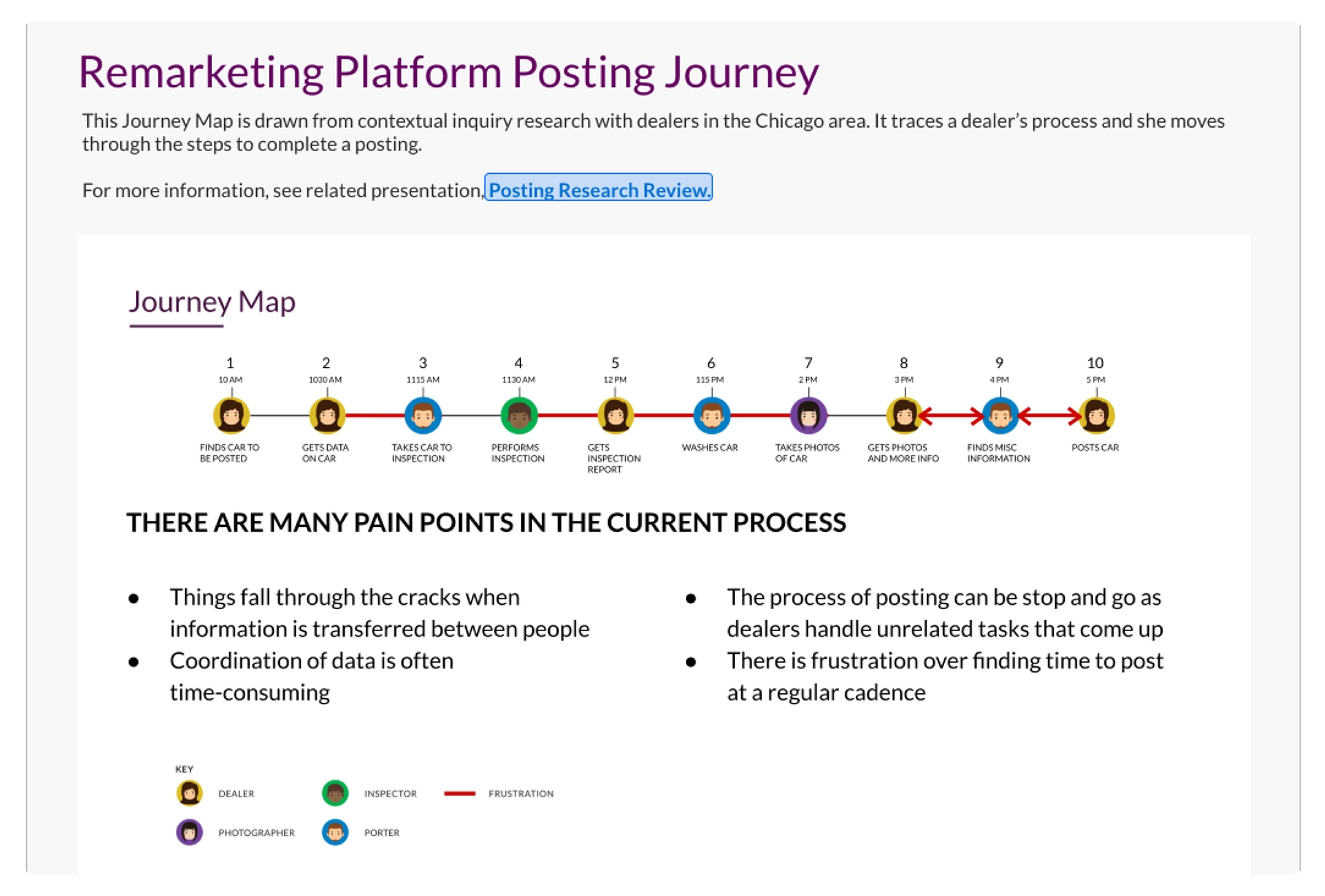
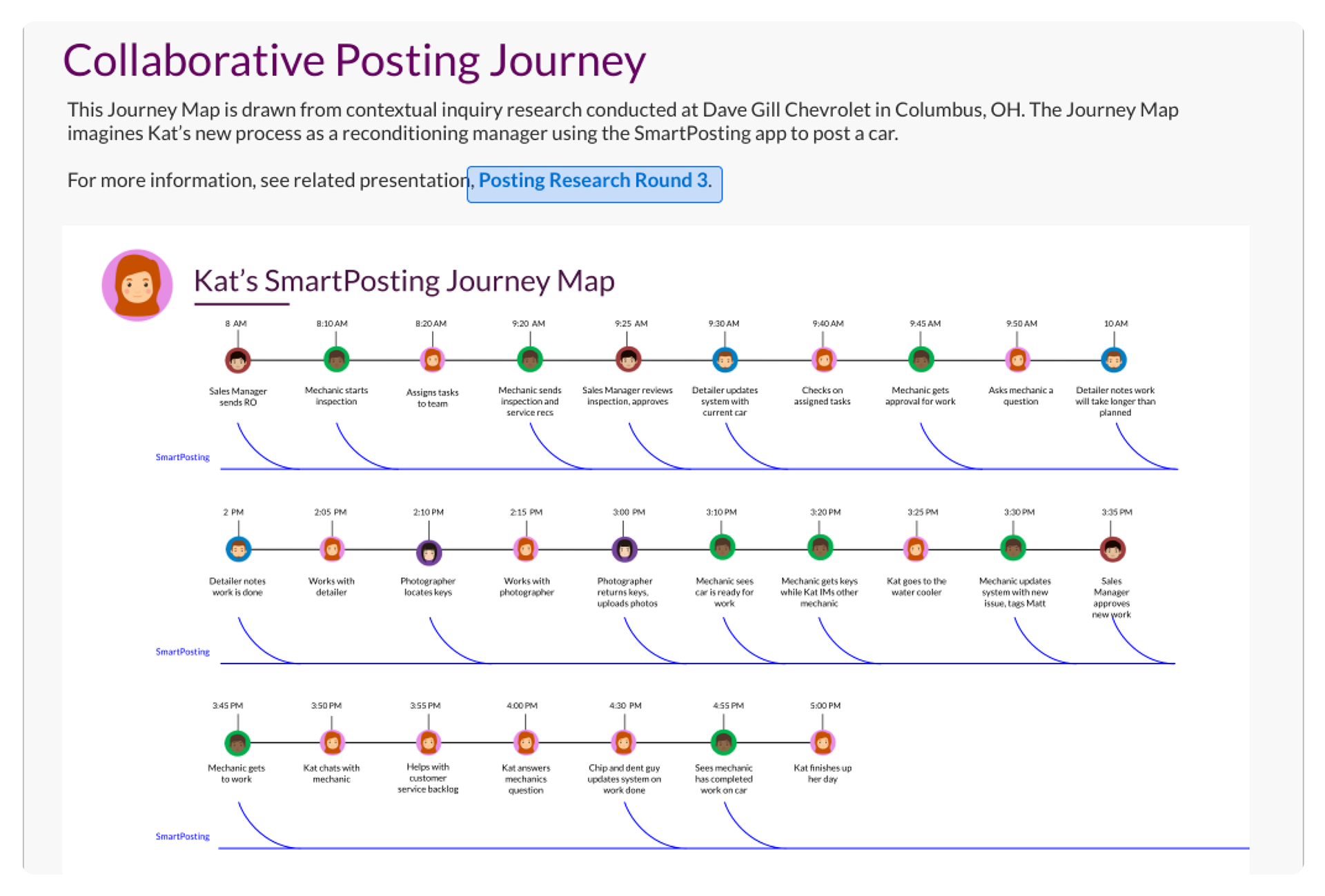
Journey maps
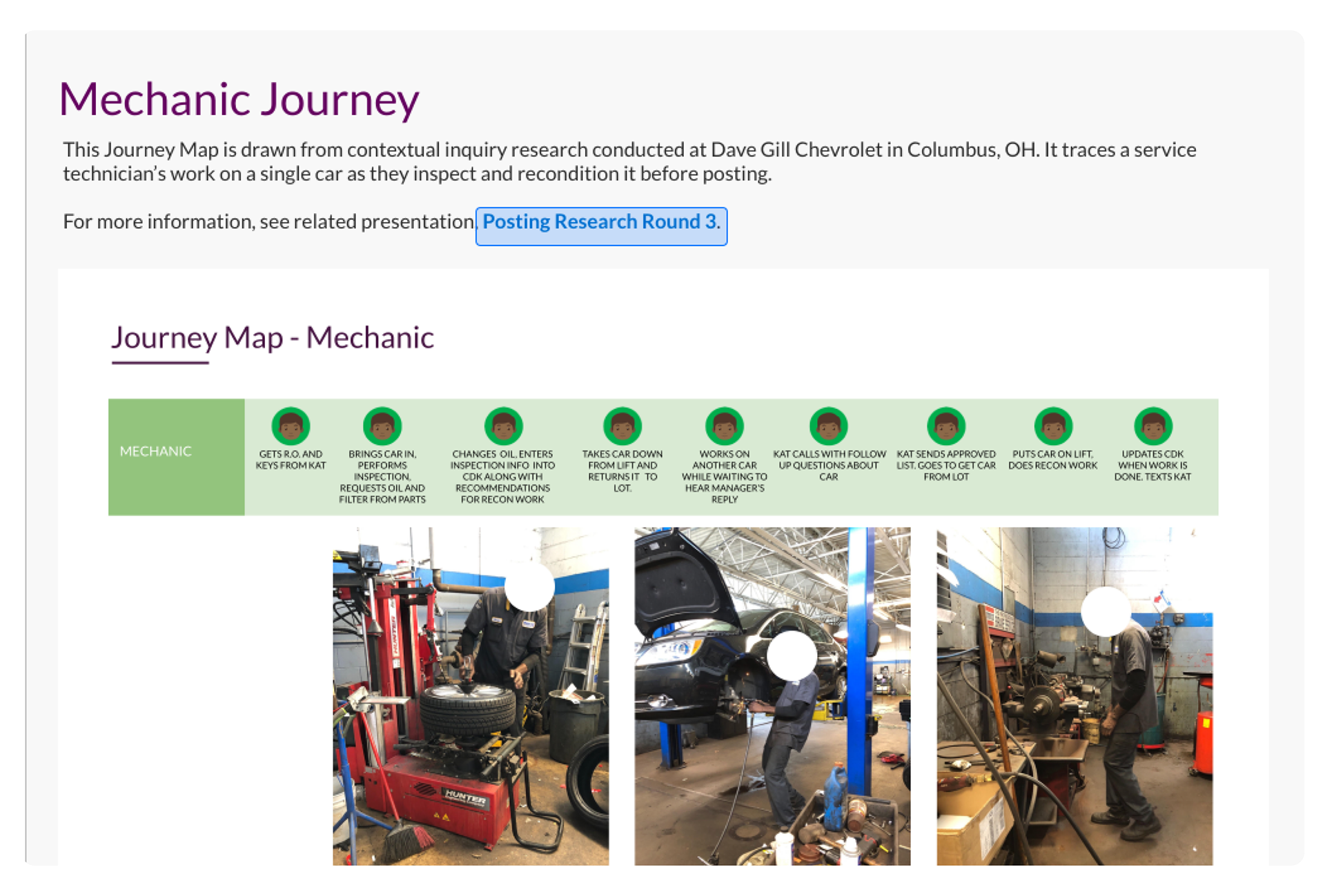
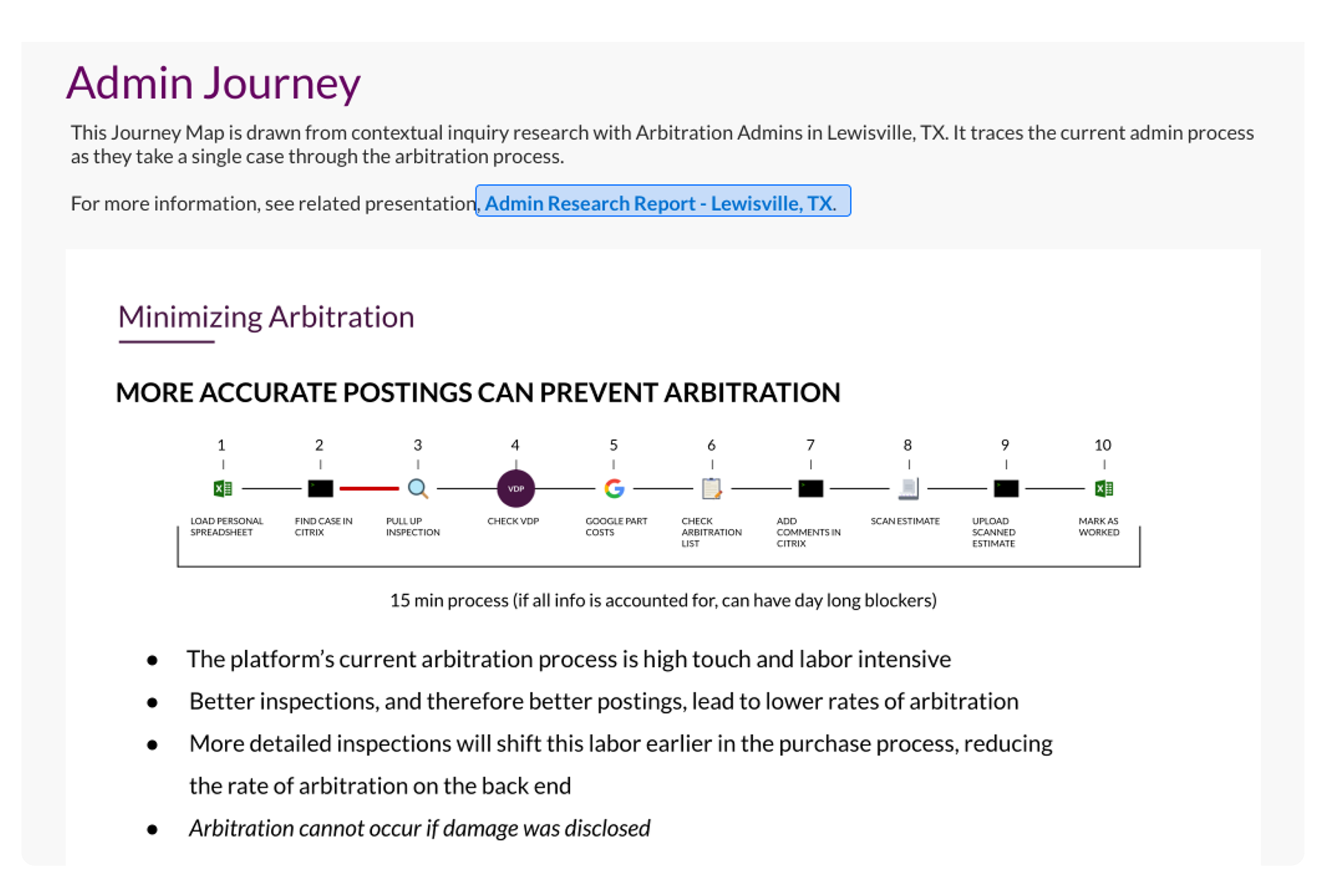
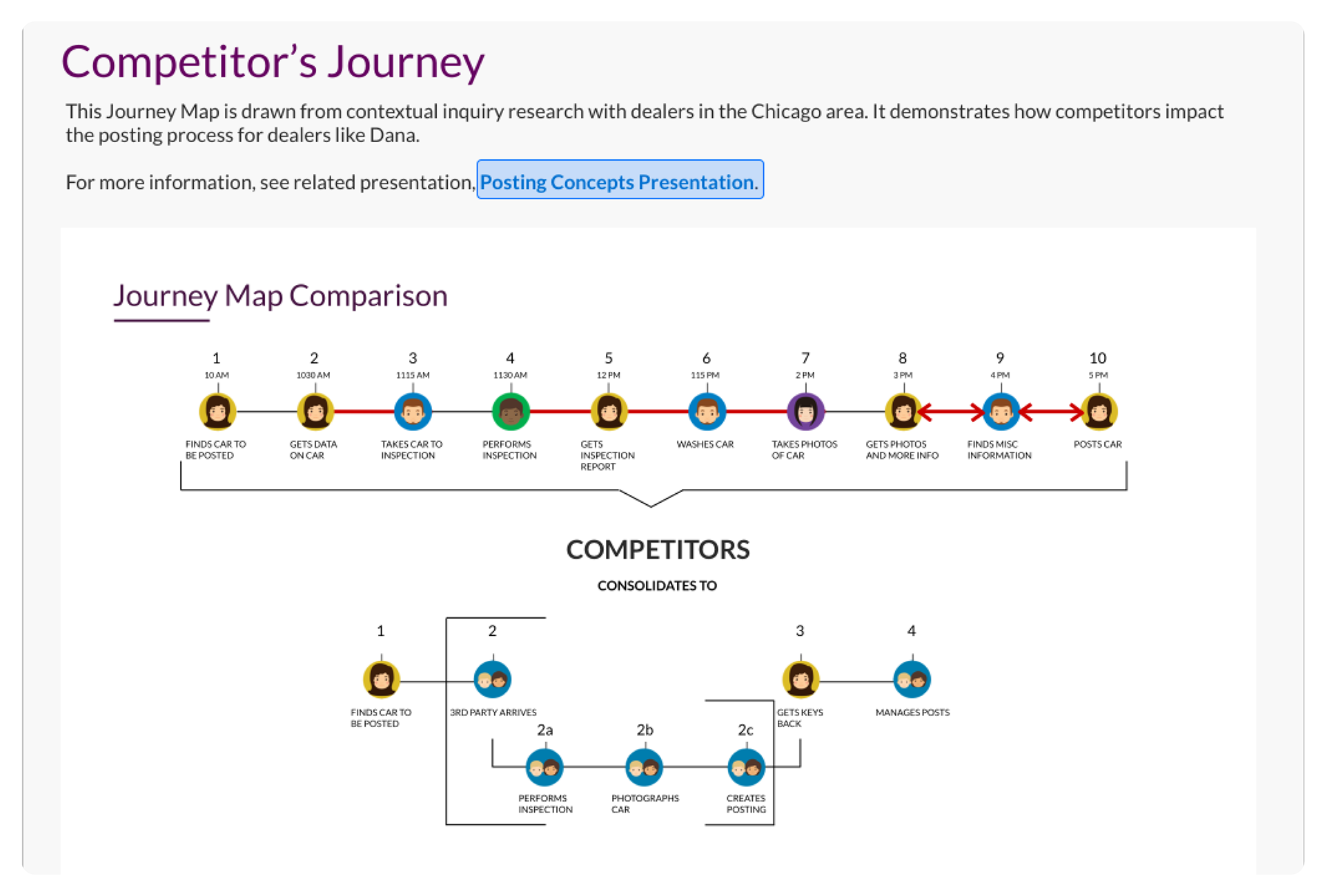
Our team conducted several rounds of cotextual inquiry to unpack the overall posting process and the process for each team member involved. We made a series of journey maps to communicate each process and pain points team members were experiencing.
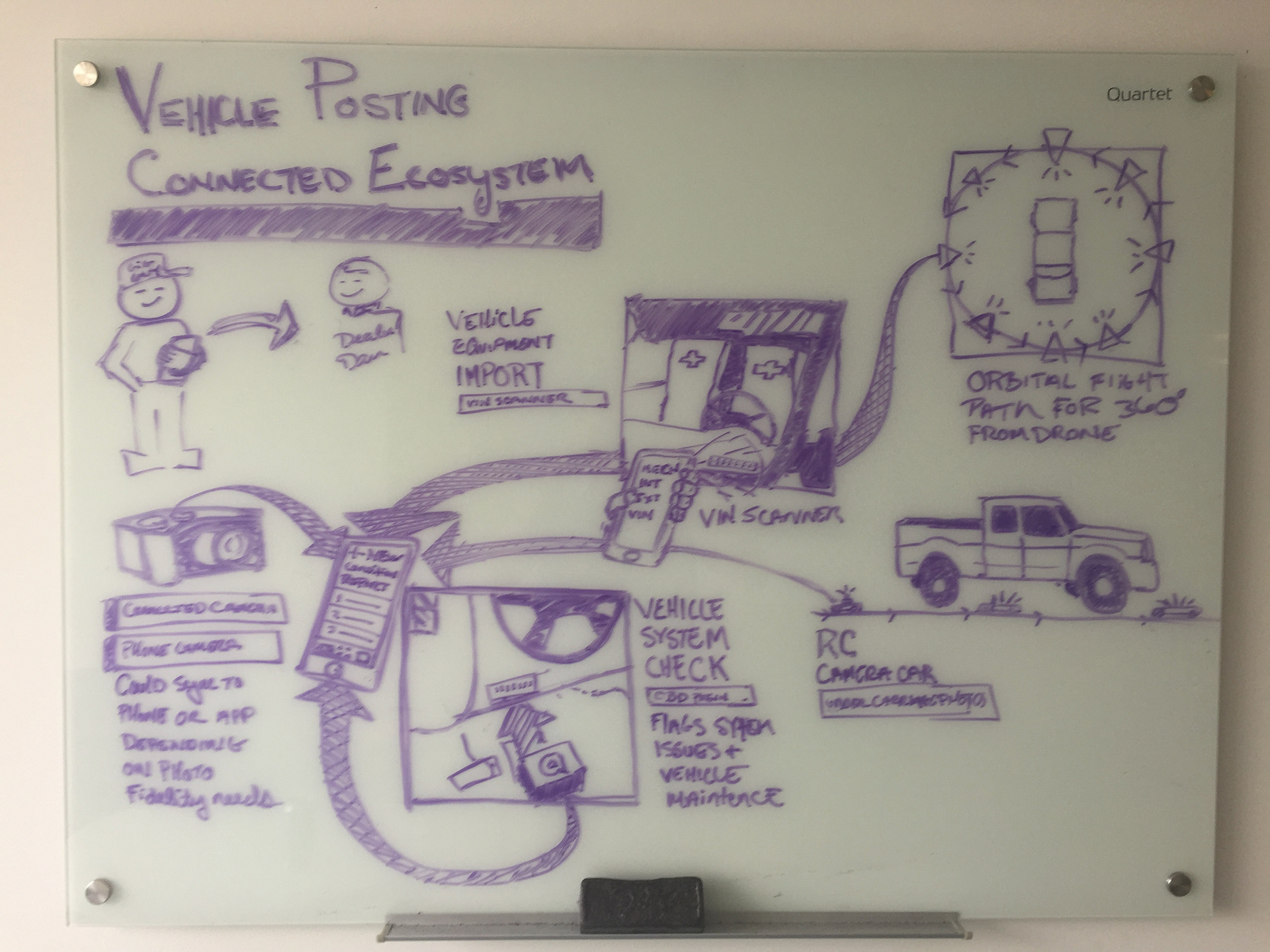
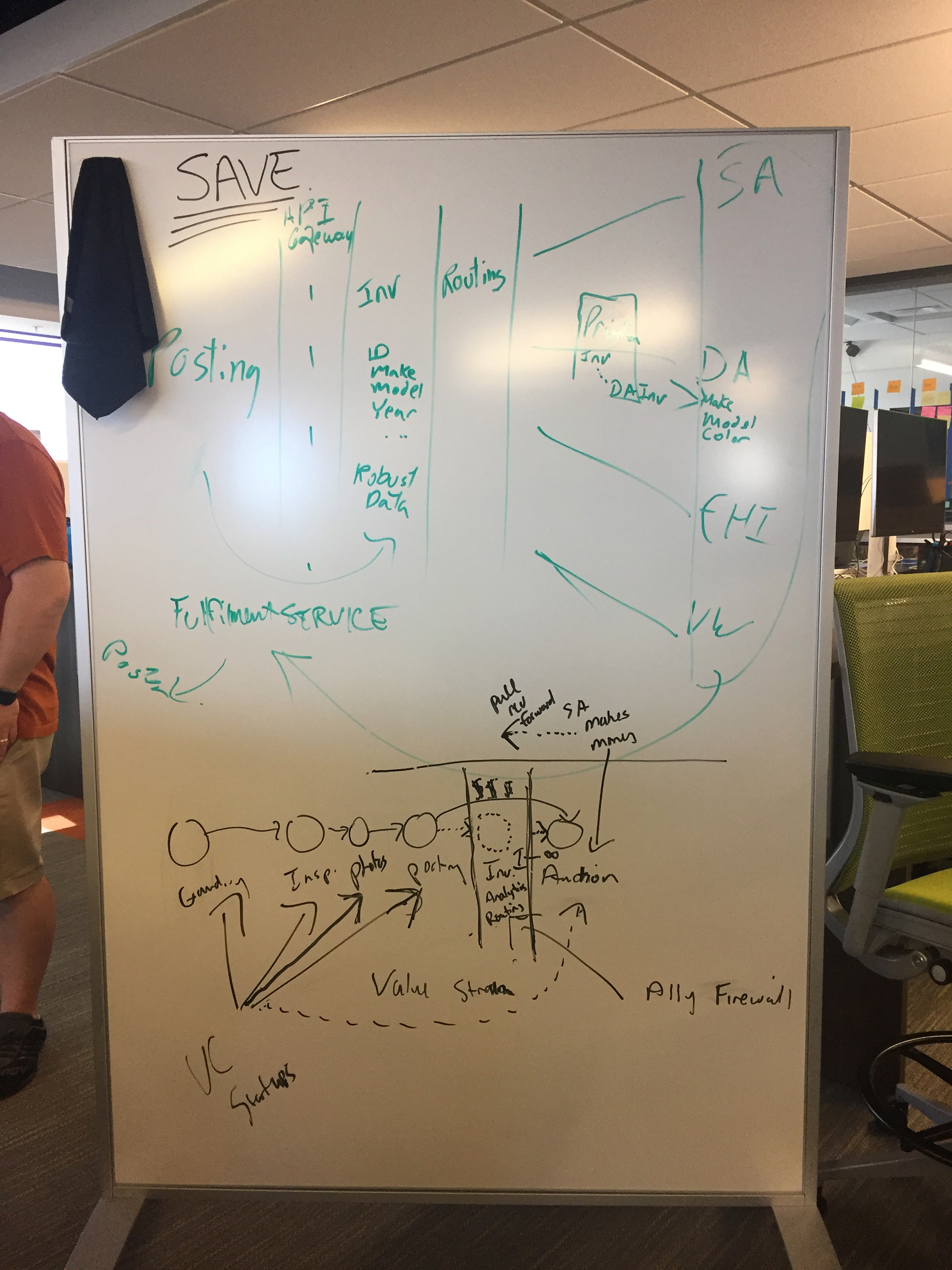
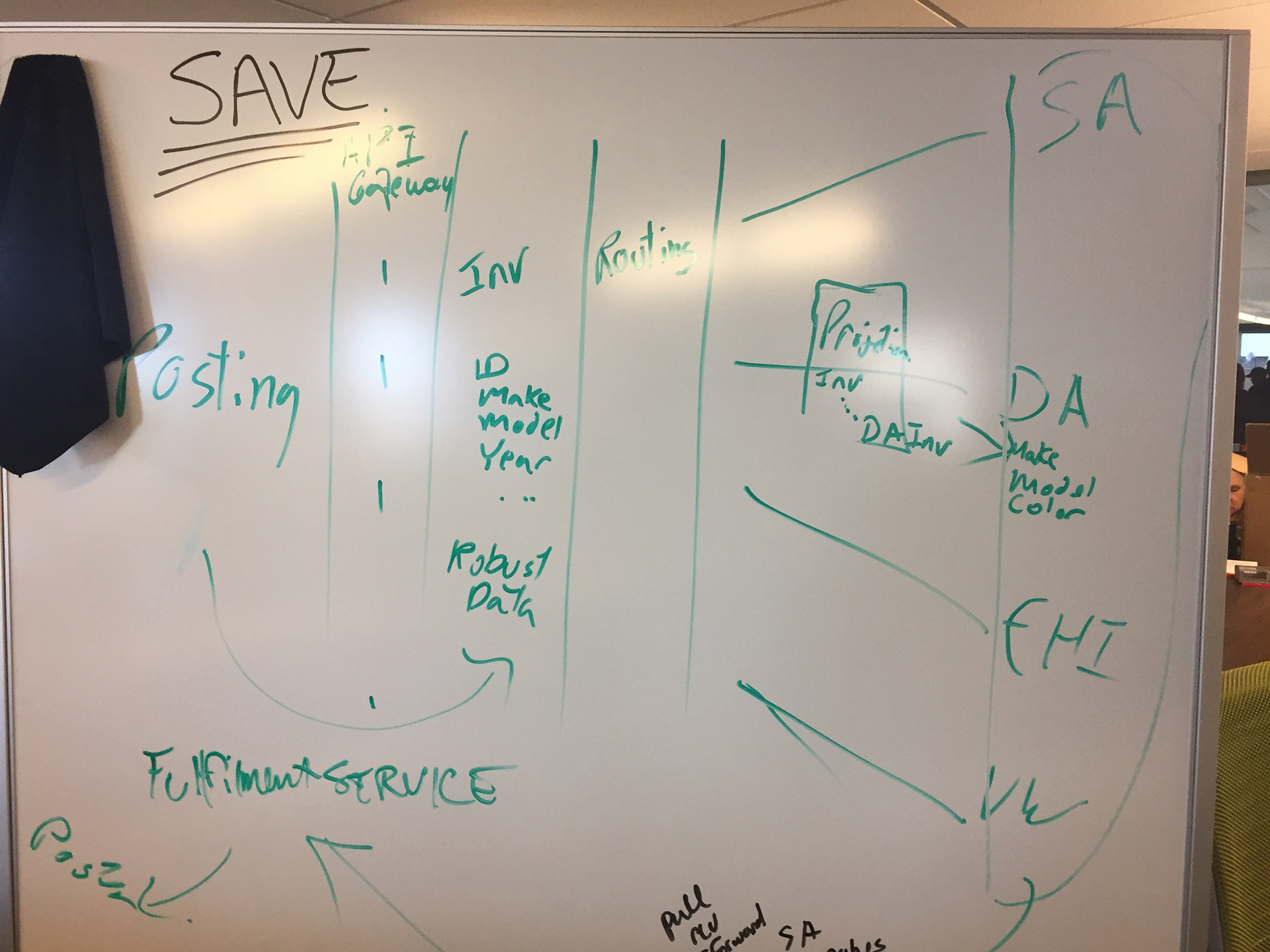
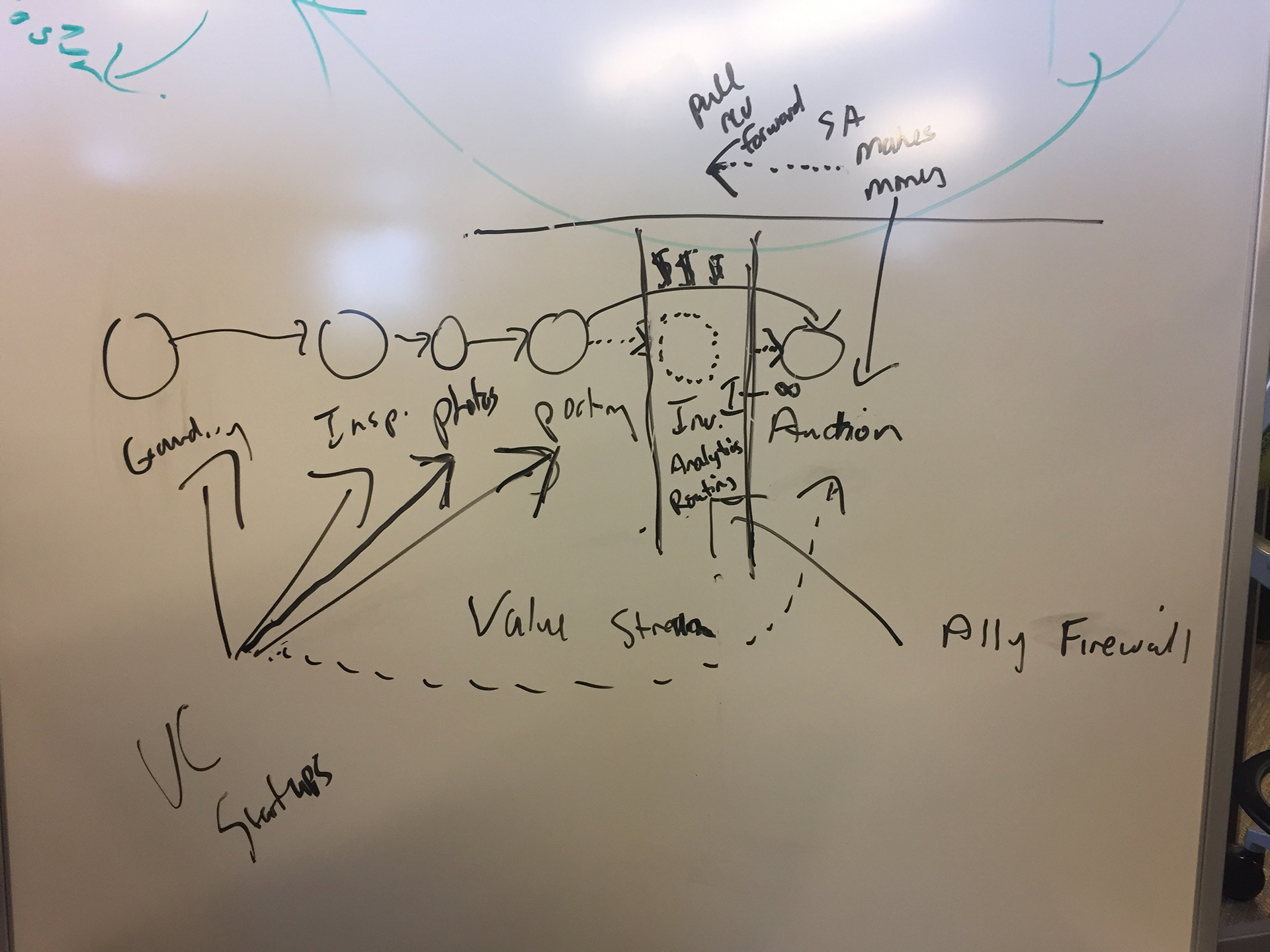
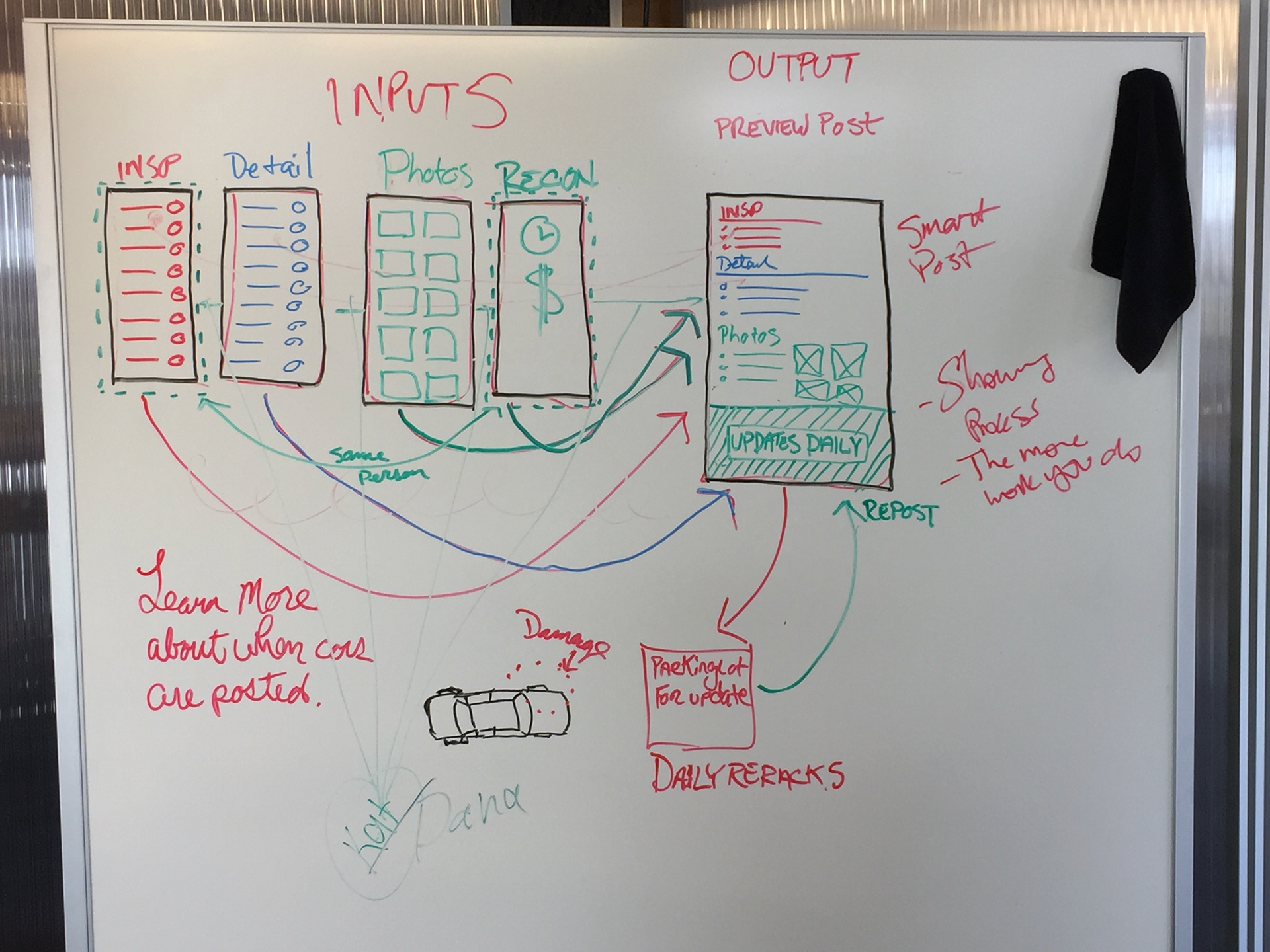
Whiteboarding Ideation
Wireframes
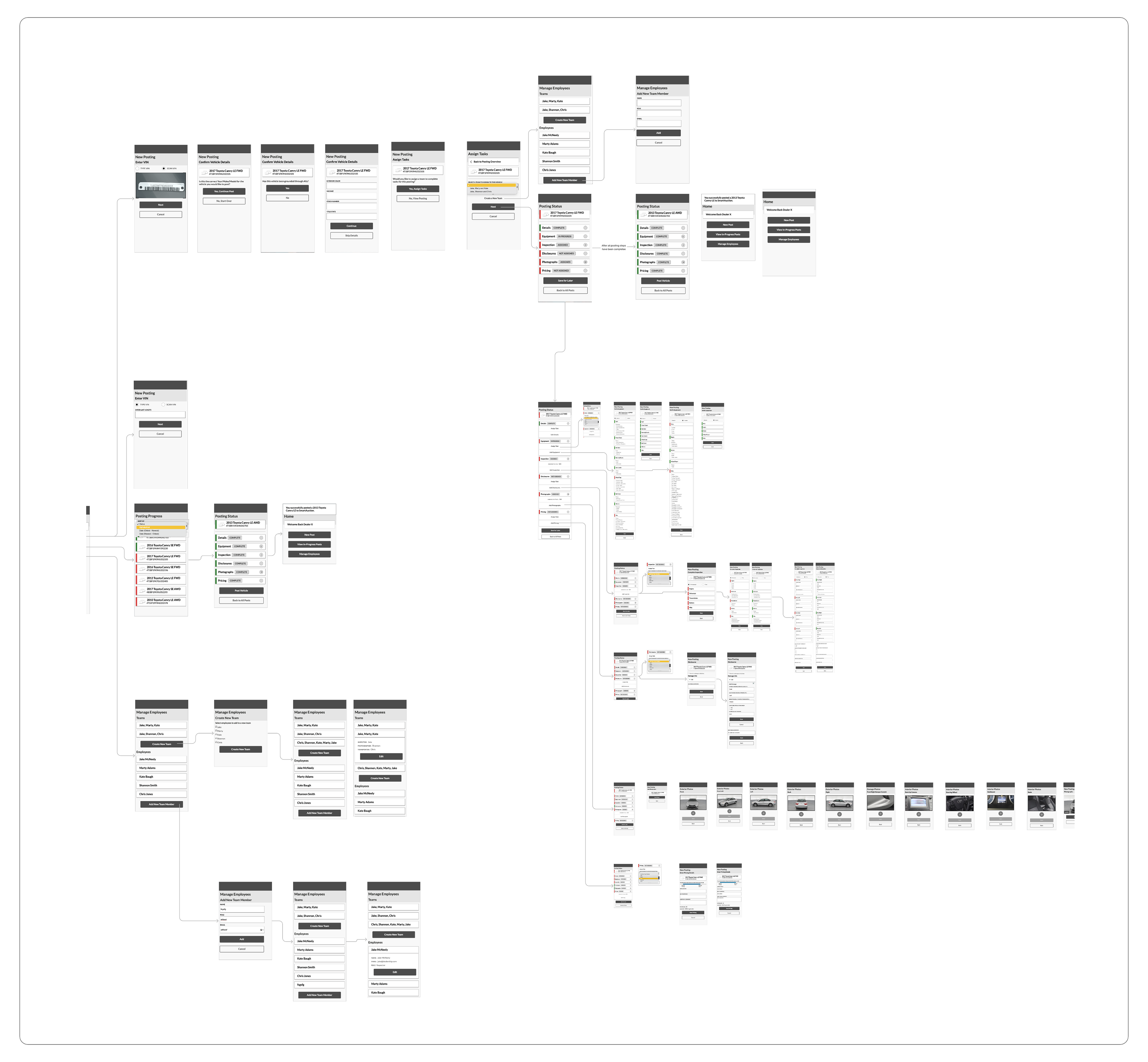
After research and Ideation, our team developed a few concepts for an all-new posting experience that put the dealer manager asynchronously at the center process. We developed wireframes and prototypes and tested our primary concept. After a few rounds of testing, we assessed the viability and the success of the prototype by reviewing the qualitative and quantitative data from our in-the-field testing sessions.
Next, we organized our findings into a deck and presented them to client stakeholders. The findings were met favorably by our clients. Although our client didn't have the budget scoped to fund the engagement when we presented it they intended to scope the Asynchronous Posting app into their budget for the following year.
An 18th Month engagement wraps up.
I'm thrilled to share the positive outcomes we achieved together with the Ally SmartAuction team. This engaging and collaborative experience allowed us to align our goals and gain valuable insights into the current state of the product.
Throughout our product sprints, we defined the core problems and crafted a compelling value statement to guide us on this journey. By immersing ourselves in the product's existing state, we gained a deeper understanding of its strengths and areas for improvement. Moreover, getting to know the personas and users gave us invaluable perspectives to shape our new product vision.
The review of current product epics and features was an eye-opening exercise, and it paved the way for exciting possibilities. With creativity and enthusiasm, we embarked on the journey of next-generation product story mapping, defining new epics, and innovative features.
Our friendly and collaborative approach fostered an open atmosphere, encouraging everyone to share their insights and ideas freely. The teamwork between client stakeholders and our cross-functional team members was exceptional, and the results of this week's efforts will undoubtedly continue to propel the SmartAuction team as they take the reins upon the completion of their digital transformation.
Together, we set the stage for a groundbreaking product transformation, fueled by our collective passion for innovation and our commitment to embrace modern technology and human-centered design practices. Using these tools we completely rebuild SA's development pipeline, product architecture, User experience, and UI Design all while delivering a functioning white-label vehicle remarketing platform to an enterprise client. I am truly excited about the potential this engagement holds, and I am grateful to each and every one of you for making this journey a fantastic and successful one.